Wildlife Conservation Through Hunting
Hunters across southern Africa play a decisive role in keeping wildlife populations healthy and habitats intact. From the Kalahari dunes of Namibia and Botswana to the Limpopo bushveld, the Eastern Cape thickets, the Karoo, the Lowveld and Highveld of South Africa, and the floodplains and miombo woodlands of Zimbabwe, Zambia and Mozambique, regulated hunting generates the revenue, incentives and management data that pure protection alone often cannot sustain. Understanding this link strengthens ethical practice and secures the future of both game and hunting heritage in the region.
In South Africa, Namibia, Botswana, Zimbabwe, Zambia and Mozambique, wildlife on private and communal land is managed under national legislation that treats game as a valuable renewable resource. Professional hunters and outfitters operate under strict permit systems issued by provincial or national authorities. In South Africa this typically means provincial nature conservation permits and, for listed species, additional Threatened or Protected Species (TOPS) authorisations. Namibia requires Ministry of Environment, Forestry and Tourism permits and adherence to quota systems set through annual game counts. Botswana, Zimbabwe, Zambia and Mozambique each maintain their own licensing frameworks, hunting-block concessions and closed seasons designed around breeding cycles of key plains game and dangerous game. These legal structures allocate offtake by science rather than privilege and prohibit unregulated commercial bushmeat markets that historically depleted populations.
License fees, concession rentals, trophy fees and daily rates paid by visiting and local hunters flow directly into conservation. In Namibia, communal conservancies reinvest hunting income into anti-poaching patrols, water-point maintenance and community development, giving rural residents a tangible stake in keeping gemsbok, springbok, kudu and mountain zebra on the land. South African game ranches and conservancies use hunting revenue to fund fencing, predator-proofing, firebreaks and habitat rehabilitation across the bushveld and Karoo. In Zimbabwe’s Save Valley and other conservancies, and in Zambian and Mozambican hunting blocks, outfitter fees support scout salaries, road networks and aerial surveys. International safari clients who book buffalo, sable, nyala, eland or lion hunts under fair-chase rules therefore underwrite the very protection of those species and the ecosystems they occupy.
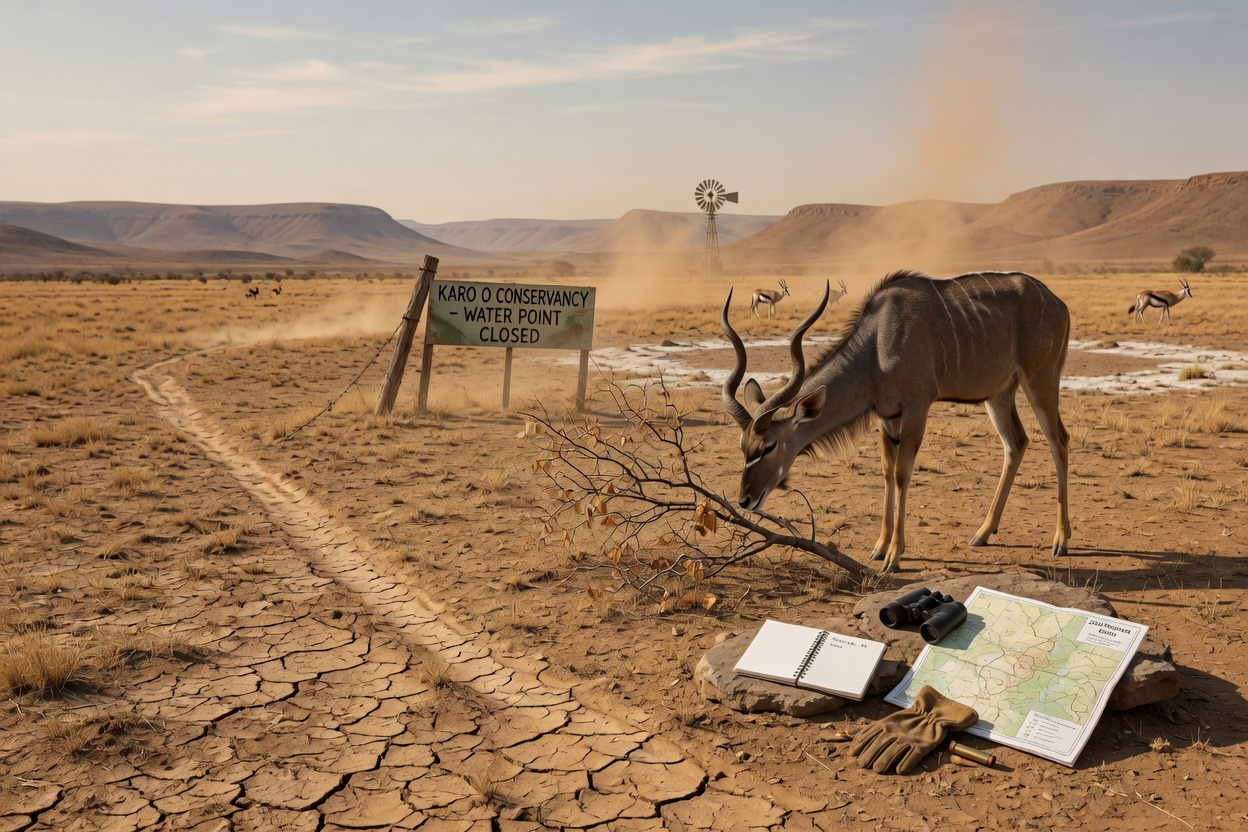
Habitat work on the ground is equally practical. Hunters and landowners establish and rotate food plots of lucerne, maize and indigenous browse that benefit impala, warthog, wildebeest and a host of non-hunted species. Artificial water points carefully sited in the Kalahari and Namib margins reduce pressure on natural pans during drought while avoiding permanent over-concentration of animals. Controlled burns in the Lowveld and bushveld mimic natural fire regimes, refreshing grazing for zebra and red hartebeest and opening thickets for nyala and bushbuck. Invasive plant clearing—removing prickly pear, lantana or alien wattles—restores carrying capacity. Many of these projects are financed by hunting leases on private land or by contributions channelled through conservancy trusts.
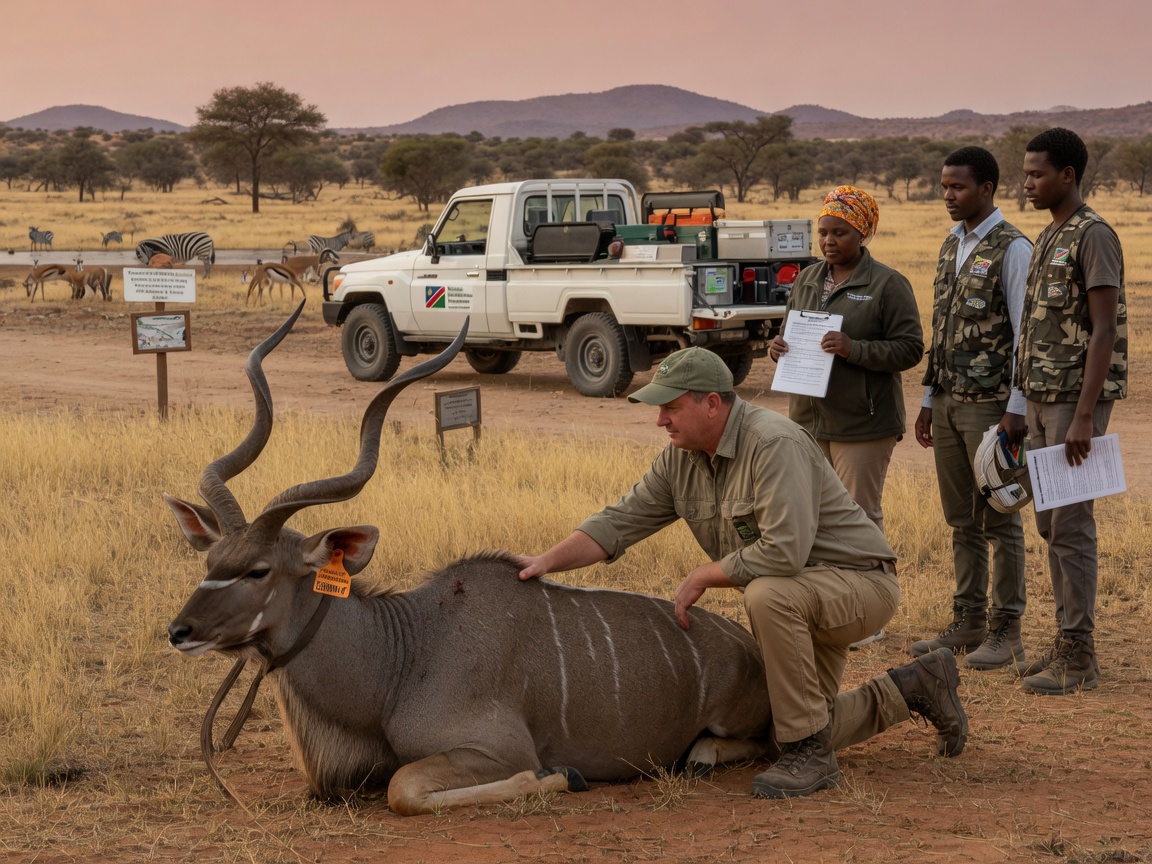
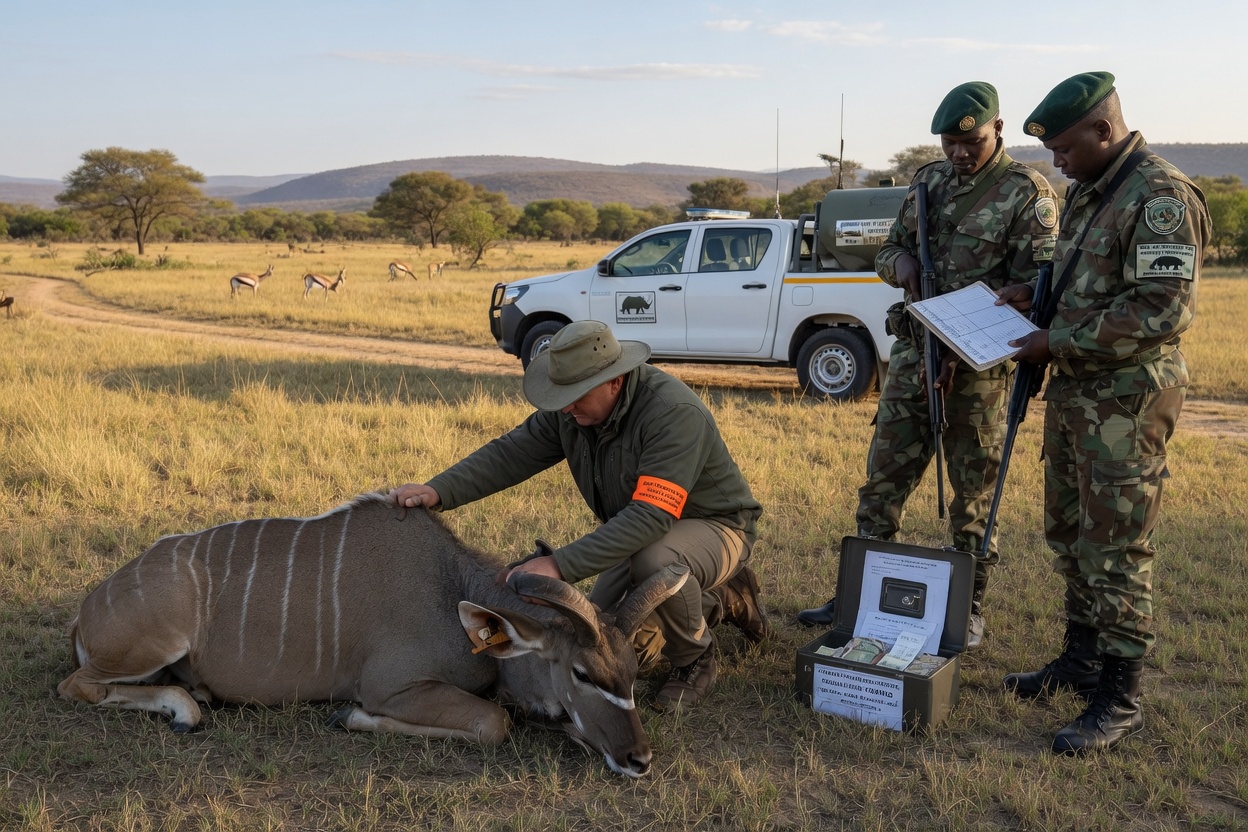
Species management relies on hunting as a precision tool. Overabundant impala or warthog populations on fenced ranches are reduced to protect veld condition and to limit disease risk. Age- and sex-specific quotas for kudu, gemsbok and eland prevent skewed demographics. Compulsory hunt-return forms and compulsory measurement of trophies supply wildlife departments with annual data on population trends, horn growth and distribution. In areas where lion, leopard or hyaena conflict with livestock, carefully regulated problem-animal or quota hunts, combined with improved kraaling and compensation schemes, reduce retaliatory killings. Disease surveillance—especially for foot-and-mouth, bovine tuberculosis and anthrax—is often funded by the same levy systems that hunters support, protecting both livestock economies and free-ranging buffalo herds.
Ethical standards remain non-negotiable. Fair-chase principles require that animals have a reasonable opportunity to escape; baiting, artificial lights and motorised pursuit are heavily restricted or banned depending on the country and species. Proper utilisation of meat is both a legal and cultural expectation—springbok, impala and wildebeest venison feed farm staff and local markets, while trophy fees fund broader conservation. Professional hunters are expected to mentor clients and young local hunters in shot placement, tracking and respect for the animal and the land. Outfitters who maintain clean camps, rehabilitate roads after the season and leave water infrastructure for wildlife demonstrate the stewardship that keeps concessions viable.
Hunters who want to deepen their contribution can join established southern African organisations such as the Namibian Professional Hunting Association, Wildlife Ranching South Africa, or national hunters’ associations in Zimbabwe and Zambia. Volunteering for game counts, camera-trap grids and snare-removal drives in the Limpopo or Zambezi Valley supplies data managers need. Supporting legislation that secures hunting access on state and communal land, while opposing poorly designed blanket bans, keeps the economic model alive. Sharing accurate information with non-hunters—explaining how a properly priced buffalo or sable hunt finances months of anti-poaching—builds the social licence that conservation hunting requires.
When hunting is conducted under science-based quotas, transparent permitting and strong local benefit-sharing, it becomes one of the most effective conservation tools available in southern Africa. The kudu stepping into a Limpopo clearing at last light, the gemsbok stringing across a pink Kalahari dune, and the buffalo herd moving through Mozambican mopane all depend on landscapes that pay their way. Responsible hunters, working with professional outfitters and community partners, ensure those landscapes continue to do so for generations to come.