White Rhinoceros Hunting
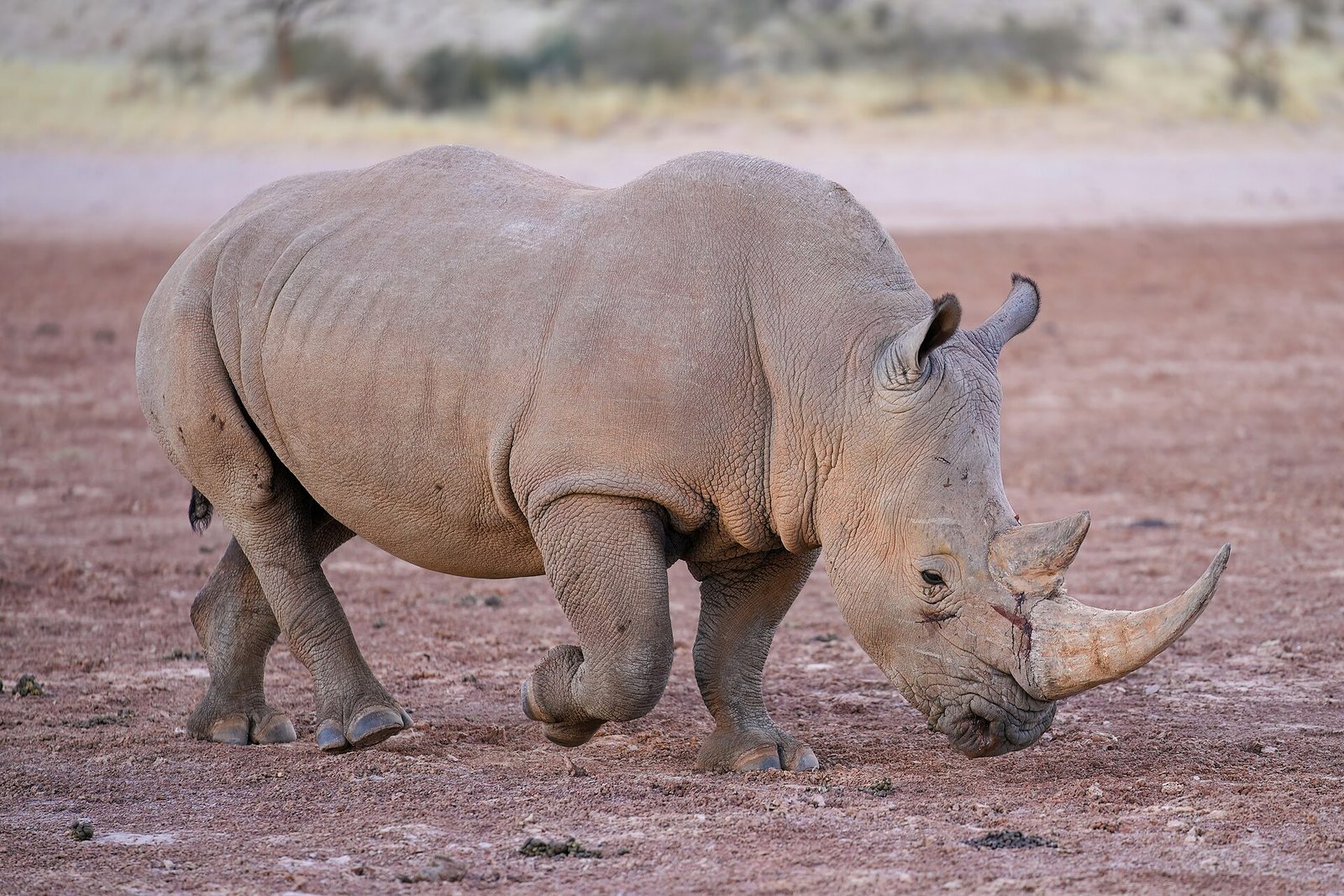
Ceratotherium simum
The white rhinoceros, scientifically known as Ceratotherium simum, is one of the most iconic big game animals, revered by hunters for its massive size and prehistoric presence. Standing up to 6 feet tall at the shoulder and weighing between 4,000 to 7,000 pounds, these behemoths are the second-largest land mammals after elephants. Males are typically larger than females, with a broad, square-lipped mouth adapted for grazing—hence the name "white," derived from the Afrikaans word for "wide." Their thick, gray skin folds into armor-like plates, and they sport two prominent horns on the snout, with the front one often reaching 3 to 5 feet in length, making for an impressive trophy. Native to the grasslands and savannas of southern and eastern Africa, white rhinos thrive in open habitats where they can graze on short grasses. They are generally social animals, often seen in small groups called crashes, though mature bulls can be solitary and territorial. These herbivores are most active during cooler parts of the day, wallowing in mud to regulate body temperature and protect against parasites. Their poor eyesight is compensated by keen hearing and smell, which hunters must account for when approaching—wind direction is crucial to avoid detection. White rhinos are primarily found in South Africa, Namibia, Zimbabwe, and Kenya, with conservation efforts helping to stabilize populations in protected reserves. For hunters, the challenge lies in their sheer power and unpredictable charges, demanding expert tracking and ethical shot placement. The horns and overall size make them a pinnacle trophy, but pursuits are strictly regulated to support anti-poaching initiatives. As a species once on the brink of extinction, the white rhino is classified as Near Threatened by the IUCN, with legal hunting playing a role in funding conservation through sustainable programs. Responsible hunters contribute to these efforts, ensuring future generations can experience the thrill of encountering this magnificent creature in the wild.
Hunt facts
- Countries
- Botswana Mozambique Namibia South Africa Uganda Zambia Zimbabwe
- Hunt regions
-
Botswana: Chobe North WestMozambique: GazaNamibia: Erongo Hardap Karas Khomas Omaheke OtjozondjupaSouth Africa: Eastern Cape Gauteng KwaZulu-Natal Limpopo Mpumalanga North West Northern CapeUganda: NorthernZambia: Eastern MuchingaZimbabwe: Manicaland Masvingo
- Habitat
- Grassland Mixed savanna Bushveld
- Best time to hunt
- May–October (Dry season)
- Mass
- 1700–2300 kg (3748–5071 lb)
- Trophy minimum
-
- SCI (inches): 70
- SCI bow: 63
- Rowland Ward (inches): 26
- Rowland Ward record: 62 2/8
Southern white rhino horn
Typical record-book minimums; confirm the current edition with your professional hunter.
Where to Find White Rhinoceros
White rhinoceros, also known as square-lipped rhinos, primarily inhabit open grasslands, savannas, and bushveld regions where they graze on short grasses. Their natural range is concentrated in southern and eastern Africa, with significant populations in protected reserves and private game farms.
For legal hunting opportunities, South Africa and Namibia stand out as the best countries, offering controlled hunts under strict conservation permits. In South Africa, areas like KwaZulu-Natal and Limpopo provinces host managed populations on private ranches, while Namibia's communal conservancies in the northwest provide similar access. These hunts are typically for non-breeding males and support anti-poaching efforts through high fees.
Seasonal considerations favor the dry winter months from May to September, when vegetation is sparse, making rhinos easier to spot near waterholes. Avoid rainy seasons (November to March) due to thick foliage and muddy terrain.
The terrain features flat to gently rolling plains with acacia scrub and scattered trees, often in hot, arid environments reaching 90°F (32°C) daytime. Hunt in areas with permanent water sources, as rhinos drink daily.
Tips for locating them include tracking fresh footprints (about 10-12 inches wide) and dung middens, which they use to mark territory. Use elevated blinds near water or game trails at dawn and dusk, when they're most active. Always hire experienced professional hunters and obtain necessary CITES permits to ensure ethical, legal pursuits.
Why Hunt White Rhinoceros
Hunters pursue the majestic White Rhinoceros for its unparalleled trophy qualities, boasting massive, curved horns that can exceed three feet in length, paired with a robust body weighing up to 5,000 pounds. These features make it a symbol of ultimate achievement, with hides and horns serving as striking displays of a successful safari.
The hunting challenge is immense, demanding expert tracking skills through dense African bushveld, where the rhino's keen senses and unpredictable charges add heart-pounding excitement. Spot-and-stalk methods test patience and precision, turning each hunt into an adrenaline-fueled adventure that few species can match.
While not primarily hunted for meat, the White Rhino offers lean, gamey flesh that's surprisingly tender when prepared right—think slow-roasted cuts or hearty stews that provide a unique culinary experience from the wild.
Culturally, pursuing rhinos ties into ancient African traditions of sustainable harvest and rites of passage, honoring wildlife heritage.
Crucially, regulated hunts fund vital conservation efforts, with fees supporting anti-poaching patrols and habitat preservation, ensuring rhino populations thrive.
This species delivers unforgettable experiences, from witnessing their prehistoric grace in the savanna to the profound satisfaction of contributing to their survival— a hunt that's as rewarding ethically as it is thrilling.
White Rhinoceros Hunting Tips
Hunting white rhinoceros requires strict adherence to legal permits and conservation guidelines, as these animals are protected and hunts are typically conducted in controlled environments like South Africa or Namibia for population management. The most effective method is spot-and-stalk hunting, where you use binoculars to locate rhinos from a distance, then approach on foot with a professional guide. Bow hunting is rare due to the animal's size and thick hide; rifle hunting dominates.
For equipment, opt for a heavy-caliber rifle like . 375 H&H Magnum or . 416 Rigby, loaded with solid or expanding bullets for deep penetration. A high-quality scope with low magnification aids in quick target acquisition. Essential gear includes sturdy boots, camouflage clothing suited to savanna terrain, and a rangefinder.
Shot placement is critical: aim for the heart-lung area just behind the front shoulder when broadside, or the brain if facing head-on, but only at close range under 50 yards to ensure a humane kill. Avoid spine shots, as they may not drop the animal instantly.
Tracking involves reading spoor—look for large, three-toed footprints and fresh dung piles. Stalk quietly against the wind, using natural cover like bushes or termite mounds, and move slowly to avoid detection, as rhinos have keen senses.
The best time is during the dry season (May to October) when water sources concentrate animals, and early morning or late afternoon when they're active and visibility is good.
Common mistakes include underestimating the rhino's speed and aggression—never approach too closely without backup. Rushing shots or ignoring wind direction can spook them.
Safety is paramount: always hunt with an experienced professional hunter, maintain a safe distance, and be prepared for charges—carry a backup firearm and know escape routes. Respect ethical guidelines to support conservation efforts.
Featured Outfitters for White Rhinoceros
View allPlan Your White Rhinoceros Hunt
Submit a free enquiry and we'll match you with outfitters who hunt White Rhinoceros in your region.
Sign Up to Enquire African Elephant
 African Lion
 Black Rhinoceros
 Cape Buffalo
 Forest Buffalo
 Giant Forest Hog