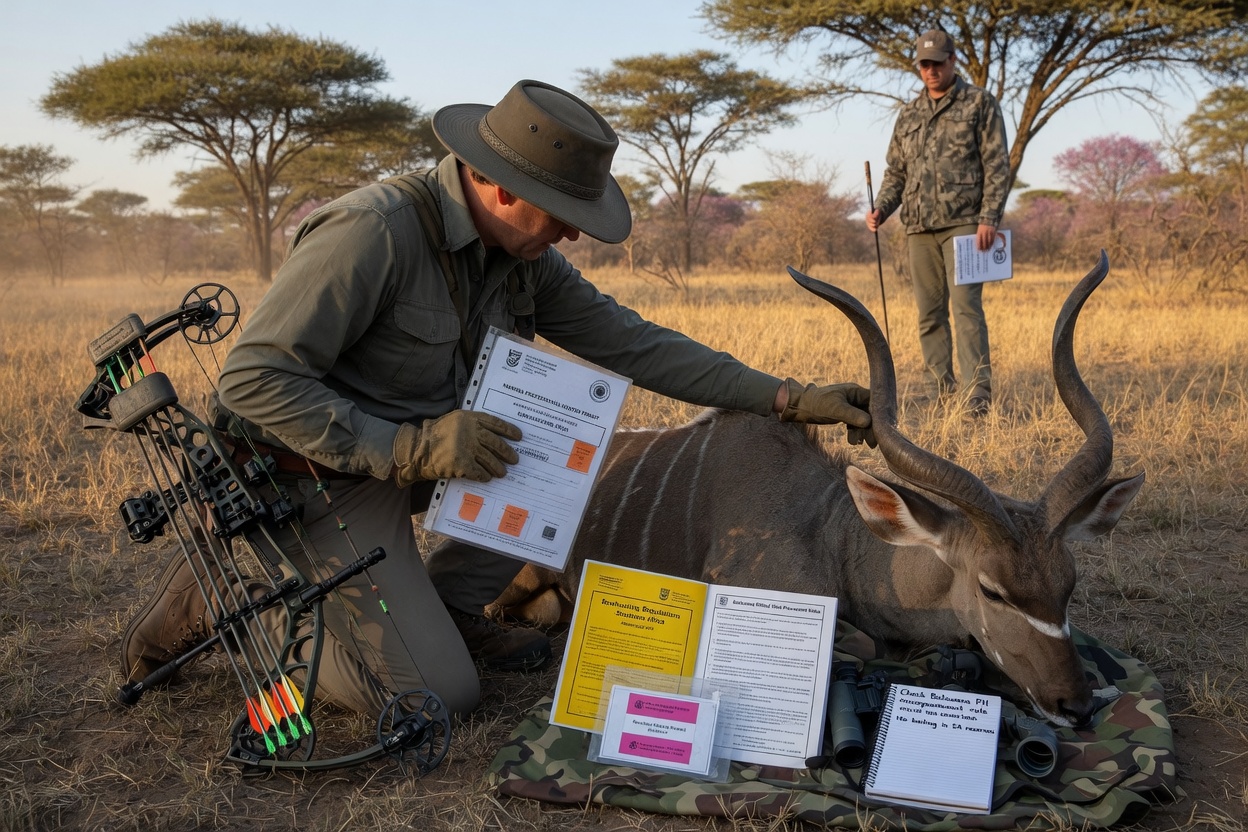
Bowhunting in Southern Africa represents one of the most demanding and rewarding pursuits a hunter can undertake. The combination of vast wilderness, world-class game, and the intimate challenge of the bow creates experiences that stay with you for life. Yet the legal landscape is anything but uniform. Each nation maintains its own statutes, provincial variations, and permitting processes. Understanding these differences is not optional. It is the foundation of an ethical, legal, and successful hunt.
Hunting with a bow demands more than marksmanship. It requires knowledge of local law, respect for conservation frameworks, and a commitment to fair-chase principles. Southern African countries have built sophisticated systems in which regulated hunting generates substantial revenue for anti-poaching units, habitat protection, and rural communities. When hunters follow the rules, they become partners in that conservation model. When they ignore them, they risk confiscation of trophies, fines, or worse, and they undermine the very system that keeps wildlife abundant.
Most Southern African nations share several baseline requirements. Foreign hunters almost always need a licensed Professional Hunter, or PH, especially when pursuing dangerous game. A valid hunting license or permit must be obtained in advance, often through the outfitter. Trophy export requires additional paperwork, including CITES documentation for listed species such as leopard, elephant, and certain antelope. Equipment standards typically specify a minimum draw weight of 50 pounds for plains game and 70 pounds or more for buffalo and similar species, along with approved broadheads that meet cutting-diameter and sharpness criteria. Crossbows occupy a gray area in some jurisdictions and may be restricted or banned. Night hunting, hunting from vehicles, and baiting are generally prohibited except under tightly controlled conditions.
South Africa offers the most accessible and diverse bowhunting opportunities on the continent. All nine provinces permit bowhunting, though specific ordinances differ. Limpopo, the Eastern Cape, and KwaZulu-Natal host the majority of commercial operations. Hunters need a provincial hunting license plus written permission from the landowner. For Threatened or Protected Species, additional TOPS permits apply. Plains-game species such as kudu, impala, gemsbok, and warthog are commonly taken with compound or traditional bows. Dangerous-game bowhunting is legal but reserved for highly experienced hunters using heavy arrows and proven setups; most outfitters require a rifle backup for follow-up. South Africa’s hunting industry is well-documented as a net positive for conservation, with fees supporting extensive private wildlife ranching that has expanded habitat far beyond state parks.
Namibia stands out as perhaps the premier bowhunting destination in the region. The country’s conservancy model and vast communal lands create excellent conditions for both plains and dangerous game. The Ministry of Environment, Forestry and Tourism issues the necessary permits. Bowhunting is enthusiastically supported, and many concessions advertise bow-only or bow-preferred packages. Gemsbok, springbok, kudu, and Hartmann’s mountain zebra are classic targets. Elephant and lion hunts with a bow are possible in designated areas but demand exceptional skill and typically a two-PH team. Namibia’s community-based natural resource management program has been widely studied and credited with increasing wildlife numbers while delivering tangible benefits to rural residents.
Botswana presents a more complex picture. After a five-year moratorium, trophy hunting resumed in 2019 under a community-quota system designed to return benefits to villages living alongside wildlife. Bowhunting is permitted in certain concessions, though rifle hunting remains more common. Elephant quotas exist and remain politically sensitive; hunters should confirm current allocations and community-consent requirements well in advance. The Department of Wildlife and National Parks oversees licensing. Because regulations can shift with government policy, working with an established Botswana-registered outfitter is essential.
Zimbabwe continues to offer quality bowhunting through its CAMPFIRE program and private conservancies. The Parks and Wildlife Management Authority issues licenses. Plains-game hunts are straightforward, while leopard and buffalo require additional tags and experienced PHs. Recent years have seen efforts to stabilize the industry after economic challenges, and reputable operators maintain high ethical standards. Zambia’s Game Management Areas operate under the Department of National Parks and Wildlife. Bowhunting is legal, and the country is known for strong buffalo and sable populations. Mozambique has reopened selected areas after years of instability; hunters should verify concession status and security conditions before booking.
Practical preparation begins long before the flight. Choose an outfitter who is a member of recognized associations such as PHASA, NAPHA, or the relevant national body and who can demonstrate a clean record with wildlife authorities. Confirm that your bow setup meets the destination country’s exact specifications; many require chronograph testing or arrow-weight verification on arrival. Practice from elevated positions and at unknown distances, because African terrain rarely offers the flat shooting lanes of a 3-D course. Understand that follow-up on a wounded animal is the hunter’s responsibility and that a PH’s rifle is there for safety, not convenience. Finally, budget for all permits, community levies, and trophy-export fees so there are no surprises.
Ethical bowhunting in Southern Africa is about more than a clean kill. It is about contributing to a proven conservation economy. Studies from Namibia and South Africa consistently show that well-regulated hunting outperforms photographic tourism in remote areas where visitor numbers are low. Those dollars pay game scouts, fund water-point maintenance, and give communities a financial stake in keeping wildlife on the land rather than converting it to livestock. Hunters who take the time to learn the rules become ambassadors for that model.
The patchwork of regulations can feel daunting, yet it exists for good reason. It protects both the resource and the hunter. Start your research with official government wildlife department websites, then speak directly with licensed outfitters who operate in the specific concession you intend to hunt. Join organizations that advocate for science-based wildlife management. When you finally draw your bow on African soil, you will do so with the confidence that comes from knowledge and the satisfaction that comes from doing it right.