The thrill of a multi-country hunting safari is unlike anything else in the sporting world. Imagine taking a kudu in the rugged hills of Namibia one week and then pursuing buffalo or plains game across the border in Botswana or Zimbabwe the next. These trips offer hunters unmatched variety in terrain, species, and cultural experiences while supporting conservation through ethical hunting. Yet the adventure can grind to a halt at the first border post if your vehicle paperwork is not in order. Cross-border vehicle rules for multi-country safaris demand careful preparation, and getting them right keeps the focus where it belongs: on the hunt and the habitat.
Hunters planning these journeys typically travel through Southern Africa, where countries such as South Africa, Namibia, Botswana, Zimbabwe, Zambia, and Mozambique share relatively accessible land borders. Self-drive options or using an outfitter’s 4x4 convoy are common for plains-game circuits. Flying between camps is simpler for many, but those who choose to drive gain flexibility and a deeper connection to the land. Either way, understanding vehicle regulations prevents costly delays, fines, or even vehicle impoundment.
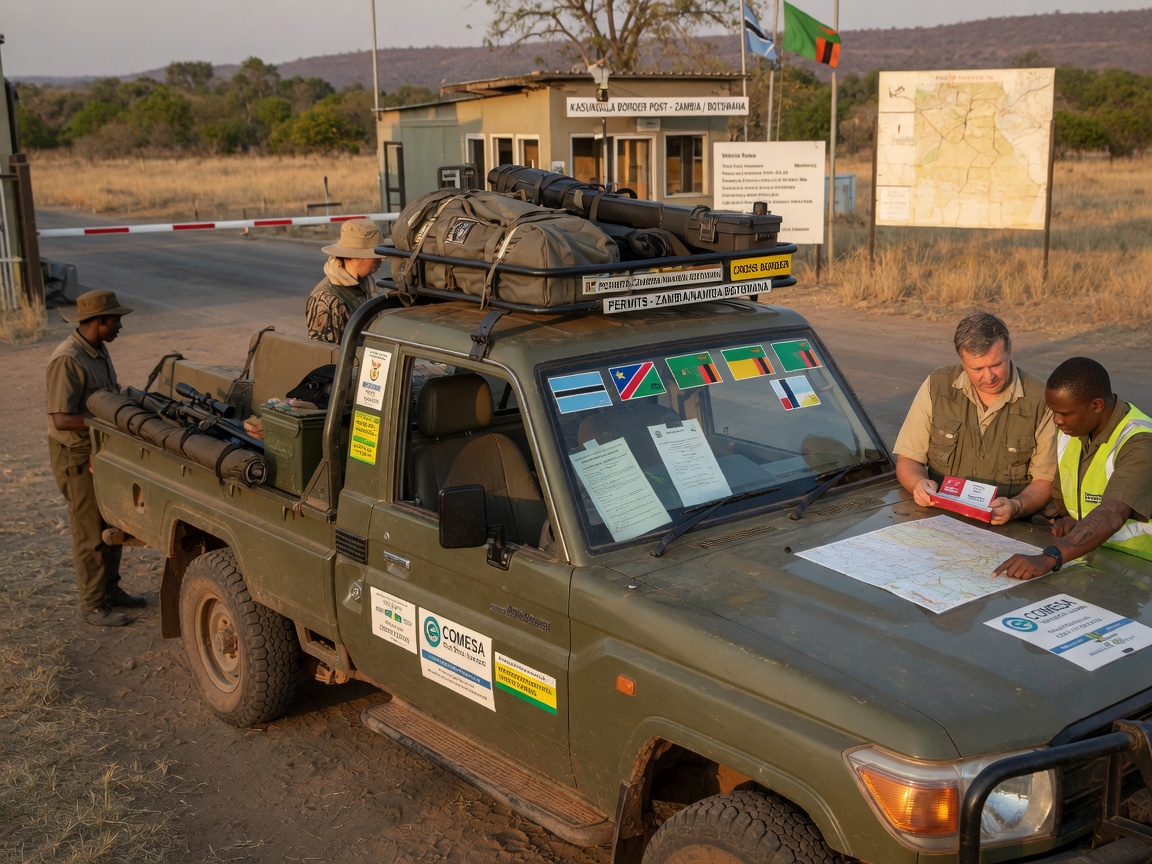
Start with the core documents. Your vehicle registration papers must be original and current. If the vehicle is financed or registered in someone else’s name, carry a letter of authority from the owner or bank. Most Southern African countries issue a Temporary Import Permit at the border. These permits are often free or carry a modest fee and allow the vehicle to stay for a set period, usually matching your visa or hunting license duration. Keep multiple photocopies and digital scans. Officials may stamp or record the permit, so treat it like a passport for your truck.
Insurance is non-negotiable. Third-party liability coverage is mandatory in nearly every country you will enter. The COMESA Yellow Card remains one of the most useful tools. Issued by approved insurers, it provides third-party coverage recognized across more than a dozen African nations, including key hunting destinations. Obtain it from your home-country insurer or at the first border if you are starting from South Africa. Comprehensive insurance that follows the vehicle across borders is harder to find and often more expensive, so confirm coverage limits and exclusions in writing before departure. Some hunters report that standard South African policies extend automatically into Namibia and Botswana for short periods, but never assume this without written confirmation.
A Carnet de Passages en Douane is sometimes recommended as a vehicle “passport” that guarantees you will re-export the vehicle and avoids paying import duties. In practice, many SADC countries do not require a carnet for vehicles registered in South Africa or neighboring states when the stay is temporary. Namibia and Botswana typically process vehicles with just the Temporary Import Permit. Zimbabwe, Zambia, and Mozambique can be stricter, especially if you plan an extended stay or if the vehicle has aftermarket modifications. Check the latest requirements with the relevant customs authority or a reputable overland specialist at least six weeks before travel. Rules have tightened in some places since 2022 as governments digitized border processes and increased scrutiny on commercial-looking vehicles.
Driver documentation matters too. Carry your national driver’s license and consider an International Driving Permit, which some officials still request even if not strictly required. If a professional hunter or tracker will drive, ensure they have the proper licenses and that your outfitter has the necessary operator permits. Vehicle-specific rules include displaying the correct nationality sticker (ZA for South African vehicles, for example) and ensuring lights, reflectors, and license plates meet local standards. Overloading is a common reason for being turned back or fined, particularly in Botswana, which enforces axle-weight limits rigorously.
Country-specific nuances can surprise even experienced travelers. South Africa requires outgoing vehicles to be declared and sometimes inspected for outstanding traffic fines. Namibia’s borders are generally efficient, but remote crossings may have limited hours. Botswana maintains high standards for vehicle roadworthiness and may inspect for invasive plant material or undeclared goods. Zimbabwe has improved its processes in recent years yet still involves more paperwork and possible cash fees. Mozambique and Zambia often require additional police or immigration stamps. Always verify current operating hours, accepted payment methods, and any new electronic pre-clearance systems. Several countries now offer online portals for advance declarations, reducing time spent at the post.
Practical preparation goes beyond paper. A capable 4x4 with high ground clearance, dual batteries, and recovery gear is essential for the dirt roads and seasonal rivers you will encounter. Carry extra fuel, water, and spare parts because remote hunting areas offer limited services. Two full-size spare tires and a quality compressor are wise investments. GPS units loaded with offline maps plus a satellite communicator provide backup when cell coverage disappears. Pack a comprehensive first-aid kit and know the locations of medical evacuation services. These steps are not just about comfort; they reduce the chance of becoming stranded and needing costly recovery that could delay your hunt.
Ethical hunters understand that responsible travel supports conservation. Hunting license fees, trophy fees, and community-benefit programs fund anti-poaching patrols and habitat protection across these transfrontier landscapes. A vehicle that is mechanically sound and legally compliant helps you move efficiently between concessions without creating extra pressure on local resources or officials. Stay on designated tracks, pack out all waste, and respect community lands you pass through. Many successful multi-country hunts now incorporate visits to conservancies where hunters can see firsthand how their participation contributes to wildlife numbers and rural livelihoods.
Recent developments include greater use of digital systems at major crossings and occasional changes in insurance recognition after regional trade updates. Always consult official government websites, the Automobile Association, or your outfitter for the most current information. What worked last season may have changed. Build extra time into your itinerary for border formalities; a two-hour delay is common, and a full day is not unheard of during peak periods.
The reward for this diligence is a seamless safari that lets you concentrate on wind direction, shot placement, and the stories you will bring home. Multi-country hunts create memories that last a lifetime and, when done correctly, leave a positive mark on the places we visit. Plan thoroughly, travel legally, and hunt ethically.
If you are considering a multi-country hunting safari, start the paperwork conversation with your outfitter today. Our team specializes in these complex itineraries and can connect you with trusted partners who handle vehicle logistics so you can focus on the hunt. Reach out for a customized quote and current-season updates. The next great adventure is waiting just across the border.