Hunter Safety in Remote Areas
Hunting in the remote reaches of southern Africa presents unique challenges that demand thorough preparation and strict safety protocols. From the vast sandveld of the Kalahari and the gravel plains bordering the Namib desert to the dense mopane and combretum bushveld of Limpopo, the thorny thickets of the Lowveld, the open grasslands of the Highveld, and the rugged valleys of the Eastern Cape and Karoo, hunters pursuing kudu, gemsbok, impala, springbok, blue wildebeest, eland, nyala, sable, warthog and buffalo must treat every outing with the seriousness it deserves. Distances are large, professional medical help is often hours away by road or air, and the bush itself can turn a minor problem into a life-threatening one. Proper planning, redundant systems and local knowledge prevent emergencies and save lives.
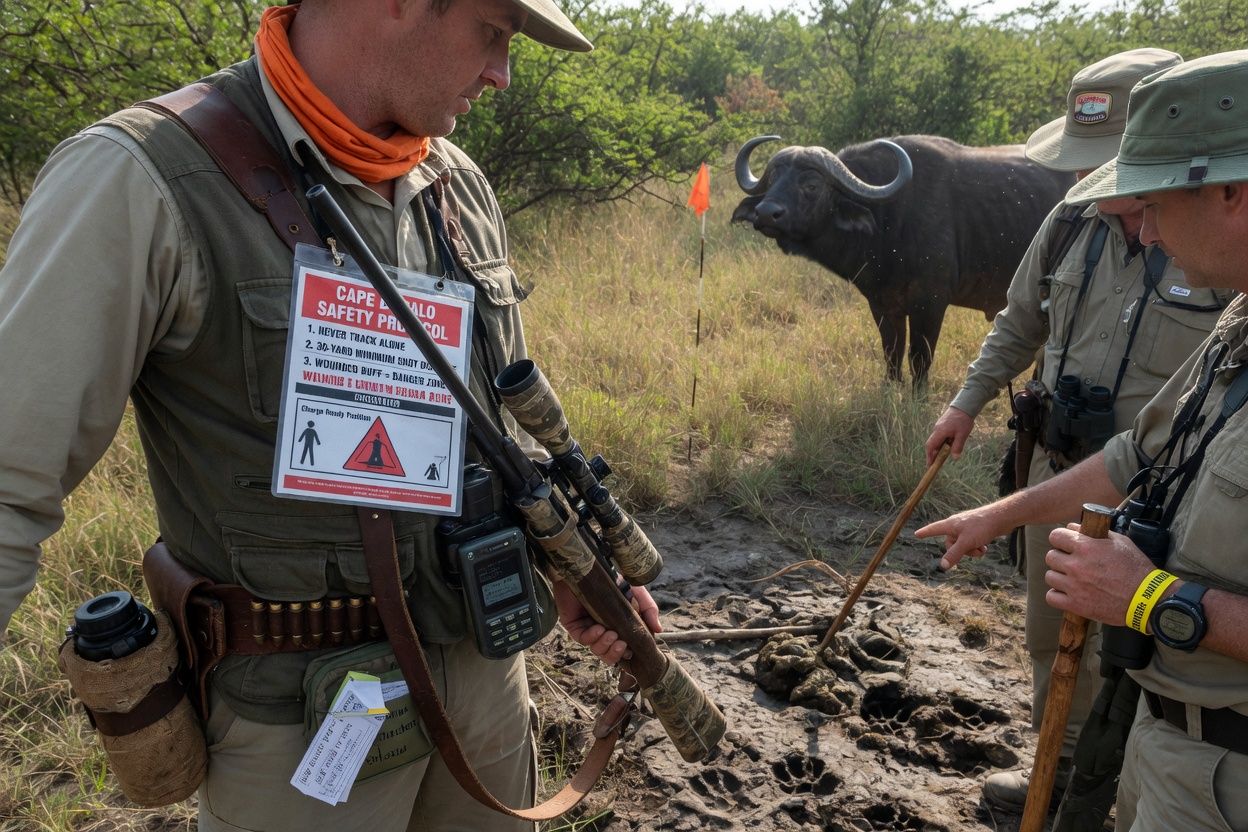
Before departing for a hunt in Namibia’s communal conservancies, Botswana’s wildlife management areas, Zimbabwe’s safari concessions, Zambia’s game management areas, Mozambique’s coutadas or South Africa’s private ranches and state land, file a detailed trip plan with trusted contacts at home and with your outfitter or professional hunter. Research the specific area using current topographical maps, recent satellite imagery and local knowledge of water points, fence lines, cutlines and vehicle tracks. Confirm check-in and reporting requirements with the relevant nature conservation authorities, as many southern African destinations require periodic radio or satellite contact. Inform someone of your exact hunting locations, including camp coordinates and planned daily routes for tracking eland across Kalahari pans or glassing kudu in Limpopo riverine bush. Always plan for delayed return scenarios caused by a long follow-up on a wounded buffalo, a vehicle stuck in sand, or an unexpected storm that turns a dry riverbed into a barrier.
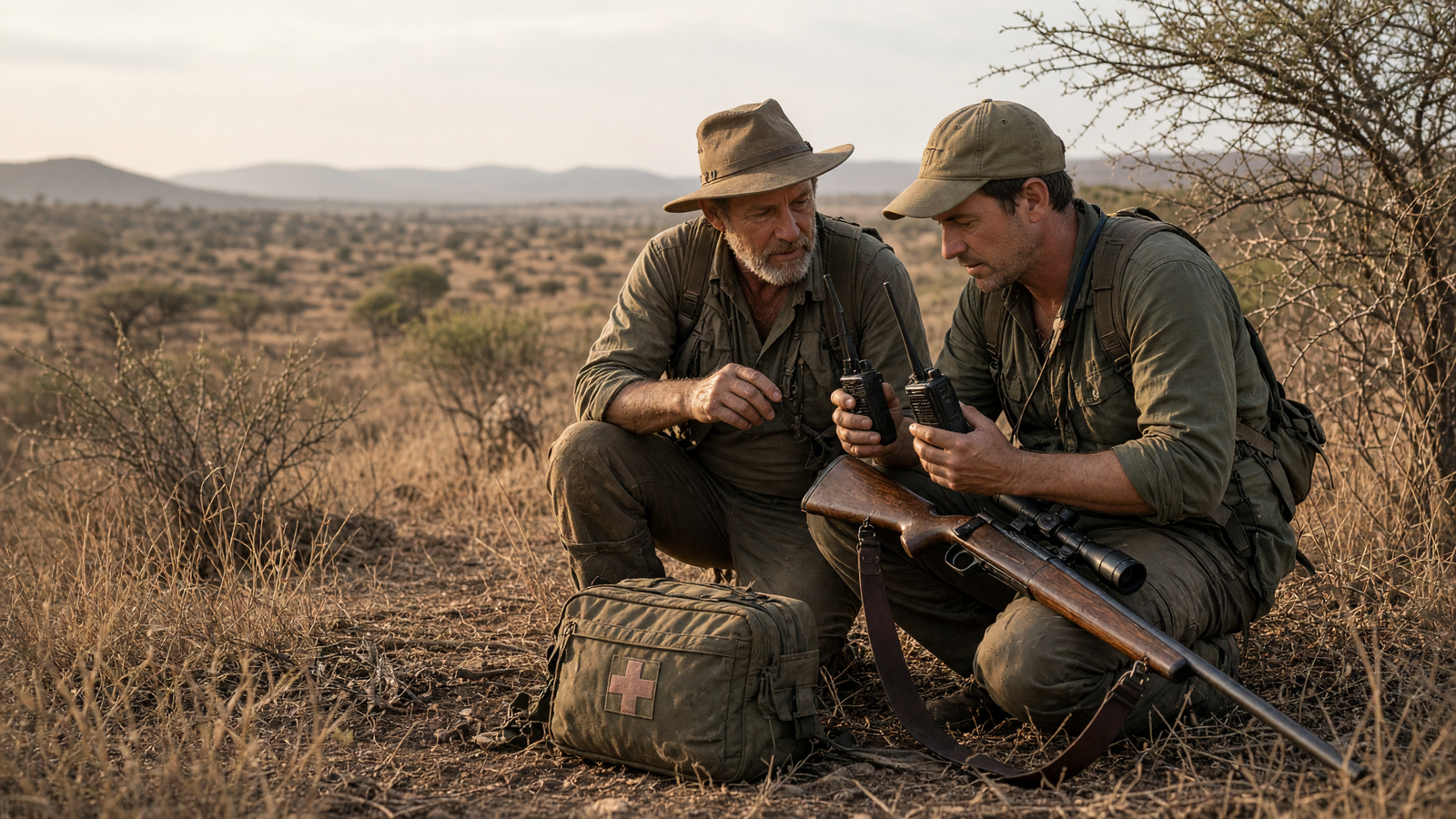
Communication equipment is non-negotiable where mobile coverage is patchy or absent. Carry a satellite communicator or personal locator beacon capable of two-way messaging and SOS functions; these devices have become standard for hunters operating far from towns in Namibia, Botswana and the more remote corners of Zimbabwe and Zambia. Two-way radios keep hunting partners and trackers in contact when spreading out to glass for springbok on open plains or coordinating movement through thick nyala bush. Keep a fully charged cell phone in a waterproof case for those brief moments when you crest a ridge near a lodge or main road and pick up signal. An emergency whistle and a signal mirror remain simple, reliable tools for attracting aircraft or distant vehicles across the open Highveld or the featureless expanses of the Kalahari.
Navigation skills separate prepared hunters from those who become statistics. A GPS unit with extra batteries or a charged power bank is essential, yet always carry paper maps and a magnetic compass as backup—electronics fail in fine Kalahari dust, extreme heat or after immersion in a seasonal swamp. Mark your vehicle and camp location in the GPS the moment you stop, especially when hunting the rolling dunes and pans of the Kalahari or the uniform mopane woodland of the Lowveld where one ridge looks much like another. Practice with your navigation tools before the trip. Knowing how to triangulate position from visible landmarks such as distinctive koppies, windmills or dry river courses can mean the difference between a short walk back to the bakkie and a dangerous night exposed to the elements. Many professional hunters in Zimbabwe, Zambia and Mozambique expect clients to understand basic map reading before walking after sable or following a blood trail on buffalo.
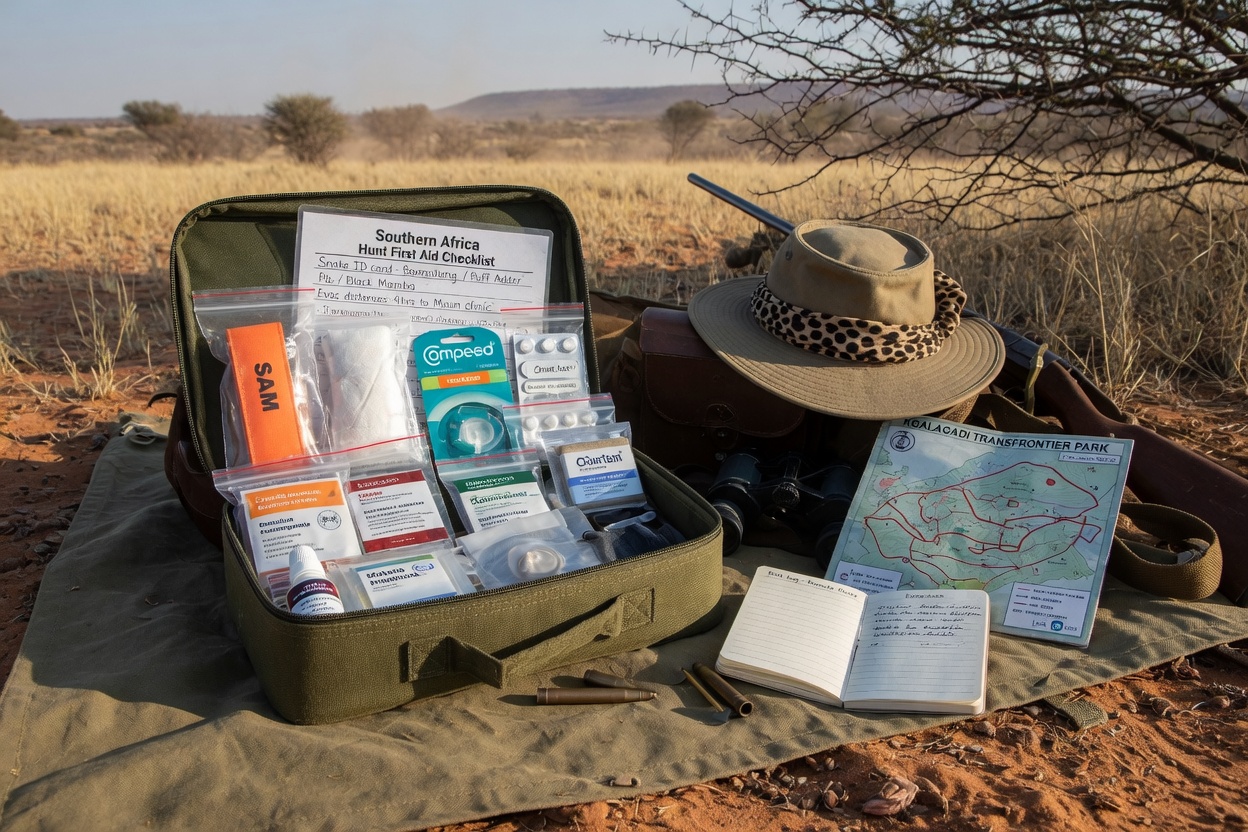
Emergency preparedness must match African bush realities. Complete a recognised first-aid course and carry a comprehensive kit stocked for snakebite—puff adders, black mambas and boomslangs occur across the region—deep lacerations from thorns or horns, fractures and trauma. Emergency shelter materials, including a space blanket and lightweight bivvy bag, can keep you alive if darkness forces you to spend a night out while following gemsbok or buffalo. Water purification tablets or a reliable filter are vital; even clear-looking pans and river pools in the Okavango fringes, Zambezi valley or Limpopo system can carry pathogens. Pack high-energy emergency food that will not spoil in extreme heat, and keep fire-starting materials in a waterproof container. The ability to light a signal fire or warm yourself during a surprisingly cold desert night is fundamental.
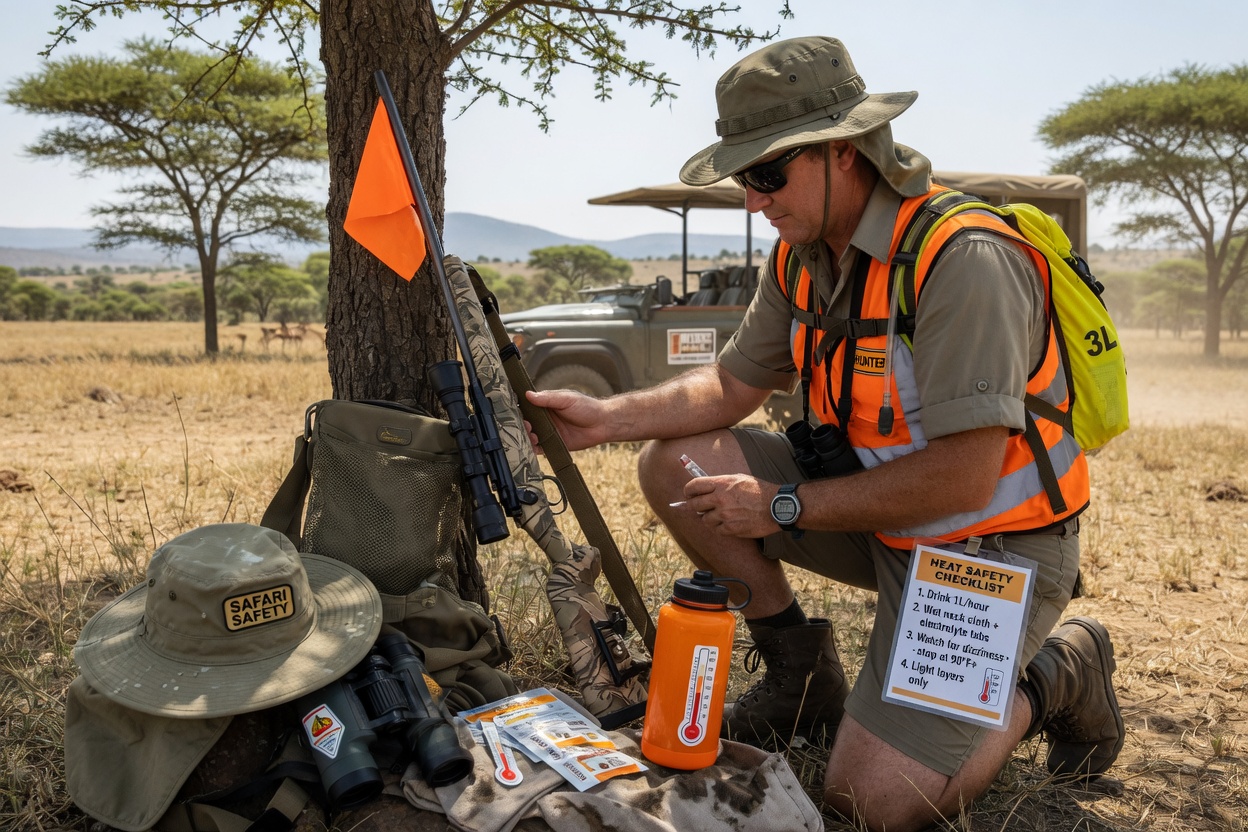
Weather awareness in southern Africa requires understanding rapid local shifts. Check forecasts several times before leaving, but also learn the signs on the ground: towering cumulonimbus over the Highveld often mean violent afternoon thunderstorms that can flood dry dongas in minutes; a sudden temperature drop and rising wind in the Karoo or Namib frequently precede dangerous dust storms that reduce visibility to metres. Know the symptoms of hypothermia, which can strike even in arid regions after sunset when temperatures plummet, and of heat exhaustion and heat stroke, constant threats when stalking impala or wildebeest under the midday Lowveld sun. Plan escape routes to solid shade, rocky overhangs or the vehicle for severe weather, and dress in layers of moisture-wicking clothing that protect against both intense sun and the sharp evening chill. A wide-brimmed hat, long sleeves, sturdy thorn-resistant trousers and broken-in boots are safety equipment as much as comfort items.
Medical considerations go beyond the kit itself. Carry all prescription medications with extras, sealed against heat and fine dust, and ensure your professional hunter knows about any condition that could become critical far from a clinic in places such as Maun, Katima Mulilo, Skukuza or Hwange. Be competent in basic first aid for cuts, sprains and the puncture wounds common when pushing through wait-a-bit thorn after kudu. Recognise the signs of serious emergencies including cardiac events, severe allergic reactions, and the progression of snake or scorpion envenomation. Discuss a clear evacuation plan with your outfitter in advance—many southern African operations maintain relationships with air-ambulance services and know the nearest usable airstrips and roadheads for casevac. Wilderness first-aid training that addresses African conditions is strongly recommended for anyone hunting semi-independently or in very remote concessions.
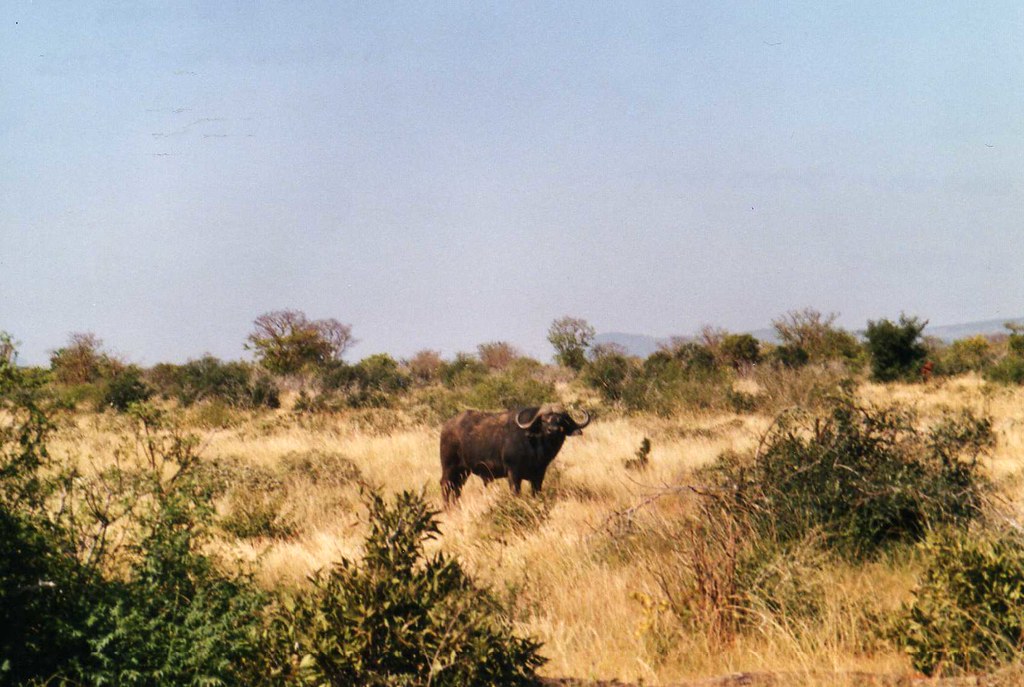
Regulations and paperwork form part of operational safety. Ensure hunting licences, species permits, firearm import documentation and any CITES paperwork are fully in order before you leave civilisation; being delayed or stranded by a compliance issue in a remote area multiplies every other risk. Respect closed seasons, quota limits and sex or age restrictions that protect breeding populations of sable, roan, eland and other species. Where the law requires it—in Botswana, Zambia, Zimbabwe, Mozambique and many South African contexts—hunt only under a licensed professional hunter and follow their instructions without argument when they call off a stalk for safety reasons, particularly around dangerous game such as buffalo.
The foundation of safe remote hunting across southern Africa is redundancy. Maintain backup plans for your backup plans: a second means of communication, spare navigation methods, extra water capacity and a shared understanding with your outfitter about contingency procedures. Whether you are glassing for gemsbok along ancient riverbeds, tracking eland through the Central Kalahari, sitting over a waterhole in the Eastern Cape or walking the thickets of the Zambezi valley for nyala, disciplined preparation and respect for the bush keep both hunters and the wildlife they pursue safer. Treat every remote hunt as a serious undertaking and you will return with lasting trophies and memories rather than avoidable injuries or worse.