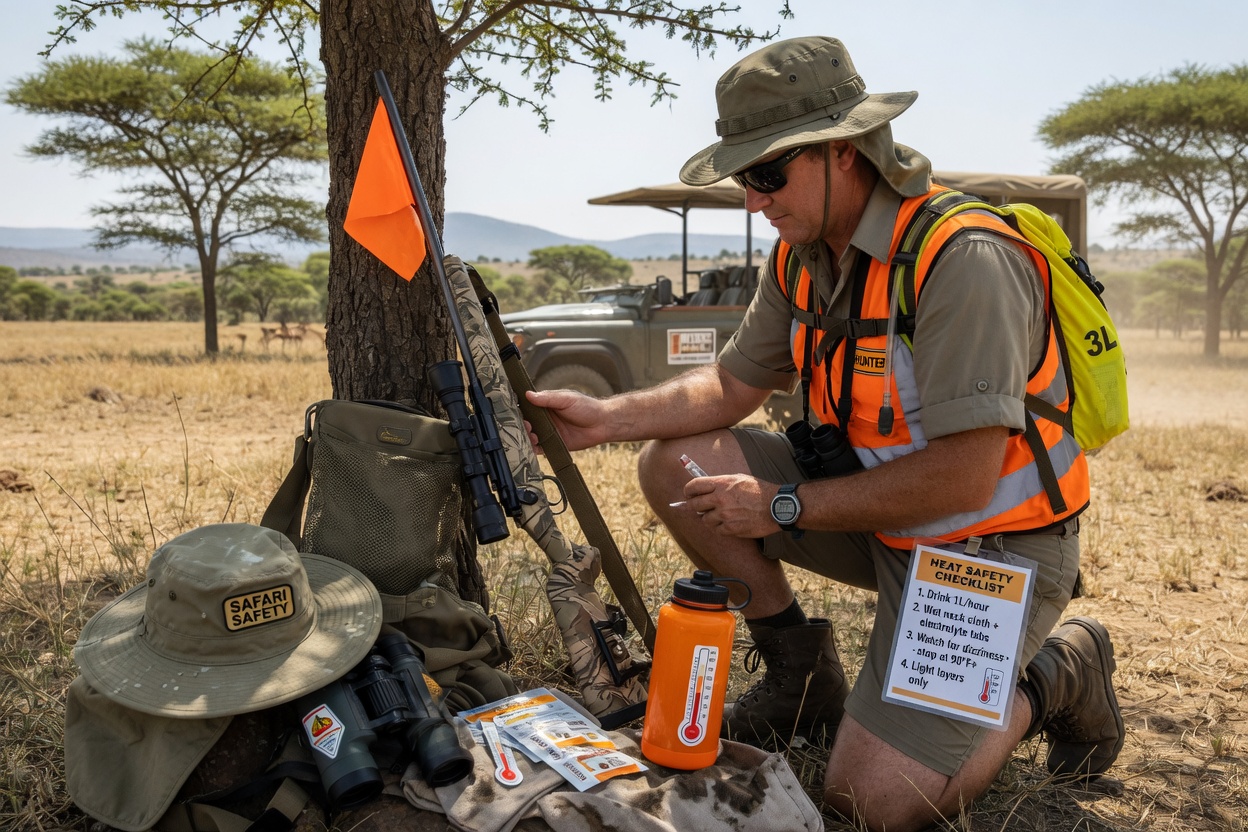
The allure of a summer safari hunt draws countless beginners to the African bush each year. Imagine stalking impala through golden grasslands as the sun climbs, or waiting in a hide as temperatures push past 100 degrees Fahrenheit. That excitement is real, but so is the danger of heat exhaustion. This heat-related illness sneaks up on even seasoned hunters when physical effort meets extreme conditions. For those new to safari hunting, understanding prevention is not optional. It is the difference between a successful, ethical hunt and a medical emergency in a remote area.
Heat exhaustion happens when your body overheats and cannot cool itself effectively. The Centers for Disease Control and Prevention notes that it typically follows prolonged exposure to high temperatures combined with humidity and strenuous activity. Symptoms include heavy sweating, weakness, dizziness, nausea, headache, and muscle cramps. If ignored, it can progress to heat stroke, a life-threatening condition where the body temperature exceeds 104 degrees and cooling mechanisms fail. Recent data from climate monitoring groups show that average summer temperatures in popular safari destinations like South Africa, Namibia, and Tanzania have risen by 1 to 2 degrees Celsius over the past two decades. This shift, driven by broader climate patterns, makes traditional hunting windows hotter and more unpredictable. Hunters now face longer periods of intense heat, increasing the risk for those unprepared.
Safari hunts amplify these risks in ways that backyard or woodland hunts do not. You cover miles on foot while carrying a rifle, binoculars, and water, often at elevations or in open terrain with little shade. The physical demand of tracking game, combined with the adrenaline of the chase, can mask early warning signs. Professional hunters, or PHs, set a fast pace because animals move during cooler hours, but beginners may not yet have the fitness or acclimatization to keep up. Dust, dry air, and limited access to immediate medical care compound the problem. I have guided many first-time safari clients over the years, and the ones who struggled most were those who treated the hunt like a casual hike. One young hunter from the Midwest arrived eager but dehydrated after a long flight. By midday on day two, he was cramping and lightheaded. We pulled him from the field, cooled him in the shade, and he recovered, but it cut his hunt short. That experience taught me that preparation starts long before you board the plane.
Prevention begins with hydration, the single most important factor. Drink water consistently, aiming for at least one liter per hour of activity in extreme heat. Do not wait until you feel thirsty, as thirst is a late signal. Include electrolyte drinks or tablets to replace sodium and potassium lost through sweat. The American College of Sports Medicine recommends this approach for endurance activities in heat, and hunting qualifies. Pack a hydration bladder in your daypack so you can sip without stopping. Avoid alcohol and excessive caffeine the night before and during the hunt, as both dehydrate you. Eat light, frequent meals rich in fruits and vegetables rather than heavy proteins that require more energy to digest.
Clothing and gear choices matter just as much. Wear lightweight, loose-fitting, light-colored clothing made from moisture-wicking fabrics. A wide-brimmed hat and UV-protective sunglasses reduce heat absorption and protect your eyes from glare. Many modern safari shirts now include built-in sun protection and ventilation panels, a recent improvement over traditional cotton that stays wet and heavy. Apply broad-spectrum sunscreen every two hours, even on cloudy days, because sunburn impairs your body's ability to regulate temperature. Carry a cooling towel that you can soak and drape around your neck. These simple items have become standard in outfitter kits over the last five years as awareness of heat illness has grown.
Timing your activity is another proven strategy. Most successful summer safari hunts happen in the early morning and late afternoon when animals are active and temperatures are lower. Plan to rest in camp or a shaded hide during the peak heat of midday, typically from 11 a.m. to 3 p.m. This schedule aligns with both animal behavior and human physiology. If your PH suggests pushing through, speak up. Ethical hunting includes knowing your limits. Acclimatize by arriving a few days early if possible. Spend time outdoors in similar heat before the hunt to let your body adjust. Studies on military personnel and outdoor workers show that even three to five days of gradual exposure can improve heat tolerance significantly.
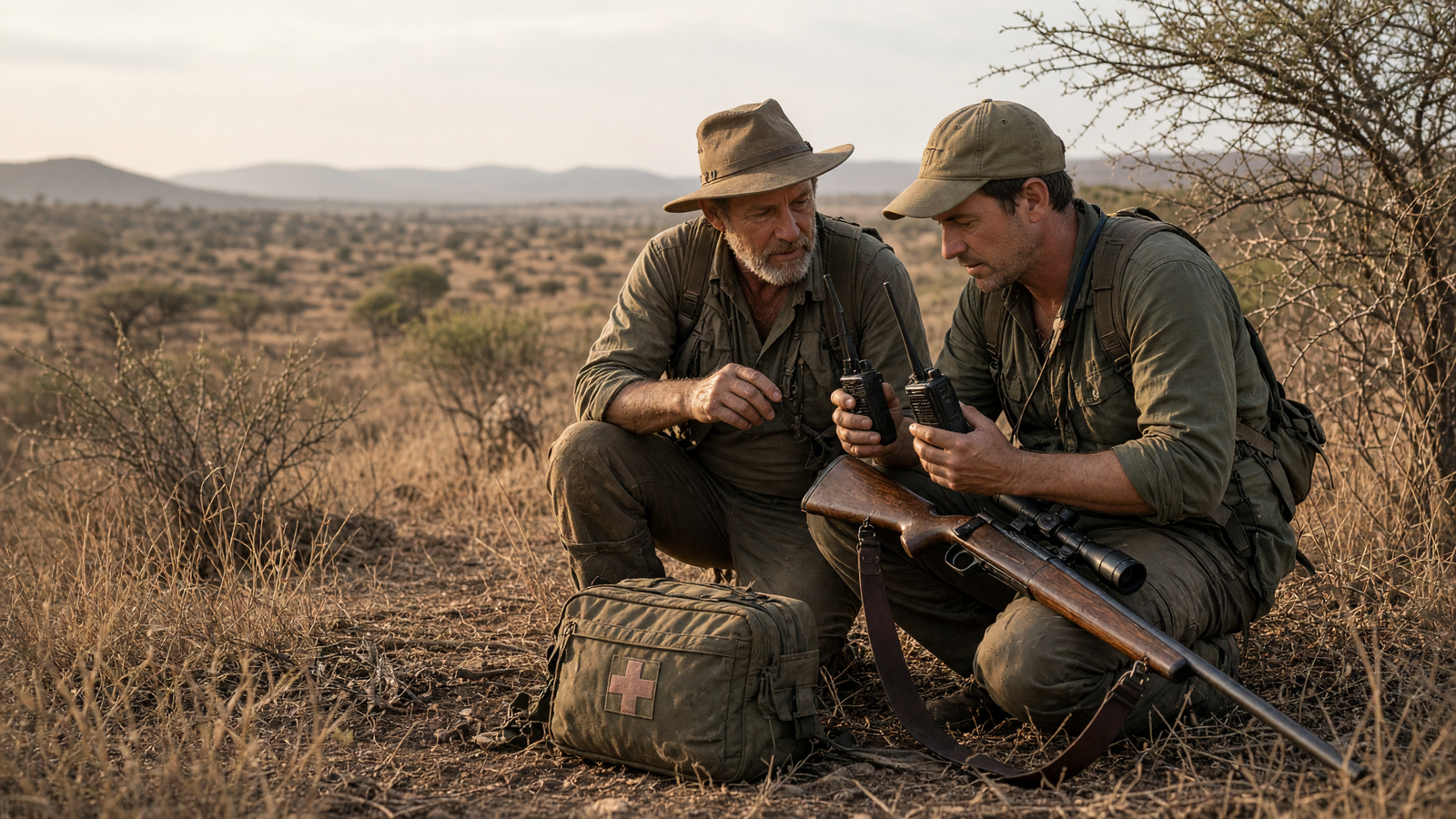
Physical preparation cannot be overlooked. Beginners should start a fitness routine months in advance that includes cardio, strength training, and hiking with a loaded pack. Focus on building endurance rather than just muscle. Consult a doctor before any intense program, especially if you have underlying conditions. On the hunt, use the buddy system. Watch your partner for signs of distress and communicate openly about how you feel. Many outfitters now include basic heat illness training in pre-hunt briefings, a positive development that reflects greater emphasis on hunter safety.
Recognizing symptoms early saves lives. If you or a companion experience heavy sweating that suddenly stops, confusion, rapid pulse, or vomiting, act immediately. Move to shade, loosen clothing, apply cool water to the skin, and fan the person. Have them sip water or an electrolyte solution if they are conscious. Elevate the legs slightly. In remote safari settings, contact your PH or use a satellite communicator to arrange evacuation if symptoms worsen. Do not attempt to continue hunting. Heat exhaustion requires rest and recovery, often 24 hours or more. Ignoring it endangers not only the hunter but the entire party and can lead to cancelled hunts or worse.
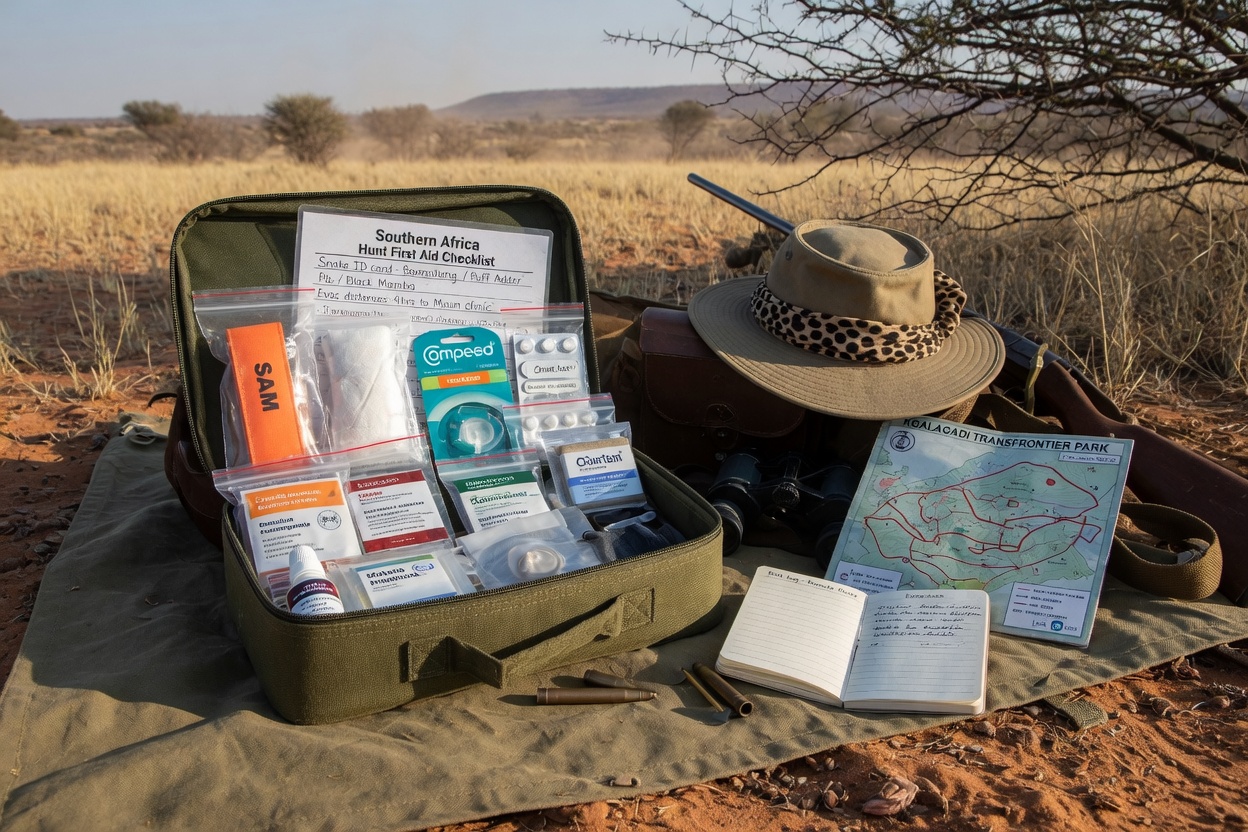
Additional tips for beginners include packing a small first-aid kit with oral rehydration salts and knowing the location of the nearest clinic. Inform your outfitter of any medications you take, as some increase heat sensitivity. Respect the wildlife and the land by hunting ethically. Pushing yourself to the point of collapse does not honor the animal or the conservation principles that make safari hunting sustainable. Many African countries reinvest hunting fees into habitat protection and anti-poaching, so staying healthy keeps you contributing to that cycle.
Summer safari hunts offer unforgettable experiences when approached with respect for both the environment and your own body. Heat exhaustion is preventable with knowledge, preparation, and smart decisions. Start planning your hydration strategy, gear list, and fitness now. Talk to experienced hunters, read recent outfitter reports, and consider a wilderness first-aid course. The African bush rewards those who come ready. If you are considering your first safari, reach out to reputable operators who prioritize safety briefings and have protocols for heat-related issues. Your hunt should create lasting memories of skill and conservation, not a cautionary tale. Stay cool, hunt ethically, and come home with stories worth telling.