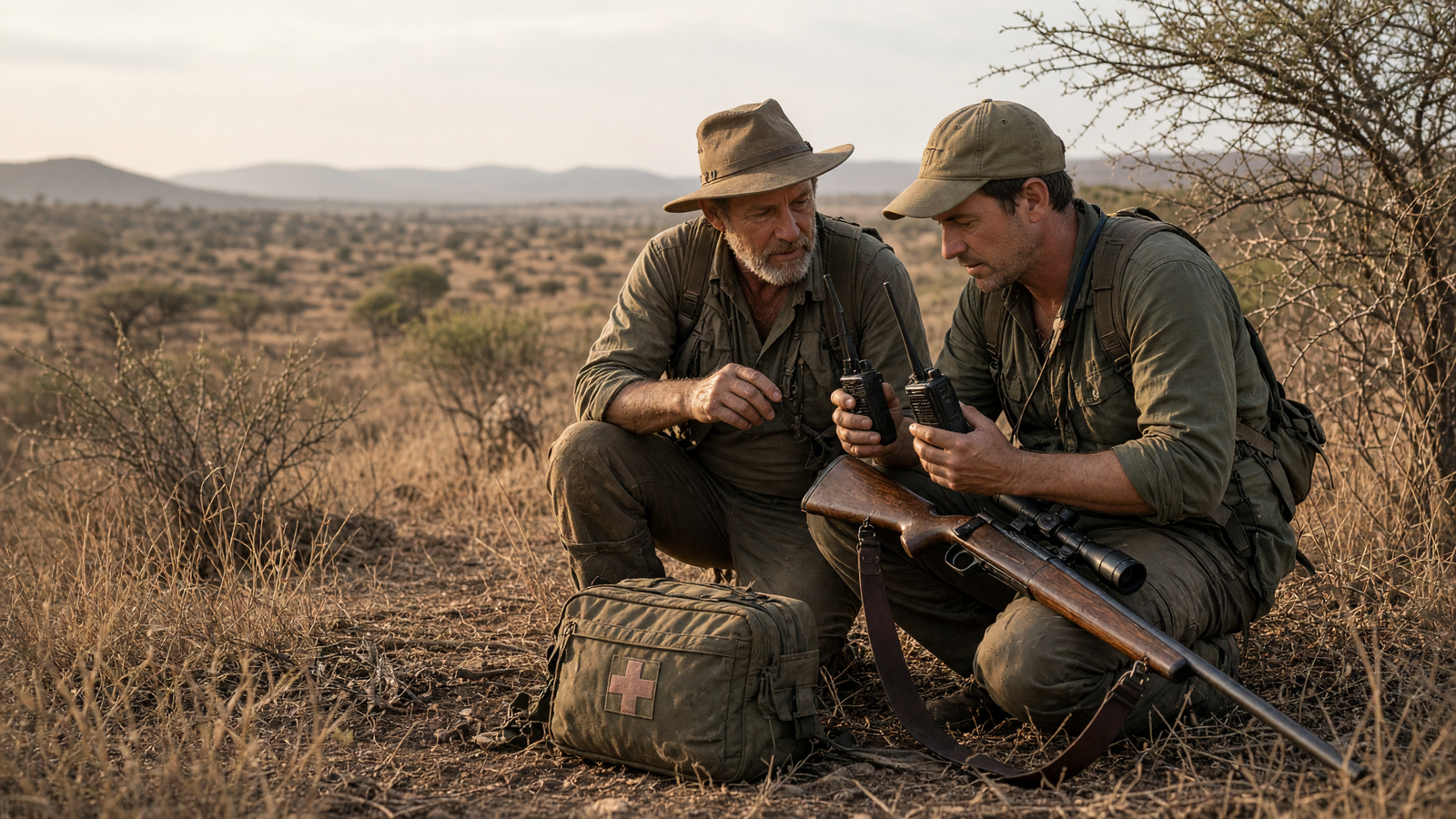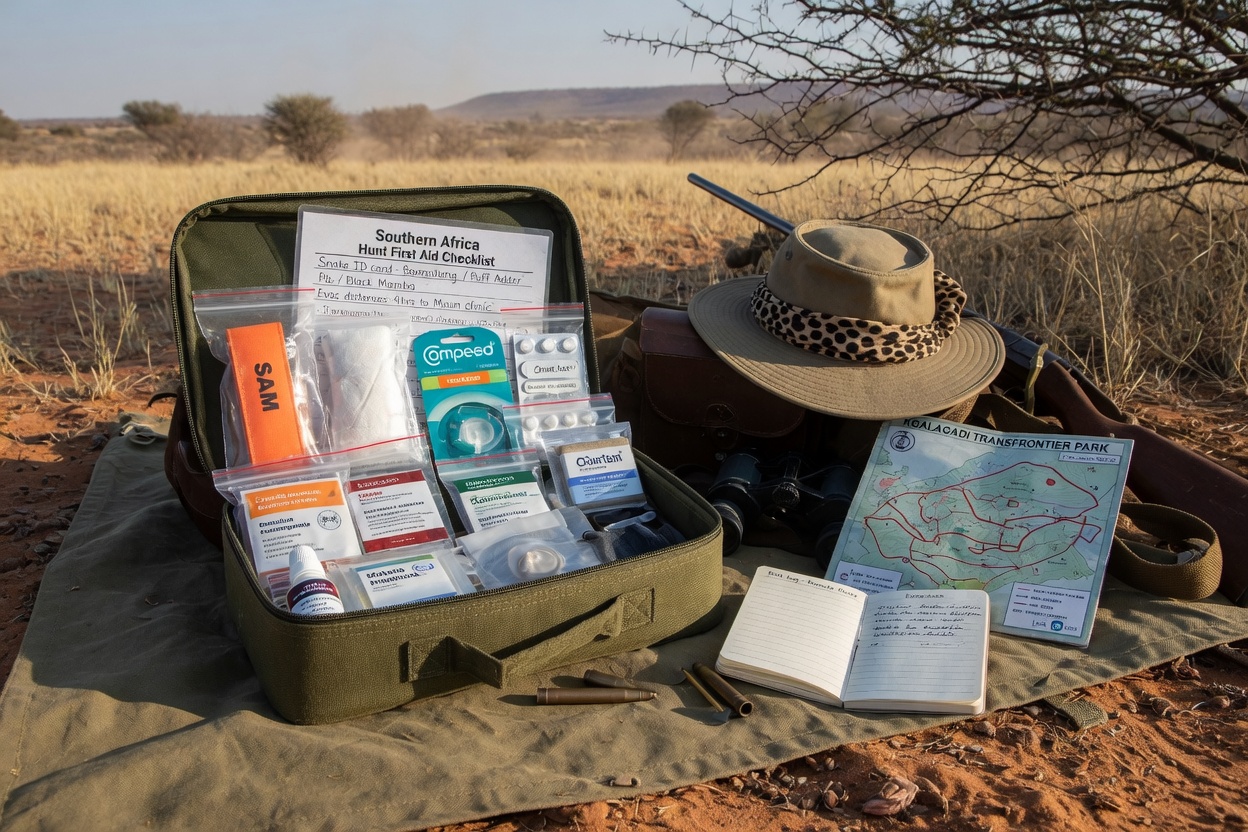
Heading into the remote bush of Southern Africa for your first hunt is an unforgettable experience. The wide-open landscapes of Namibia, Botswana, South Africa, Zimbabwe and Zambia deliver world-class plains game and dangerous game opportunities that few other places on earth can match. Yet these same areas are genuinely remote. The nearest clinic or hospital can easily be four, six or even twelve hours away by vehicle, and weather or terrain can stretch that timeline further. For beginner hunters this reality makes a well-planned first aid kit one of the most important pieces of equipment you will pack.
Ethical hunting and conservation go hand in hand with personal responsibility. A hunter who stays safe is a hunter who can continue to contribute to wildlife management through licensed, regulated hunting. Accidents do happen: a twisted ankle on rocky koppie, a deep cut from a skinning knife, heat exhaustion under a 40-degree sun, or the far rarer but serious encounter with a venomous snake. Wilderness medicine research consistently shows that the first 30 to 60 minutes after an injury often determine the outcome when professional help is delayed. This guide gives beginners a clear, practical roadmap for assembling and using a first aid kit tailored to Southern African conditions.
Southern Africa presents a distinct set of medical risks that differ from a typical North American or European hunt. Venomous snakes are a genuine concern. The region is home to puff adders, which account for the majority of bites because of their excellent camouflage, as well as Cape cobras, black mambas and boomslangs. Modern snakebite protocol, supported by the South African Snakebite Institute and international wilderness medicine bodies, emphasises rapid evacuation, limb immobilisation and keeping the patient calm. Outdated methods such as cutting, sucking or applying a tight arterial tourniquet are no longer recommended and can cause additional harm.
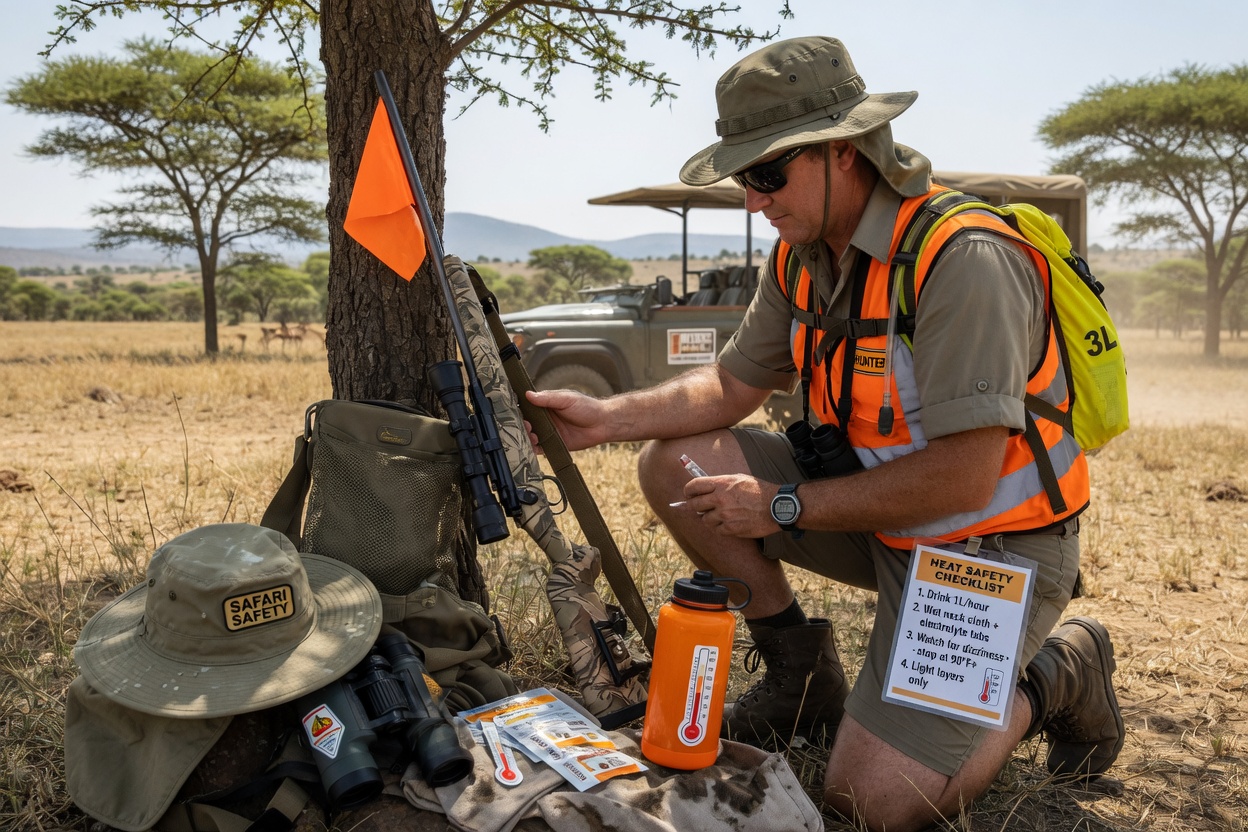
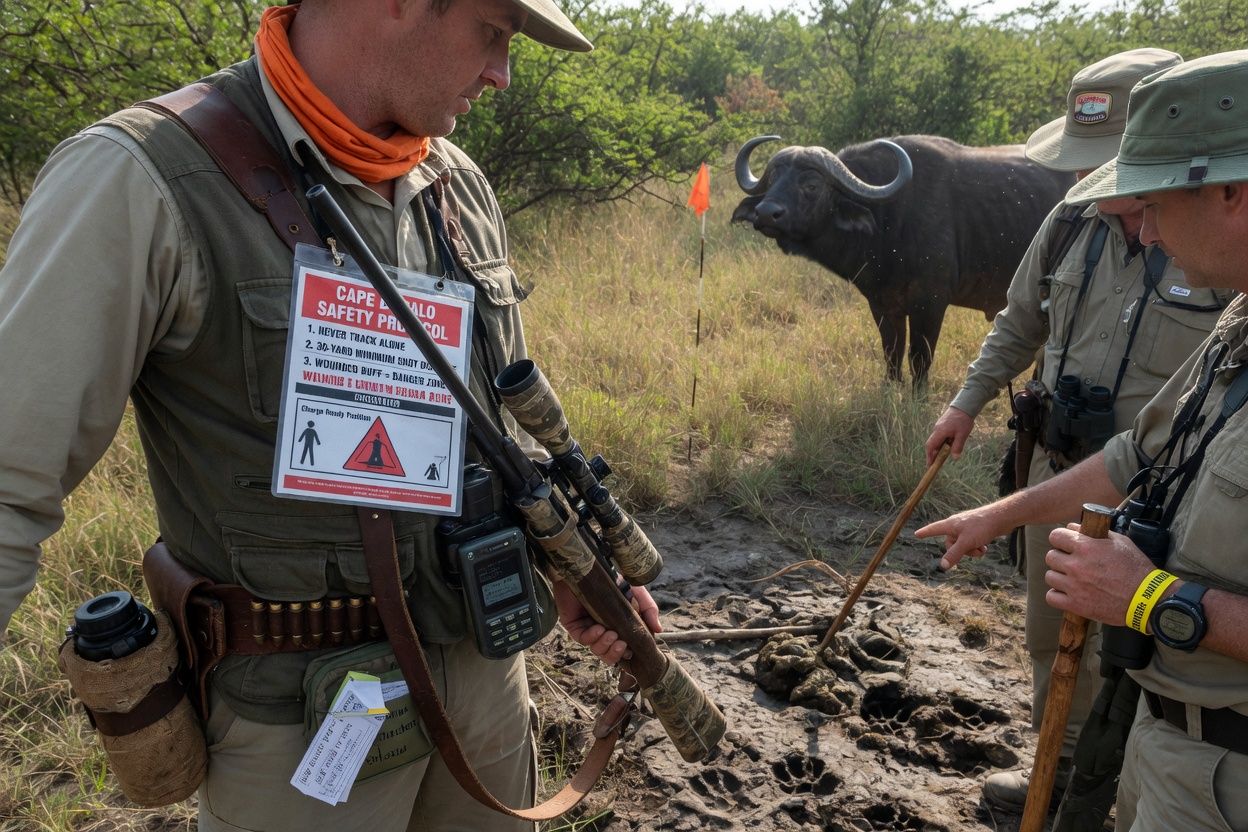
Heat-related illness is another major factor. Daytime temperatures regularly exceed 35 °C and can climb past 40 °C in the Kalahari or Lowveld. Dehydration, heat exhaustion and heat stroke develop quickly when hunters are walking long distances in thick clothing. Insect-borne threats include malaria in certain northern and eastern areas, African tick-bite fever throughout much of the bushveld, and tsetse flies in parts of Botswana and Zimbabwe. Ticks, scorpions and spiders add further minor but uncomfortable risks. Trauma from slips, vehicle incidents or, very occasionally, dangerous game must also be anticipated. Finally, because HIV prevalence remains significant in parts of the region, any first-aid response that involves blood requires proper barrier protection.
A solid kit therefore needs both everyday supplies and items that address these specific African realities. Start with a comprehensive trauma section. Include a commercial tourniquet such as the CAT or SOF-T, which military and wilderness studies have shown to be highly effective at stopping life-threatening limb bleeding. Add several Israeli emergency bandages or equivalent trauma dressings, haemostatic gauze (QuikClot or Celox), a pair of chest seals, a SAM splint, triangular bandages and plenty of sterile gauze and tape. Nitrile gloves (at least four pairs), trauma shears, a CPR face shield and a permanent marker for noting tourniquet time complete the critical-care core.
General wound care comes next: assorted adhesive bandages, blister treatment (moleskin or specialised patches), antiseptic wipes or solution, antibiotic ointment, sterile saline for irrigation, and tweezers for tick or splinter removal. A digital thermometer, oral rehydration salts, and a compact emergency blanket are inexpensive additions that prove their worth in the heat.
Medications should be chosen after a consultation with a travel-medicine doctor. Over-the-counter items typically include ibuprofen or paracetamol for pain and inflammation, a non-sedating antihistamine for bites and stings, loperamide for travellers’ diarrhoea, and hydrocortisone cream. If you will be in a malaria area your doctor may prescribe prophylaxis plus a standby treatment course. Carry any personal prescription medicines in original packaging together with a copy of the prescription. Many outfitters also recommend a broad-spectrum antibiotic for serious wounds or gastrointestinal illness, but this must be prescribed individually.
For snake and arthropod incidents pack several wide crepe or elastic compression bandages (the pressure-immobilisation technique is still advised for elapid bites such as mamba or cobra), a pen to mark the bite site and time, and a compact snakebite information card. High-SPF sunscreen, lip balm and a quality insect repellent containing DEET or picaridin belong in every kit. A small bottle of hand sanitiser and extra nitrile gloves address hygiene and blood-borne pathogen concerns.
Organisation matters as much as contents. Use a durable, water-resistant bag with clear internal pouches so you can find items by feel in low light. Keep a small “grab-and-go” pouch containing a tourniquet, gloves, trauma dressing and gloves on your person or in your daypack. The main kit can stay in the hunting vehicle or at camp. Check expiry dates before every trip and replace anything that has been used. Practise opening and applying the key items at home so that muscle memory takes over if you are under stress.
No kit is useful if you do not know how to employ it. Beginners should complete at least a basic first-aid course and, ideally, a wilderness first-aid or wilderness first-responder programme. These courses teach patient assessment, bleeding control, fracture management and evacuation decision-making in settings without immediate ambulance support. Many professional hunters in Southern Africa hold such qualifications, yet you remain responsible for your own safety and that of your companions. Discuss medical protocols with your outfitter well before arrival; reputable operators carry extensive camp kits and have established evacuation plans, including helicopter options in some concessions.
Additional practical steps include registering with your country’s embassy, carrying comprehensive travel insurance that covers emergency evacuation, and ensuring someone at home has your detailed itinerary. A satellite communicator such as a Garmin inReach is not part of the first-aid kit itself but dramatically shortens the time until help arrives. Always inform your professional hunter of any pre-existing medical conditions.
Building this level of preparation does more than protect you. It demonstrates respect for the wild places and the wildlife we hunt. Conservation hunting depends on hunters who return home safely and continue to support habitat protection and anti-poaching efforts. A well-stocked, well-understood first-aid kit is a tangible expression of that commitment.
Start today. Sit down with a checklist, visit a reputable outdoor or medical supplier, and book a wilderness first-aid course. Talk to your doctor about travel vaccinations and malaria risk for your specific destination. When you finally step off the plane in Johannesburg, Windhoek or Maun you will do so with the quiet confidence that comes from being properly prepared. Hunt hard, hunt ethically, and come home safe.