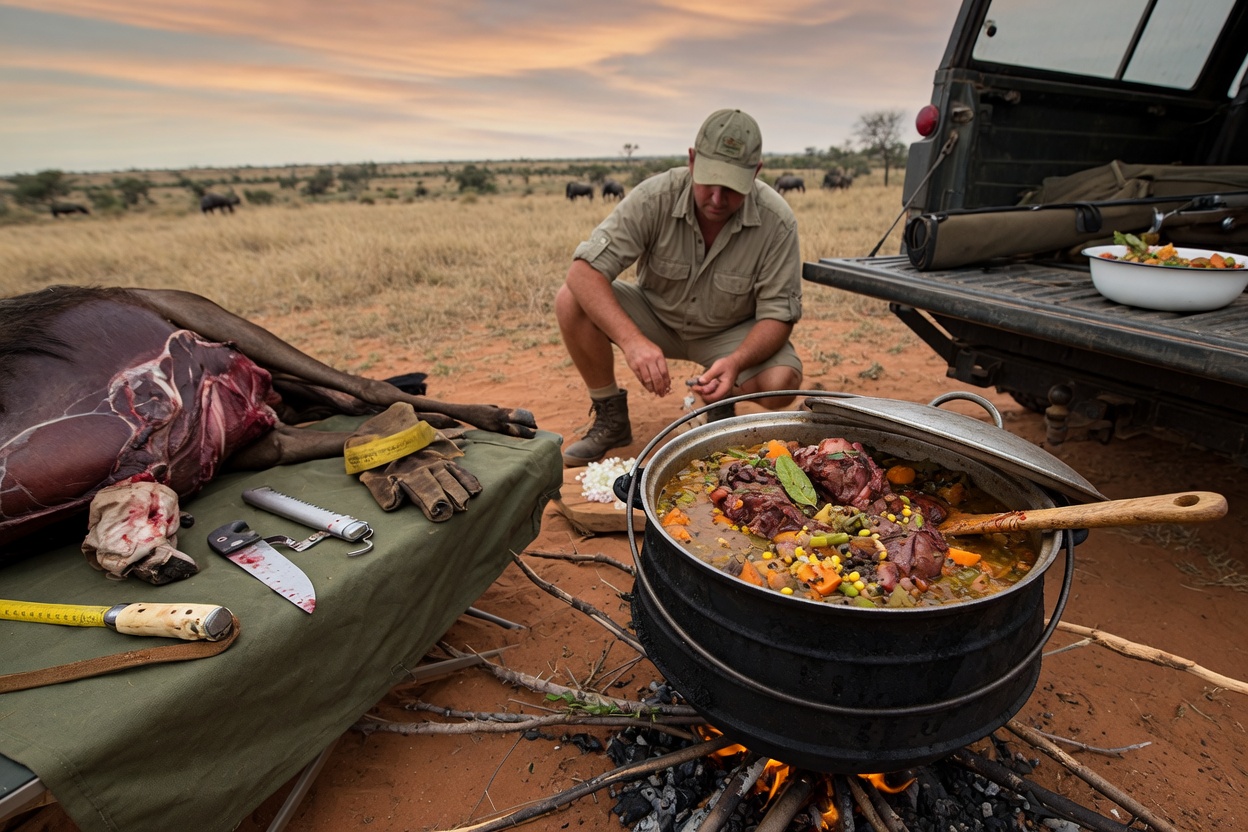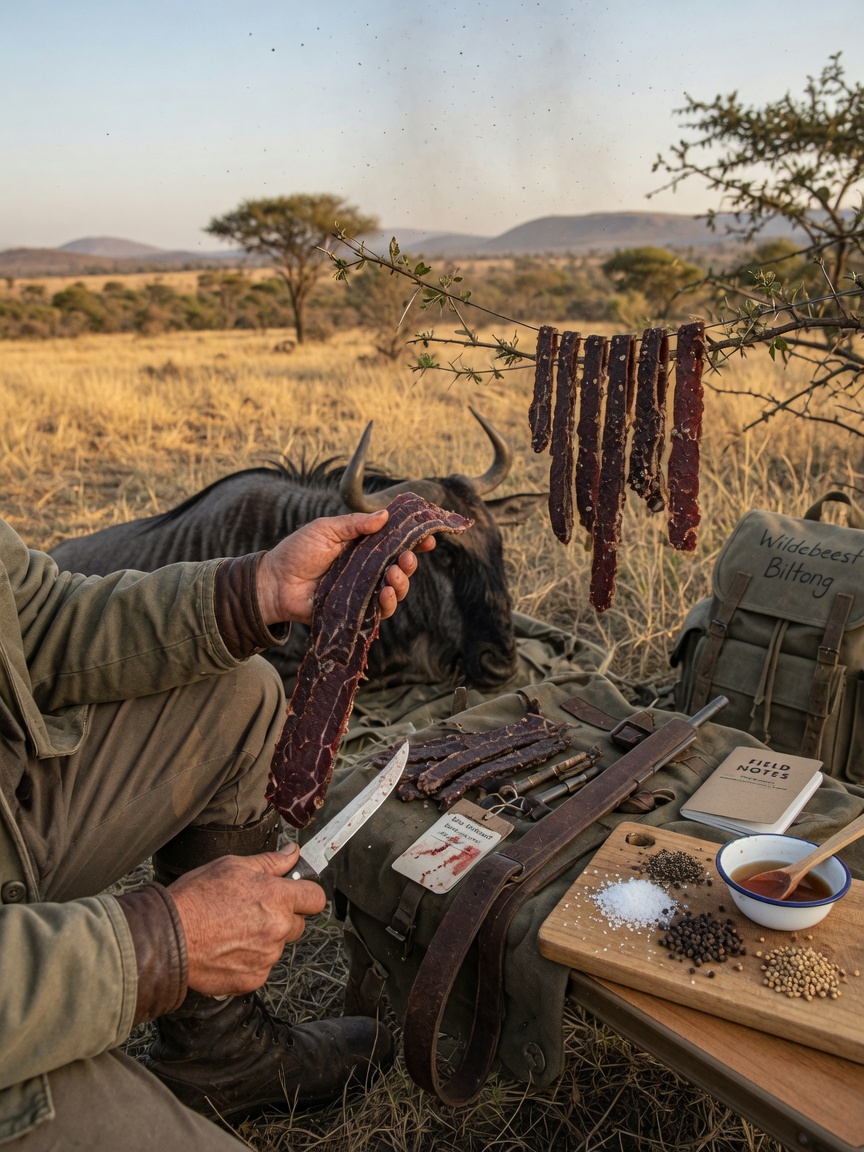
There is a special satisfaction that comes from a well-executed hunt on the African plains, and few animals deliver that feeling quite like the blue wildebeest. These hardy antelope roam the savannas in large herds, offering hunters a true test of skill and patience. Once the shot is placed and the animal is down, the real work of honoring that harvest begins. Turning a blue wildebeest into premium biltong is one of the finest ways to do exactly that. Biltong is more than just dried meat. It is a South African tradition that stretches back centuries, a method that preserves lean game while concentrating its rich, beef-like flavor into something truly special. For hunters, making your own biltong from a wildebeest you harvested yourself connects you directly to the land, the animal, and a time-tested craft.
Blue wildebeest meat stands out for biltong because it is exceptionally lean, typically containing only two to three percent fat, and packed with protein and iron. The flavor sits somewhere between good beef and classic venison, with a mild game note that takes spices beautifully. Mature bulls can yield a substantial amount of usable meat from the hindquarters and back, enough to keep a family in high-quality snacks for months. Because these animals are abundant in many southern African hunting areas, they represent a sustainable choice when taken under proper quotas. Wildlife managers have long recognized that regulated hunting of wildebeest helps prevent overgrazing and supports healthy grassland ecosystems. License fees and hunting revenues also fund anti-poaching efforts and habitat protection, making every ethical harvest part of a larger conservation story.
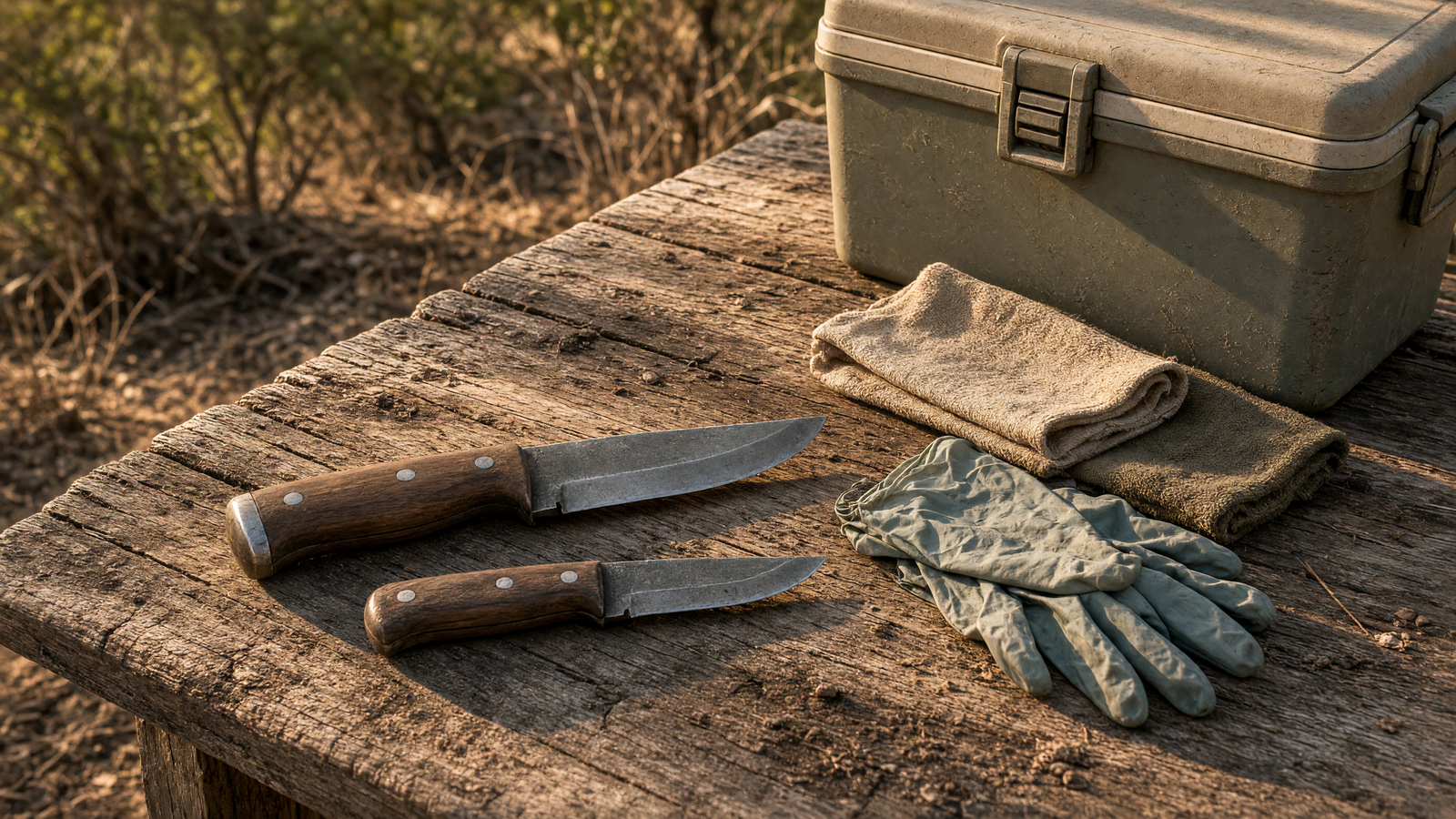
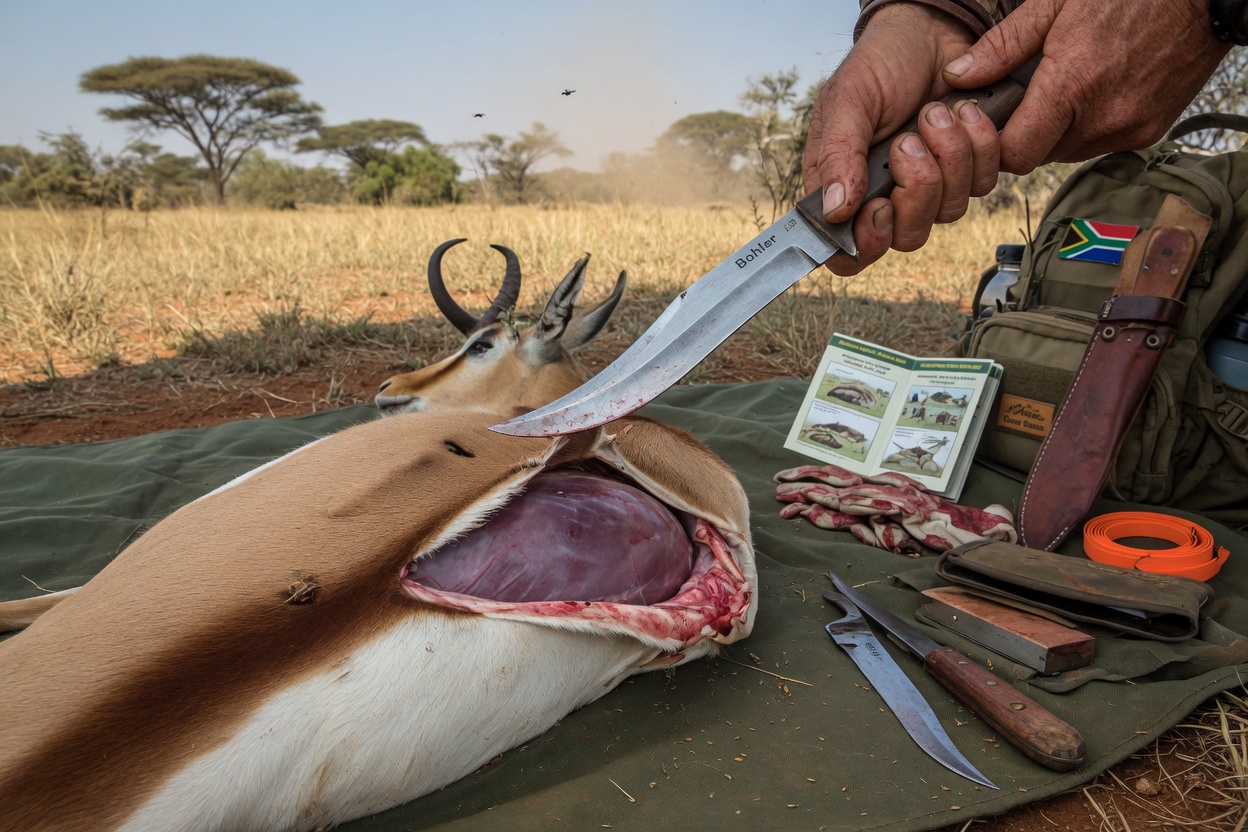
The process starts in the field the moment the animal is down. Immediate and careful handling is non-negotiable in the African heat. Bleed the carcass thoroughly, then eviscerate it as quickly as possible to drop the internal temperature. Keep the meat clean and get it into shade or a cooler without delay. Many experienced hunters hang the quarters overnight in a well-ventilated spot or use ice if available. Rapid cooling prevents bacterial growth and keeps the meat from taking on off-flavors. Once back at camp or the lodge, the butchering begins. Focus on the large, lean muscles of the hind legs: the silverside, topside, and rump. These cuts produce the long, even strips that dry uniformly. Trim away every bit of fat, silverskin, and connective tissue. Fat does not dry well and can turn rancid, so take your time here. A sharp knife and a clean workspace make all the difference.
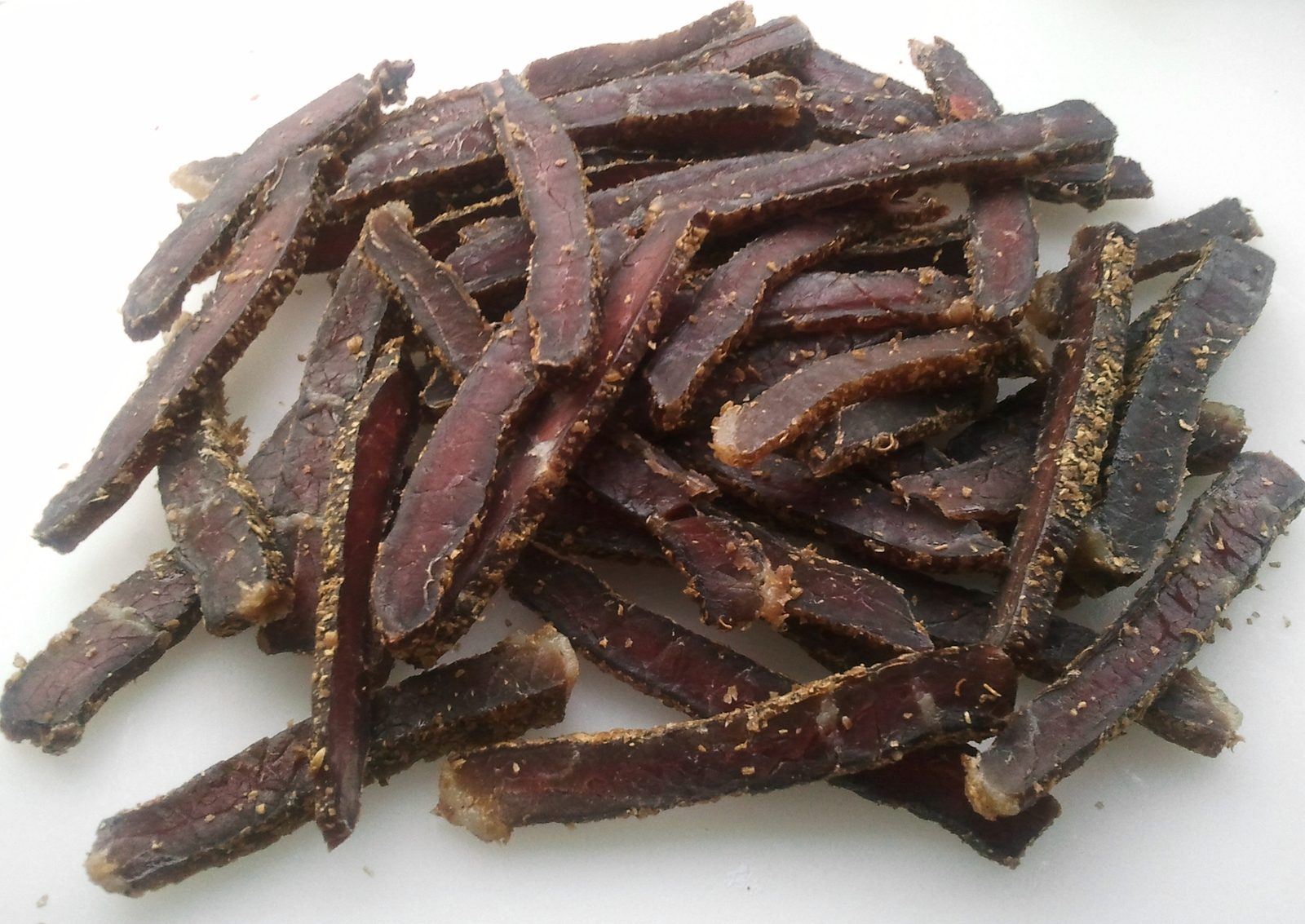
Slice the trimmed meat with the grain into strips roughly one to two centimeters thick and twenty to thirty centimeters long. Cutting with the grain gives biltong its characteristic chew, quite different from the across-the-grain texture of American jerky. Some hunters prefer slightly thicker pieces for a moister finished product. At this stage hygiene is critical. Wash your hands, sanitize surfaces, and work quickly. Traditional biltong relies on salt, vinegar, and drying to keep the meat safe, so starting with clean product is essential.
The classic marinade is simple and effective. Coat the strips generously with brown spirit vinegar or apple cider vinegar. The acidity lowers the pH and acts as a first line of defense against bacteria. Then apply a dry spice mix. A reliable starting point is coarse salt at about two to three percent of the meat weight, a generous amount of toasted and roughly crushed coriander seed, freshly ground black pepper, and a pinch of brown sugar or bicarbonate of soda if you like a touch of sweetness. Some add a little chili, nutmeg, or cloves for personal taste. Rub the spices in thoroughly, then let the meat rest in a non-reactive container for several hours or overnight in a cool place. The vinegar and salt begin drawing out moisture while the spices penetrate.
Drying is where patience pays off. Traditional methods hang the strips from hooks or wooden rods in a dry, well-ventilated space out of direct sun. Ideal conditions are temperatures between fifteen and twenty degrees Celsius with moderate humidity and constant airflow. In many camps a simple biltong box fitted with a low-wattage bulb for gentle warmth and a small fan works perfectly. Modern hunters sometimes use purpose-built drying cabinets that give more control. Depending on thickness and conditions, the process takes four to ten days. Check daily. The outside should feel dry and leathery while the inside remains slightly moist if you prefer the popular “wet” style. Fully dry biltong keeps longer but is chewier. Resist the urge to rush it with high heat, which can cook the outside and leave the center unsafe.
A few practical tips from years of making biltong in the bush: always start with the freshest possible meat, never skip the vinegar step, and keep flies away with fine mesh if hanging outdoors. If you are concerned about safety, a small amount of curing salt can be added to the spice mix, though many traditionalists omit it. Once dry, store the finished biltong in a cool, dry place or vacuum-seal it for longer keeping. It will last weeks at room temperature and months in the fridge. Slice it thin just before eating to enjoy the full flavor.
Making biltong from your own blue wildebeest is more than a recipe. It is a way of using every part of the animal with respect and turning a successful hunt into something you can share around the campfire or back home. The process teaches patience, attention to detail, and a deeper appreciation for the wildlife we pursue. When you bite into that first piece of homemade wildebeest biltong, you taste the plains, the hunt, and the tradition all at once.
Hunt ethically, process carefully, and take pride in the food you create. If you have your own tricks for wildebeest biltong or stories from the field, we would love to hear them. Share your experiences and keep the conversation going. Responsible hunters are the best stewards of the game we love.