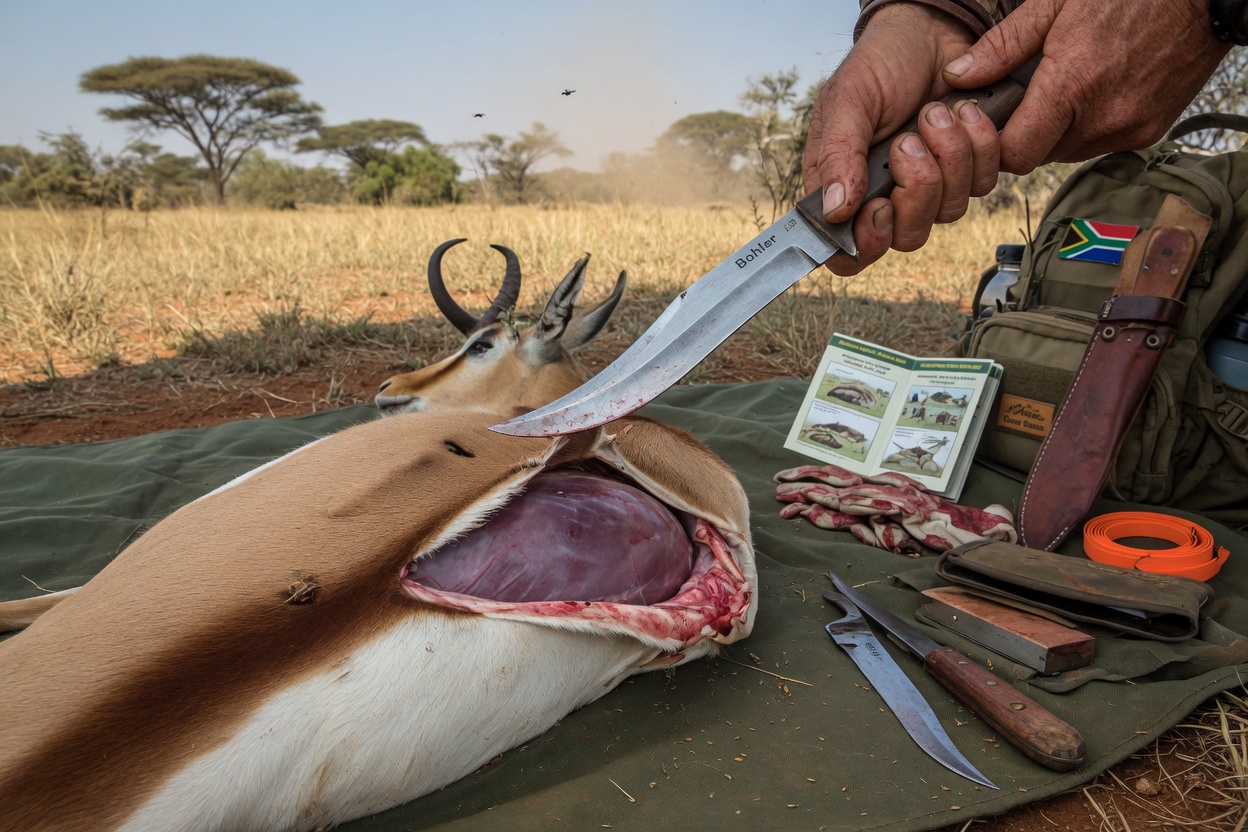
Hunting African plains game ranks among the most rewarding experiences a hunter can have. The vast landscapes of South Africa, Namibia, Zimbabwe and Botswana hold iconic species like kudu, gemsbok, impala, wildebeest and springbok. Yet the shot is only the beginning. What happens next with your knife determines whether you honor the animal, produce quality meat and return home with a story worth telling. In Africa's heat, dust and abundant insects, knife skills are not optional. They are essential for safety, meat quality and ethical hunting.
A sharp, well-chosen knife turns a potentially messy job into efficient, respectful work. Poor technique wastes meat, risks injury and can spoil an entire carcass in hours under the African sun. These skills also connect you more deeply to the hunt. When you process the animal yourself, you gain a fuller appreciation for the life taken and the conservation role hunting plays across the continent.
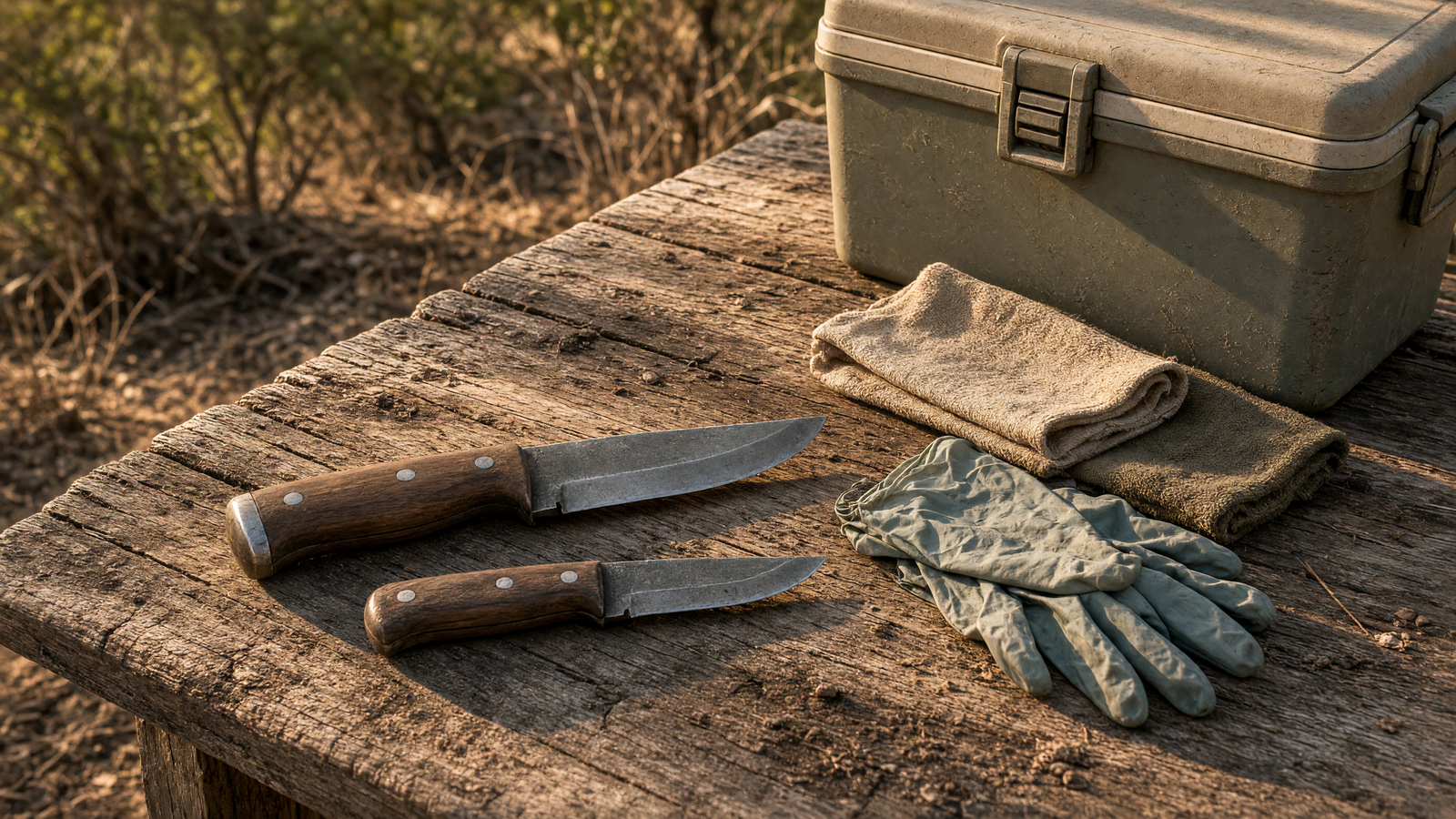
Choosing the right knife starts with understanding African conditions. Fixed-blade knives in the four- to six-inch range serve most plains game well. A drop-point or clip-point blade offers control for both delicate skinning and heavier work around joints. Full-tang construction handles the torque needed on thicker hides like those of gemsbok or eland. Stainless steels such as 440C, VG-10 or modern powder metallurgy options like CPM S30V resist rust in humid or bloody conditions far better than high-carbon steels that demand constant oiling. Many professional hunters in southern Africa now favor these corrosion-resistant blades because a single hunt can involve multiple animals over several days with limited cleaning opportunities.
Avoid overly large blades. A nine-inch Bowie looks impressive but becomes clumsy when working inside a body cavity or around a trophy cape. A gut hook can speed opening the abdomen on smaller antelope, yet many experienced hunters skip it to reduce the chance of puncturing intestines. Carry a backup folding knife with a sturdy lock for camp chores or unexpected needs. Keep a compact ceramic or diamond sharpener in your kit. African dust dulls edges quickly, and a sharp knife is safer than a dull one because it requires less force.
Field dressing must happen promptly. Daytime temperatures frequently exceed 90 degrees Fahrenheit, and flies appear within minutes. Confirm the animal is down, then approach from the rear. Position it on its back or side with the head uphill if possible. Begin your incision at the sternum and work carefully toward the pelvis, lifting the hide and abdominal wall away from the viscera. On ruminants such as impala or kudu, take extra care around the rumen. A puncture releases green, foul-smelling contents that contaminate meat instantly.
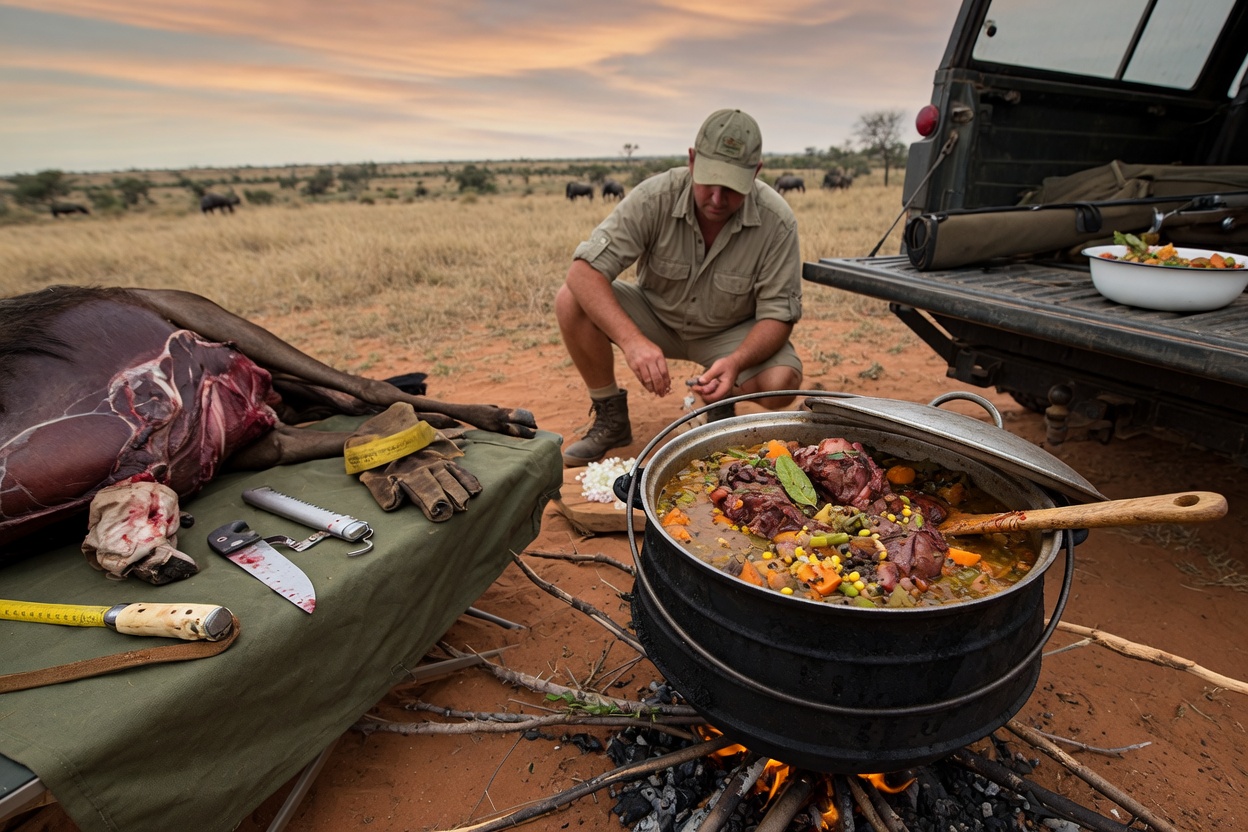
Once the cavity is open, reach in and cut the diaphragm, then sever the windpipe and esophagus as far forward as you can. Roll the organs out in one motion. Save the heart and liver if you plan to eat them; they are excellent table fare when fresh. In hot weather, get the carcass off the ground immediately. Hang it in shade if trees are available, or use a vehicle tailgate and game bags. Many outfitters provide ice or refrigerated transport, but you should still know how to handle the animal yourself. Remove the hide as soon as practical because it insulates heat and accelerates spoilage.
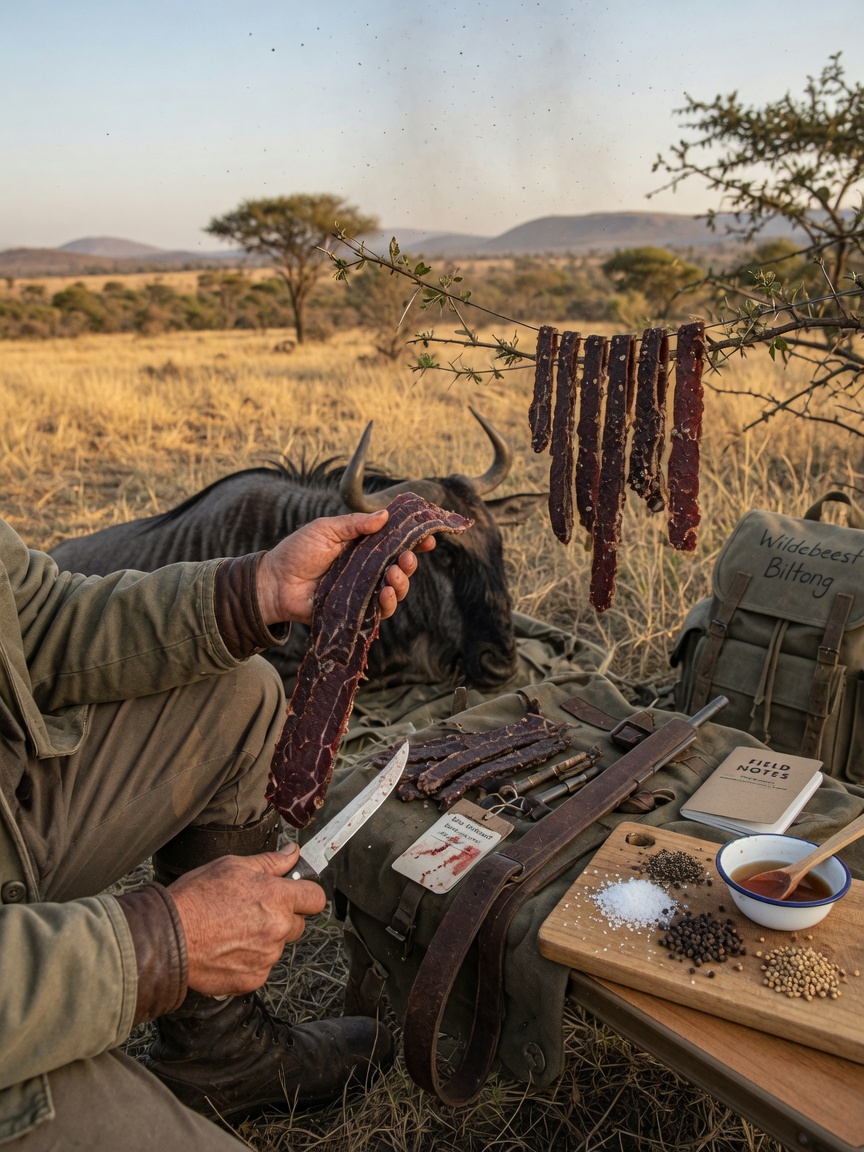
Skinning African plains game requires patience, especially on trophy animals. For a full mount or shoulder mount, start the cape well behind the shoulders and work carefully around the neck and head. Use short, controlled strokes and keep the blade nearly flat against the hide to avoid nicks. On non-trophy animals destined for the table, you can skin more aggressively. Begin at the hocks and work toward the midline. The hide on species like wildebeest is thick and can dull a knife fast, so pause to hone frequently. Always cut from the inside of the hide when possible to keep hair off the meat.
Quartering follows once the animal is skinned or at least opened. Locate the natural seams between muscle groups. A sharp knife will follow these seams with surprisingly little effort. Separate the front shoulders by cutting through the connective tissue rather than sawing bone unless necessary. The hindquarters come off by working around the pelvis and femur. In the field you can leave the quarters bone-in for easier hanging and cooling. Later, at camp or a butcher facility, you can break them down further. African game is typically very lean, so trim only damaged or excessively bloody areas. The fat that exists is often localized and can be left or removed according to taste.
Hygiene cannot be overstated. Wash your knife and hands whenever possible, even if that means using bottled water or disinfectant wipes. Keep meat off the dirt. Use breathable game bags to protect quarters from flies while allowing air circulation. In many African hunting areas, tsetse flies or just ordinary blowflies will find an unprotected carcass within minutes. Contaminated meat not only tastes poor but can cause illness. Studies of field-dressed game consistently show that rapid cooling and clean handling reduce bacterial loads dramatically.
Safety is personal. Always cut away from your body and keep your free hand behind the blade. A slip on wet hide or sinew happens fast. Wear cut-resistant gloves if you are new to the work. Tell your professional hunter or tracker what you plan to do so they can assist or advise on local techniques. Many African PHs have processed thousands of animals and will happily share methods refined over decades.
These skills carry ethical weight. Utilizing as much of the animal as possible shows respect. In southern Africa, regulated plains-game hunting generates significant revenue that funds anti-poaching units, habitat protection and community programs. When hunters take the time to process their own game properly, they reduce waste and reinforce the conservation argument. Impala, springbok and similar species exist in healthy numbers partly because hunting creates economic value for the land they occupy.
Practice these techniques at home on deer or other familiar game before your safari. Watch how a professional butcher works and ask questions. A few evenings spent breaking down a carcass in your garage will pay off when you are standing over a kudu in 95-degree heat with the sun dropping. Bring a quality knife you have already used and trust. Pack extra blades or a good sharpener. After the hunt, share what you learned with fellow hunters. The more of us who process our own game well, the stronger the tradition remains.
Mastering knife skills for African plains game transforms you from a shooter into a complete hunter. You leave the field with better meat, a deeper connection to the animal and the knowledge that you handled the entire process with competence and respect. That combination is what ethical hunting looks like on the African continent.