The Eastern Cape of South Africa has earned a well-deserved reputation among serious hunters as one of the finest destinations on the continent for pursuing plains game. When it comes to bowhunting Nyala, this region truly stands apart. The combination of ideal habitat, healthy game populations, experienced outfitters, and a strong commitment to ethical hunting and conservation makes the Eastern Cape a standout choice for bowhunters seeking a challenging and memorable encounter with one of Africa's most striking antelope.
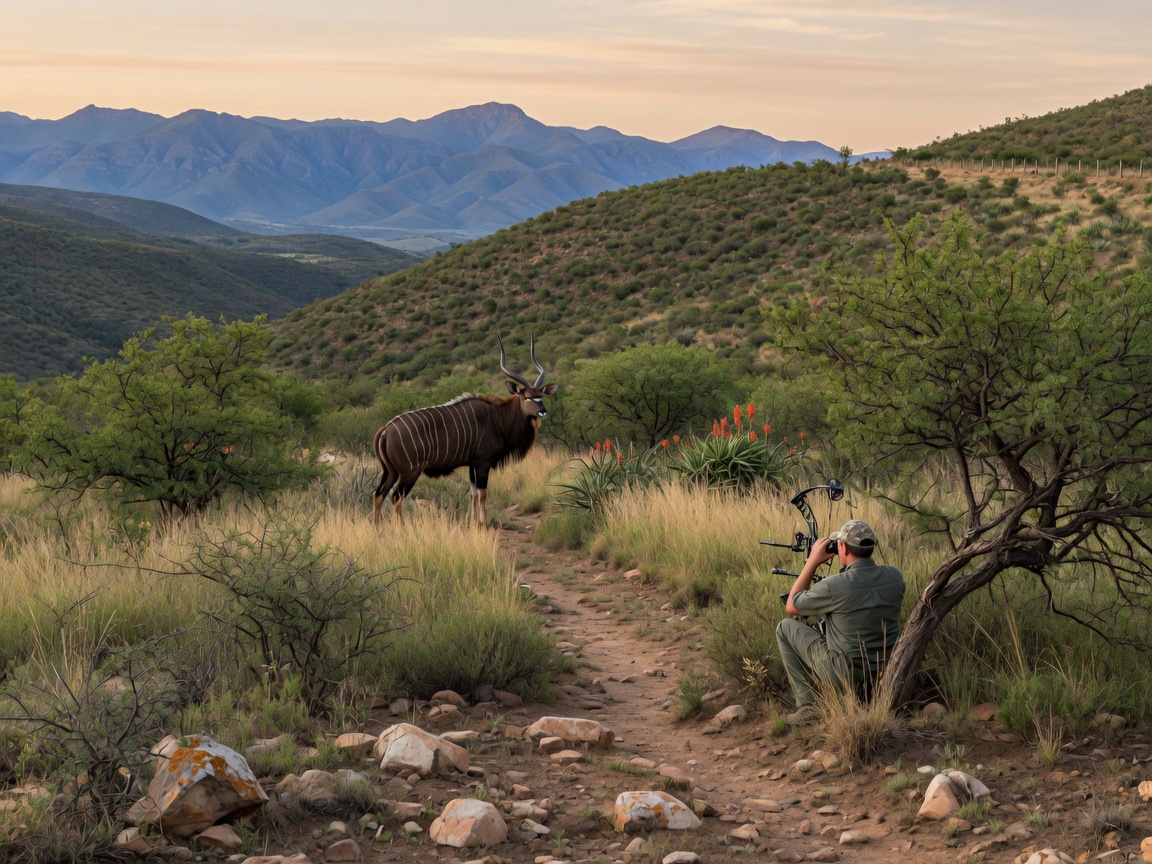
Nyala, scientifically known as Tragelaphus angasii, are spiral-horned browsers that inhabit dense thickets and riverine areas. Mature bulls display a dark coat with distinctive white vertical stripes, a shaggy mane, and impressive lyre-shaped horns. They are wary, alert animals that rely on cover and keen senses to avoid danger. This behavior makes them a perfect quarry for bowhunters who prefer close-range, skill-based hunting over long-distance rifle shots. The Eastern Cape's landscape aligns perfectly with these traits.
The region's vegetation, particularly the Valley Bushveld and spekboom thickets, creates a mosaic of dense cover interspersed with openings and water sources. These conditions allow Nyala to thrive while giving bowhunters realistic opportunities for stalks or sits. Unlike more open savannahs found in other parts of South Africa, the Eastern Cape's bushveld often brings animals into bow range of 20 to 40 yards when hunters use proper technique. Many properties feature natural funnels, dry riverbeds, and well-placed waterholes that concentrate movement, especially during drier periods.
Conservation efforts have played a major role in the success of Nyala populations here. Private game farms and reserves in the Eastern Cape have implemented professional wildlife management for decades. Sustainable hunting generates revenue that funds habitat improvement, anti-poaching patrols, and community programs. This model has helped maintain robust Nyala numbers and high trophy quality. Hunters regularly encounter mature bulls that meet or exceed record-book standards, a testament to selective harvesting and good genetics.
Bowhunting-specific advantages set the Eastern Cape apart. Numerous outfitters specialize in archery hunts and understand the unique demands of bowhunters. They offer a mix of walk-and-stalk opportunities in the thickets and comfortable, well-camouflaged blinds positioned over feeding areas or water. Elevated blinds provide excellent visibility while keeping hunters concealed. Ground blinds work well in thicker cover. Professional hunters in the region are accustomed to guiding international clients and emphasize wind direction, scent control, and patience—key elements for success with Nyala.
The climate further enhances the experience. The Eastern Cape enjoys a relatively mild weather pattern compared to more tropical or arid zones. Winter months from June through August bring cooler temperatures and reduced vegetation, making movement easier to spot and stalks more feasible. Summer hunts remain viable, particularly around water sources, though heat and thicker foliage add extra challenge. Year-round hunting is possible on private land, giving flexibility for travel schedules.
Accessibility is another practical benefit. The region is served by airports in Gqeberha (formerly Port Elizabeth) and East London, with relatively short transfers to most hunting properties. This reduces travel fatigue and allows more time in the field. Many camps offer comfortable accommodations that cater to international guests, including those traveling with bows and specialized gear.
Successful Nyala bowhunts demand preparation. Practice shooting from various positions and distances that mimic field conditions, including kneeling or sitting shots through small shooting lanes. Understand Nyala behavior: they are most active at dawn and dusk, bulls can be territorial during the rut, and they often freeze or slip away silently when they detect danger. Always play the wind and use the terrain to your advantage. Shot placement is critical—aim for the vital area behind the shoulder, accounting for the animal's size and the angle. A well-placed arrow from a quality compound or traditional bow results in a quick, ethical harvest.
Ethics and conservation remain at the heart of hunting in the Eastern Cape. Reputable outfitters follow guidelines from organizations such as PHASA and adhere to fair-chase principles. Hunters should choose operators who demonstrate transparent wildlife management, support local communities, and prioritize animal welfare. Hunting licenses, permits, and export documentation are handled professionally. By participating in these hunts, bowhunters contribute directly to the economic value of wildlife, helping ensure Nyala and other species continue to flourish on the landscape.
Many hunters combine a Nyala bowhunt with opportunities for other species such as kudu, bushbuck, impala, or warthog, creating a diverse and rewarding safari. The Eastern Cape's variety of habitats supports this approach without compromising the focus on Nyala.
In my years following hunting developments across southern Africa, the Eastern Cape consistently impresses with its balance of challenge, quality, and sustainability. The region has adapted well to modern conservation realities, including increased emphasis on responsible tourism after global travel disruptions. Outfitters have refined their operations to deliver high-quality experiences while maintaining ecological integrity.
If you are a bowhunter looking for a destination that rewards patience, skill, and respect for the animal, the Eastern Cape should be at the top of your list. Research outfitters thoroughly, communicate your experience level and expectations, and prepare physically and mentally for the hunt. The satisfaction of taking a Nyala bull with a bow in this beautiful setting is something that stays with you long after the trip ends.
Start planning today by contacting established Eastern Cape hunting operators or exploring packages that include Nyala bowhunts. The combination of world-class habitat, dedicated conservation, and genuine hunting challenge makes this region exceptional. Experience it for yourself and become part of a hunting tradition that supports both wildlife and local communities.