The Kalahari Desert spans Botswana, Namibia, and South Africa and ranks among the world's premier destinations for plains game hunting. Gemsbok, springbok, hartebeest, and other species thrive in its vast red dunes and acacia savannas. Yet the same environment that creates such memorable hunts also produces one of the most relentless threats to a rifle: fine, abrasive dust that infiltrates every moving part. A single malfunction at the moment of truth can wound an animal and violate the ethical standards every responsible hunter must uphold. Proper rifle preparation is therefore not optional. It is a core part of fair-chase hunting and of the conservation model that keeps African wildlife populations healthy through regulated hunting revenue.
Kalahari dust is unlike ordinary dirt. It is extremely fine, often compared to talcum powder, and it becomes airborne with the slightest breeze or vehicle movement. Days of 35-degree heat bake the particles onto metal and into actions. Combined with the region's extreme dryness, the dust acts as a grinding compound the instant it mixes with conventional oil. Military after-action reports from arid theaters and decades of professional hunter experience in southern Africa confirm that lubrication errors cause the majority of stoppages in these conditions. The goal is simple: keep the rifle as dry and sealed as possible while still allowing reliable function.
Begin preparation weeks before departure with a complete disassembly. Remove the bolt, trigger group if possible, and any other user-serviceable parts. Use a quality solvent to strip every trace of old carbon, grease, and oil. Pay special attention to the bolt lugs, extractor, firing-pin channel, and magazine well. Compressed air or a soft brush helps reach recesses. Once everything is chemically clean, dry the parts thoroughly. Any residual moisture will later attract dust or create unexpected rust when humidity finally appears during travel.
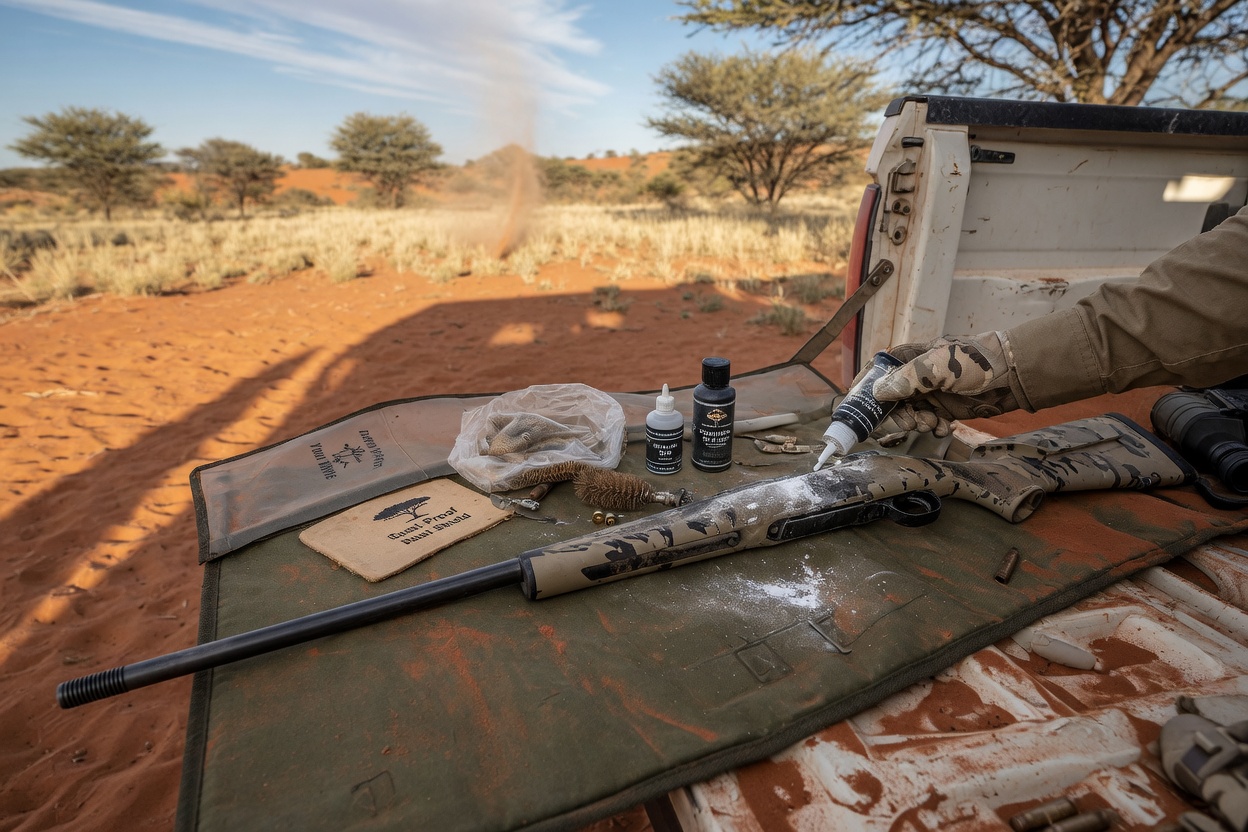
Lubrication is the single most important decision. Traditional wet oils and greases become magnets for Kalahari sand and quickly form an abrasive paste that accelerates wear and can lock a bolt shut. Switch to dry-film products. Molybdenum disulfide or tungsten-disulfide sprays leave a thin, slick coating that does not attract particles. Apply them sparingly to high-friction surfaces such as bolt races and locking lugs, then wipe away any excess until the metal feels almost dry to the touch. A light application of a quality CLP wiped nearly clean can work in a pinch, but dedicated dry lubricants perform better. Modern rifle coatings such as Cerakote, nitride, or diamond-like carbon already reduce friction and corrosion; they still benefit from this dry approach rather than heavy oil.
Protect the rifle's openings. Electrical tape over the muzzle is a time-tested method used by African professional hunters for generations. The bullet simply punches through on the first shot and the tape keeps dust out until that moment. Action covers, neoprene sleeves, or even a clean sock over the receiver keep grit from entering the ejection port or magazine well during vehicle travel on corrugated roads. For optics, use quality flip-up covers and consider wrapping the scope body with a layer of tape or a dedicated scope coat. Keep lens cloths in a sealed bag; dust on glass ruins a shot faster than dust in the action.
Ammunition deserves equal care. Store cartridges in sealed plastic boxes or original packaging inside a dust-proof case. Wipe each round before loading. Dust on a case can migrate into the chamber and cause extraction problems. If you use a suppressor, treat it the same way as the muzzle: keep it capped until the shot.
During the hunt itself, daily habits matter as much as pre-trip work. Never rest the rifle directly on the ground. Use a bipod, shooting sticks, or a vehicle rest. After every drive, wipe the exterior with a dry microfiber cloth and inspect the action. A small field kit containing a nylon brush, dry-lube spray, patches, and extra tape occupies little space yet prevents most problems. In camp, store the rifle in its case or under a breathable cover rather than leaning it in a corner where wind-blown sand accumulates. Vehicle travel on Kalahari tracks throws up constant plumes of dust; keep windows closed when possible and the rifle cased or at least sleeved.
Bolt-action rifles, the most common choice for Kalahari plains game, handle dust better than semi-automatics because they have fewer openings and moving parts. Still, a gritty bolt can refuse to close or extract. Semi-automatics require even stricter dry-lube discipline and more frequent inspection of the gas system. Whatever platform you choose, function-test the rifle after any dusty day. Cycle the action several times and check that the safety and trigger remain crisp.
After the hunt, clean the rifle as soon as practical. Dust left in place continues to abrade parts during travel home. A full disassembly, solvent clean, and fresh dry-lube application restore the firearm and reveal any wear that occurred. This post-hunt service also prepares the rifle for storage and the next adventure.
A rifle that functions perfectly in the Kalahari does more than fill a tag. It delivers the clean, ethical shot that hunting ethics demand. In southern Africa, well-regulated hunting generates the majority of conservation funding for anti-poaching units, habitat protection, and community programs. When hunters arrive with reliable equipment, they contribute directly to that model. Unreliable gear risks wounded animals and undermines the entire system.
Take the time to prepare. Test your chosen dry lubricants and protective methods at the range in dusty conditions if possible. Talk with your professional hunter about local preferences; many have refined these techniques over decades. The extra effort pays off the moment a gemsbok steps into the open and you know the rifle will do its job.
Your next Kalahari hunt can be the trip of a lifetime if the rifle is ready. Apply these practices, hunt with respect for the animal and the land, and you will return with memories rather than mechanical regrets. Share your own dust-proofing tricks with fellow hunters and keep the conversation going. Reliable equipment and ethical conduct remain the foundation of sustainable hunting everywhere.