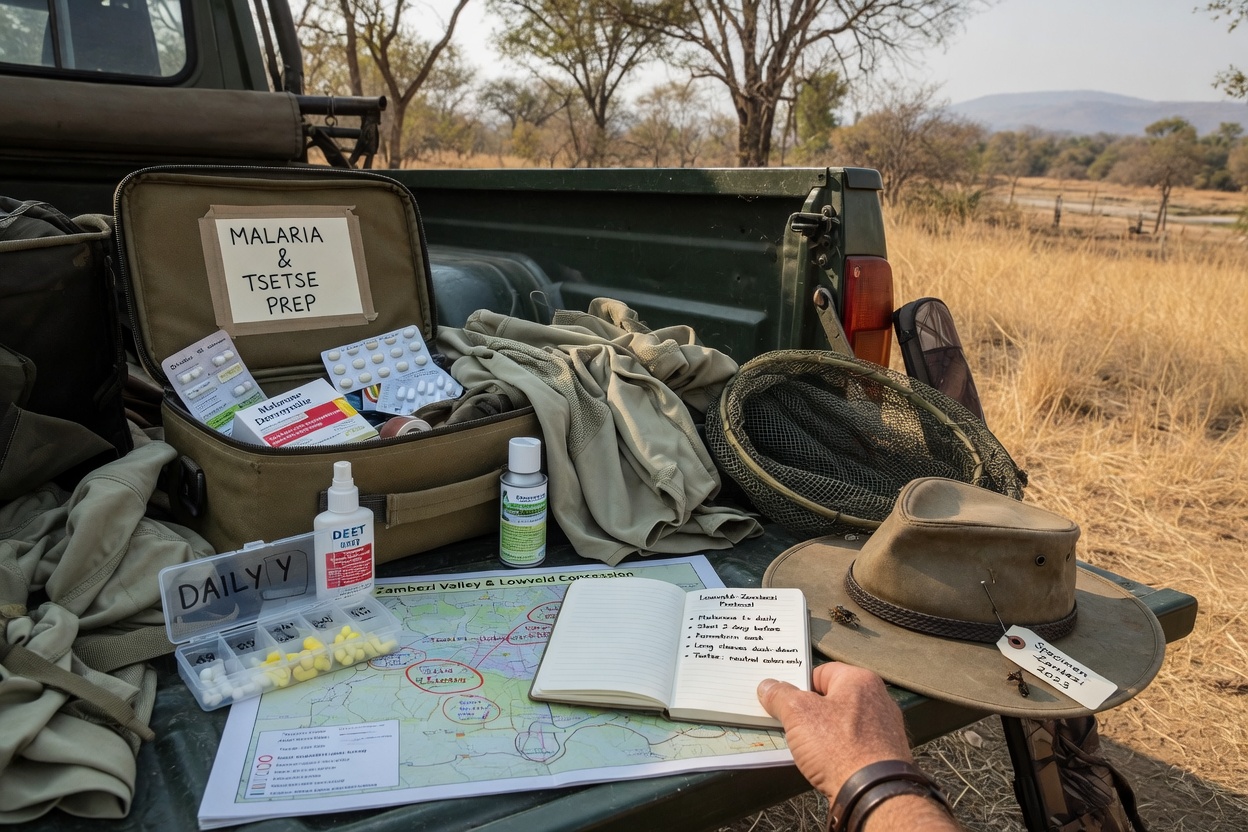
Hunting the Lowveld of southern Africa or the Zambezi Valley ranks among the most rewarding experiences a sportsman can have. These regions deliver world-class plains game, dangerous game opportunities, and landscapes that stay with you for life. Yet the same environments that produce exceptional hunting also harbor two serious health challenges: malaria and tsetse flies. Proper preparation is not optional. It is the difference between a successful, memorable hunt and a medical emergency that can end the trip early or worse.
Malaria remains a genuine threat across much of the Lowveld and nearly the entire Zambezi system. The parasite, primarily Plasmodium falciparum, is transmitted by Anopheles mosquitoes that are most active from dusk to dawn. Risk is highest during and immediately after the rainy season, typically November through April, but transmission occurs year-round in many riverine and low-lying areas. The World Health Organization and CDC continue to classify large portions of Zimbabwe’s Lowveld, Mozambique’s hunting concessions, Zambia’s Zambezi Valley, and parts of Namibia and Botswana as high-risk zones. Even South Africa’s Kruger-adjacent Lowveld sees seasonal cases. Hunters who skip prophylaxis or bite prevention put themselves at real risk of a disease that can progress from flu-like symptoms to severe, life-threatening illness within days.
Tsetse flies present a different but equally practical problem. These large, biting flies transmit trypanosomiasis, known as sleeping sickness in humans. While human cases have declined dramatically thanks to decades of control programs, the flies themselves remain abundant in many Zambezi hunting areas and pockets of the Lowveld. A swarm of tsetse can turn a stalk into misery. Their bites are painful, they target moving objects and dark colors, and they are active throughout daylight hours. Even without disease transmission, repeated bites cause swelling, infection risk, and lost hunting time.
Start malaria prevention with a doctor visit at least four to six weeks before departure. Current first-line options include atovaquone-proguanil (Malarone), taken daily and well-tolerated by most hunters, doxycycline, which also offers some protection against other tick-borne issues, and, in selected cases, tafenoquine for those who test negative for G6PD deficiency. Mefloquine is used less often now because of neuropsychiatric side effects. No pill is 100 percent effective, so combine medication with rigorous bite avoidance. Treat all clothing, including hats and gaiters, with permethrin. Apply a 30-50 percent DEET repellent to exposed skin every four to six hours. Sleep under insecticide-treated nets even in lodges, and stay inside screened areas from dusk onward when possible. Long sleeves and pants in light colors help against both mosquitoes and tsetse.
Tsetse protection relies more on behavior and clothing than chemicals. These flies are strongly attracted to dark blue, black, and navy. Wear khaki, olive, or light earth tones from head to toe. Loose, long clothing reduces landing sites. Movement and vehicle dust also draw them, so minimize unnecessary walking in known fly belts during the heat of the day if your PH advises it. Standard DEET offers only modest protection; some hunters add additional botanical or picaridin products, though results vary. Outfitters in heavy tsetse country often use vehicle-mounted traps or advise clients to stay in the truck when flies are thick. After a bite, clean the area thoroughly and watch for secondary infection. While human sleeping sickness is now rare in most safari areas, any unusual fever, headache, or swollen lymph nodes after a Zambezi hunt warrants immediate medical attention and mention of possible tsetse exposure.
Timing your hunt reduces both threats. The dry season, roughly May through October, generally means fewer mosquitoes and somewhat lower tsetse activity in many concessions, though riverine thickets can still hold flies. Shoulder months require extra vigilance. Carry a basic medical kit that includes extra antimalarials, antihistamines, antibiotic ointment, and a reliable thermometer. Travel insurance that covers medical evacuation from remote camps is essential; standard policies often exclude high-risk activities or specific diseases. Inform your hunting partner and PH of your prophylaxis schedule so they can help if symptoms appear.
These precautions also reflect the ethical side of hunting. A sick hunter becomes a burden on camp staff, local clinics, and the very wildlife populations we help conserve through license fees and anti-poaching support. Responsible preparation lets you hunt hard, contribute to habitat protection, and return home healthy enough to plan the next trip. Recent data from southern African health authorities show that travelers who follow current CDC and WHO guidelines experience dramatically lower malaria incidence than those who rely on luck or outdated advice.
Talk to a travel-medicine specialist who understands African hunting itineraries, not just general tourism. Choose outfitters who brief clients honestly about local disease pressure and provide treated nets and repellent. Once on the ground, stay disciplined. The Lowveld and Zambezi will still test you with heat, thorns, and wary game. Do not let preventable insects become the factor that ends the hunt.