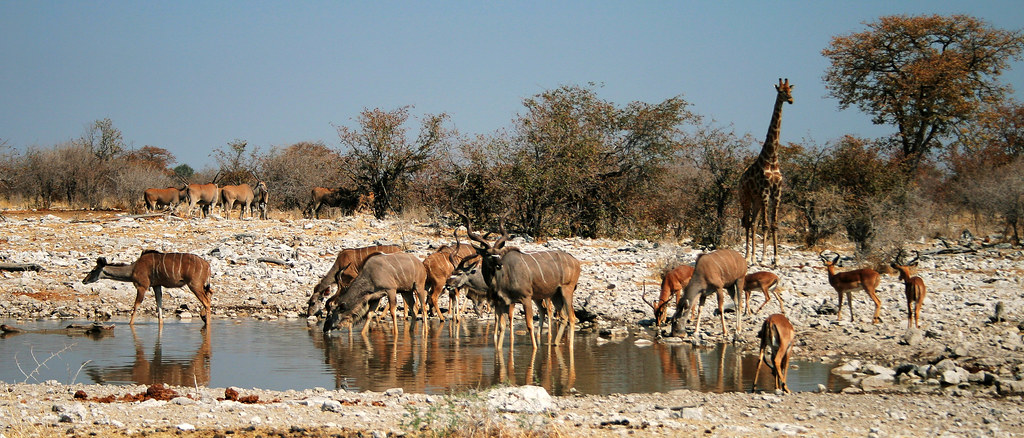
There are few hunts in Africa that test a hunter's patience, fieldcraft and physical endurance quite like stalking eland across the open plains of Namibia. The common eland, Taurotragus oryx, is the largest antelope on the continent. Mature bulls can weigh well over 900 kilograms and stand nearly 180 centimetres at the shoulder. They possess exceptional eyesight, a keen sense of smell and hearing that would embarrass most other plains game. On Namibia's vast, almost featureless landscapes there is nowhere to hide. That is precisely what makes a successful stalk so satisfying.
Namibia remains one of the finest destinations for this type of hunting. The country's communal conservancies and private ranches have demonstrated for decades that well-regulated hunting generates revenue that funds anti-poaching units, habitat protection and community development. Eland populations are healthy and, in many areas, increasing. Hunters who book here are participating in a genuine conservation model rather than simply collecting a trophy.
Understanding the animal is the first requirement. Eland are both browsers and grazers. They move constantly, often covering many kilometres in a day. Herds can number from a handful of animals to several dozen. Old bulls frequently live solitary lives or keep company with a couple of younger males. They feed most actively in the cooler hours of early morning and late afternoon. Midday finds them standing in whatever shade they can find or simply enduring the heat with remarkable stoicism. Their coat colour ranges from tawny to greyish, and the distinctive dewlap and spiral horns of a mature bull make him unmistakable once you have glassed him properly.
Preparation begins long before you set foot on the plains. Optics are non-negotiable. A pair of 10x42 or 15x56 binoculars and a good spotting scope will save you kilometres of wasted walking. Clothing should match the pale grasses and red Kalahari sand; avoid anything that silhouettes against the sky. Footwear must be broken in and capable of covering 15 to 20 kilometres in a day over uneven ground. Many hunters underestimate the distances involved. Fitness matters.
Rifle choice deserves careful thought. Eland are heavily built with thick hides and substantial bone. A .300 Winchester Magnum with 180- or 200-grain premium bullets is a practical minimum. Many professional hunters prefer the .375 H&H or similar for its extra authority. Whatever calibre you choose, practise shooting from field positions, especially sitting and kneeling, at distances out to 300 metres. Ethical shots on eland should be taken inside that range whenever possible. The heart-lung area is the only acceptable target. A poorly placed shot on an animal this size can result in a long, difficult follow-up.
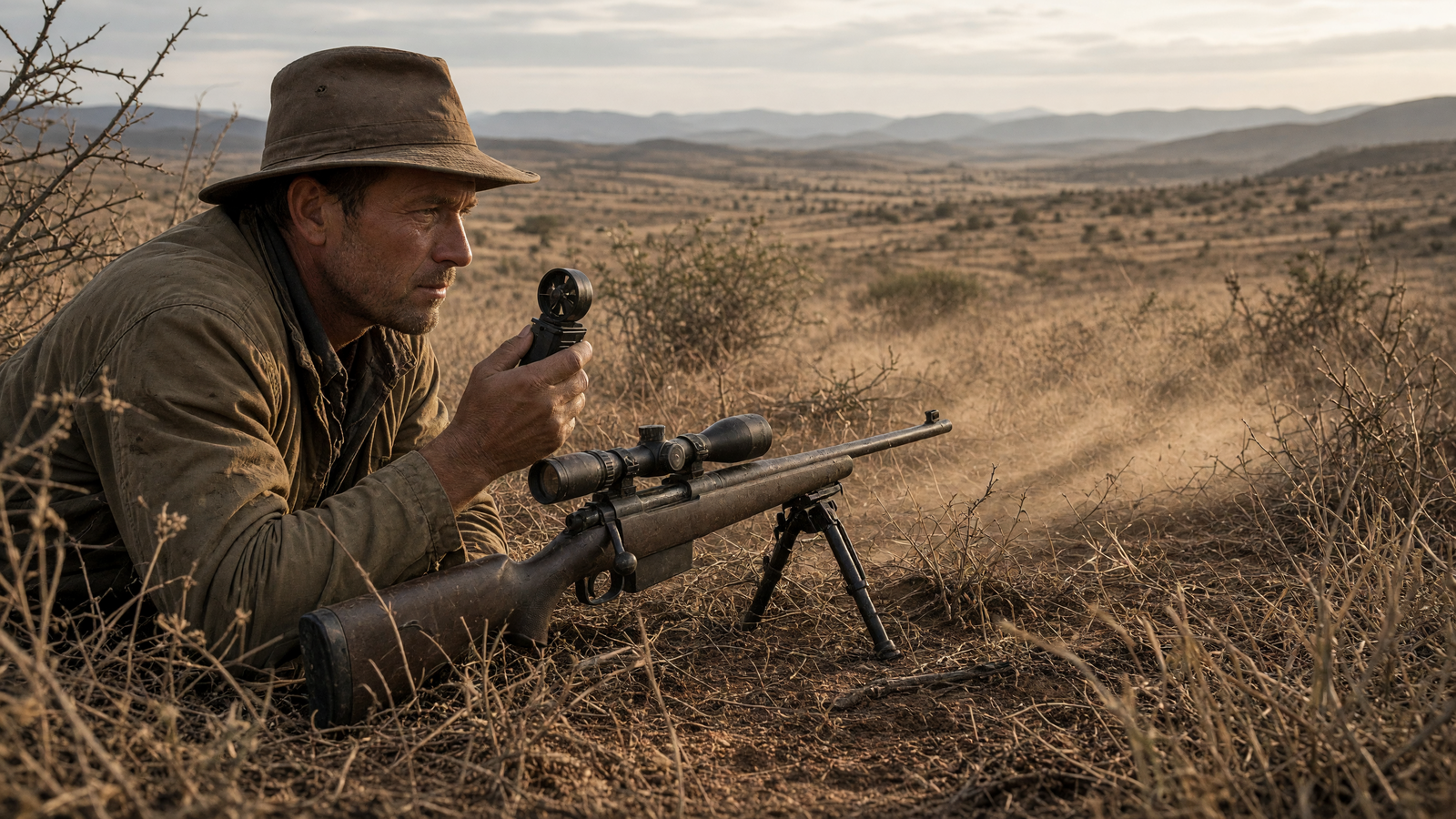
The stalk itself is a study in incremental progress. Most hunts begin with glassing from a high point or from a vehicle. Once a suitable bull is located, the real work starts. Wind direction is everything. Namibian plains are often windy, and the direction can shift. Carry a small bottle of unscented powder or simply toss dry grass into the air constantly. Always approach from downwind. Even on apparently flat ground there are subtle depressions, dry watercourses, termite mounds and isolated clumps of bush. Use every one of them.
Move only when the animal's head is down. Freeze the instant it looks up. This stop-start rhythm can turn a 600-metre stalk into a two-hour exercise. Stay off the skyline. If you must cross open ground, drop to a crawl. Your professional hunter and tracker will read the animal's body language and the terrain far better than a visiting hunter on his first trip; listen to them. They have done this hundreds of times.
Heat and thirst are constant companions. Carry more water than you think you need. A lightweight shooting stick or bipod is useful for the final sitting shot, but many successful stalks end with the hunter sitting cross-legged or kneeling because that is the only position that offers a clear, steady rest. Take the extra seconds to confirm the animal is calm and broadside. A rushed shot ruins everything.
The conservation argument for hunting eland in Namibia is straightforward and supported by decades of data. Hunting concessions and conservancies have maintained and expanded wildlife habitat that would otherwise have been converted to livestock farming. Revenue from licences and daily rates pays for water points, fencing and patrols. Local communities receive a direct share of the proceeds, giving them a genuine incentive to tolerate and protect game. Eland are not endangered. In fact, they are one of the species that benefit most clearly from this system.
A successful hunt ends with respect. The animal is approached quietly. Photographs are taken with dignity. The meat is recovered and used. Nothing is wasted. That ethic is not optional; it is the foundation of everything we do.
If you have never attempted an eland stalk on open ground, put it on your list. It will change the way you think about hunting. The combination of physical demand, mental discipline and the sheer presence of the animal itself is unmatched. Namibia offers the space, the populations and the professional infrastructure to do it properly.
Share your own experiences in the comments or get in touch if you are planning a trip. The plains are waiting, and the eland will not make it easy. That is exactly how it should be.