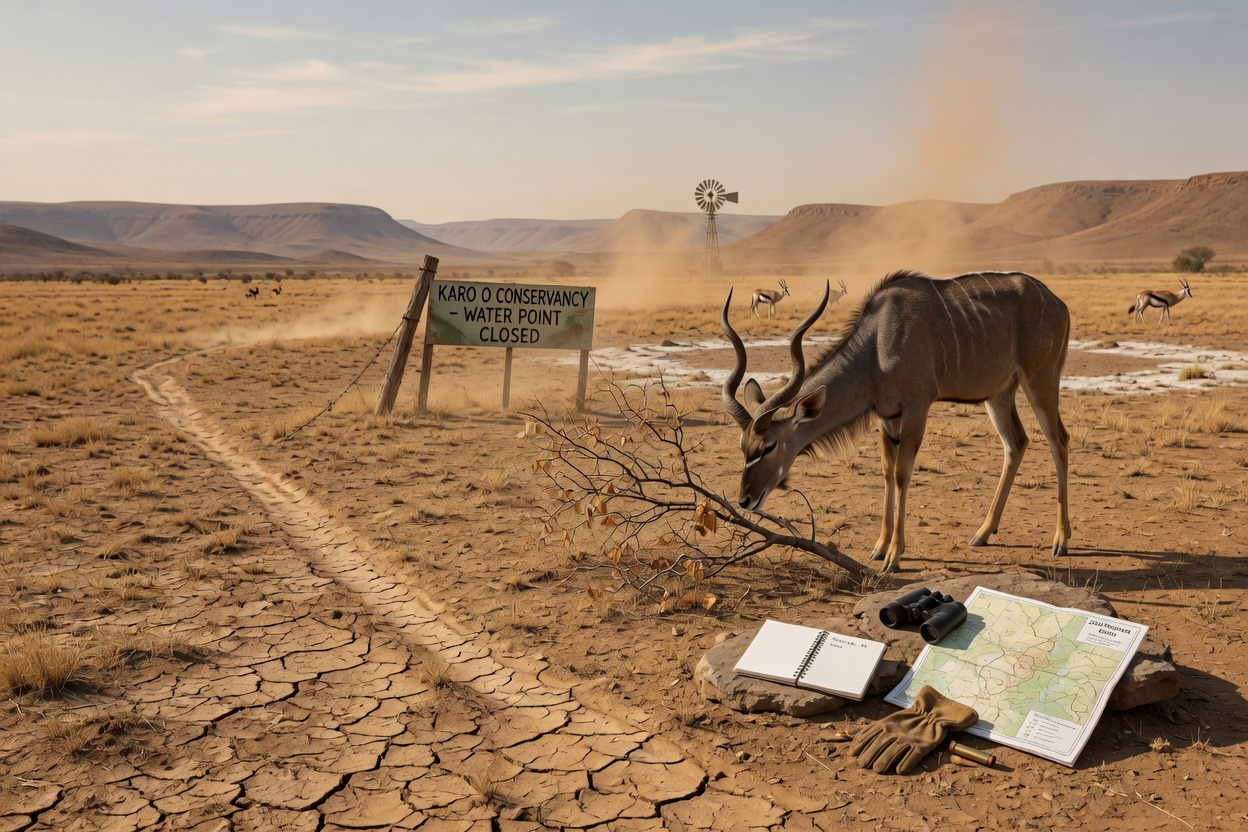
The Karoo stretches across South Africa as a vast, rugged semi-desert of open plains, rocky koppies, and hardy vegetation that has long drawn hunters seeking springbok, gemsbok, kudu, and other iconic game. Its stark beauty and challenging conditions create unforgettable hunts, but droughts are reshaping this landscape more frequently and intensely. Understanding these changes is essential for anyone planning a Karoo hunt, not just for success but for ethical practice and long-term conservation of the wildlife that makes this region special.
Droughts in the Karoo reduce rainfall well below the already low annual average of 100 to 400 millimeters, depending on the specific area. Vegetation withers, grasses fail to recover, and natural water sources such as pans and seasonal rivers dry up completely. Animals must travel farther for food and water, burning precious energy in the process. Body condition declines as forage quality drops, leading to thinner animals with less fat reserves. Reproduction suffers noticeably. Springbok, one of the Karoo's signature species, often see sharply lower lambing rates and higher juvenile mortality during dry periods. Kudu, more dependent on browse and water, concentrate in remaining thickets or near artificial water points. Gemsbok, better adapted to arid conditions, still face stress that can affect horn development and overall health over successive dry years.
These ecological shifts directly influence hunting. Game becomes more predictable around remaining water sources, which can make spotting easier but also raises ethical questions. Animals in poor condition may not represent the quality trophies many hunters seek, and taking them could add unnecessary pressure on already stressed populations. Movement patterns change too. Some herds become more nomadic, covering greater distances, while others stay tightly grouped near reliable water, increasing the risk of localized overhunting if not managed carefully. Predators such as jackals and caracals may take a heavier toll on weakened prey, further affecting numbers.
From years of observing Karoo hunts, I have seen how a single dry season can transform a property. Waterholes that once attracted scattered groups suddenly become magnets for large concentrations. The animals arrive looking drawn, their coats duller, and the usual vitality of a healthy springbok herd is missing. These moments underscore why hunt planning must go beyond traditional scouting. Successful and responsible hunters now treat current rainfall data, vegetation reports, and landowner water management as core parts of preparation.
Practical planning starts with communication. Contact your professional hunter or outfitter well in advance and ask specifically about recent rainfall, the condition of game, and any adjustments to quotas. Properties that have invested in boreholes, windmills, and rotational grazing often maintain better animal condition even in drought. Consider shifting your hunt timing if possible. While the Karoo hunting season typically runs through the drier winter months, some years benefit from waiting for any late rains that green up the veld and improve animal health. Be ready to adjust species focus. A springbok trophy hunt might become a management cull of older or excess animals that helps the remaining population by reducing competition for scarce resources.
Ethics remain central. Fair chase principles still apply, but drought demands extra judgment. Avoid taking animals that appear severely compromised unless the hunt is explicitly a management or meat harvest designed to benefit the herd. Focus on mature males when possible, and always prioritize clean, humane shots. Pack extra water and be prepared for hotter, dustier conditions that affect both hunter and game. Heat stress on animals can make them less active during midday, so early mornings and late afternoons become even more important.
Conservation and hunting are deeply linked in the Karoo. Many private farms and conservancies rely on hunting revenue to maintain water infrastructure, control invasive plants, and fund anti-poaching efforts. During drought, this support becomes critical. Controlled, sustainable harvests can actually help ecosystems by preventing overgrazing of the remaining vegetation, allowing faster recovery when rains eventually return. Studies from South African universities and organizations such as the Endangered Wildlife Trust have shown that well-managed hunting operations contribute to habitat stability in arid zones. Climate trends add urgency. More frequent El Niño events and shifting weather patterns suggest the Karoo will face longer dry spells. Hunters who adapt now help ensure game populations remain viable for future generations.
Recent seasons have highlighted these realities. Parts of the Karoo experienced below-average rainfall through 2023 and into 2024, following earlier severe droughts that affected the Western Cape and surrounding areas. Landowners reported tighter concentrations of game and the need for more intensive water point management. These conditions are not temporary anomalies but part of a longer pattern that requires hunters to stay informed and flexible.
The Karoo will always test those who hunt it, and drought simply raises the bar. By approaching each hunt with knowledge of current conditions, respect for the animals' struggles, and a commitment to conservation, you contribute to the resilience of this unique ecosystem. The reward is not only a memorable experience but the knowledge that your participation supports the land and wildlife that make Karoo hunting possible.
If you are planning a Karoo hunt, reach out to experienced outfitters who prioritize ethical practices and habitat health. Ask about current drought conditions and how they are managing game. Support operations that invest in water and vegetation recovery. The Karoo's future as a hunting destination depends on hunters who understand that conservation and pursuit go hand in hand. Get out there, hunt responsibly, and help keep this remarkable region thriving.