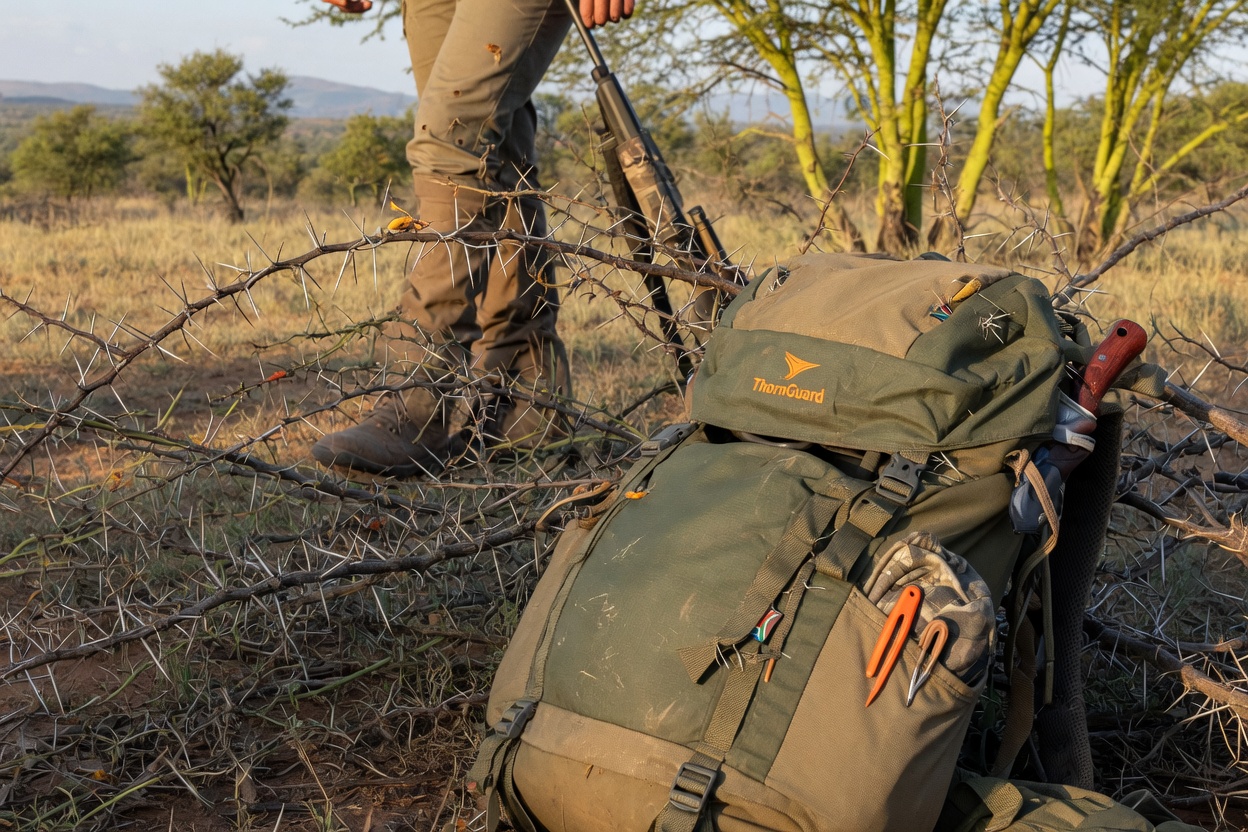
The African bush does not forgive weak gear. You step off the truck at first light, glassing for kudu or impala across a sea of acacia and mopane, and within an hour a single wait-a-bit thorn has hooked your pack, ripped a seam, and left your water bladder dripping onto your extra cartridges. For any hunter walking the thornveld of South Africa, Namibia, Zimbabwe or Botswana, a lightweight daypack that actually survives African thorns is not optional equipment. It is the difference between a focused stalk and a frustrating, potentially unsafe day.
African thorns are in a class of their own. Species such as Acacia karroo, Ziziphus mucronata and the vicious “wait-a-bit” bushes produce long, hooked or needle-sharp spines that easily puncture the 210-denier or 420-denier nylon found on most hiking and even many hunting packs. Professional hunters and outfitters consistently report that standard daypacks last only a few days before developing holes that leak water, lose small items or force constant field repairs. In temperatures that regularly exceed 35 °C / 95 °F, losing your water supply or first-aid kit is more than an inconvenience. The right pack therefore has to be both light enough for all-day walking and tough enough to shrug off repeated encounters with those thorns.
Material choice is the foundation. Look first for 1000-denier Cordura or equivalent high-tenacity nylon. This fabric has a proven track record in military and expedition use for abrasion and puncture resistance. Even better are hybrid laminates that incorporate Dyneema or ultra-high-molecular-weight polyethylene fibers; these deliver exceptional tear strength at a fraction of the weight of traditional heavy canvas. Many current hunting packs now use these advanced textiles on high-wear zones such as the base, sides and hip-belt wings while keeping the overall empty weight under 1.4 kg / 3 lb. Avoid large panels of stretch mesh or thin ripstop; thorns treat them like tissue paper. Reinforced Hypalon or extra-layer patches on the bottom and corners add another layer of insurance without adding noticeable bulk.
Capacity and organization matter just as much as toughness. A 20- to 32-liter pack is the sweet spot for a typical African day hunt. That volume swallows a 2- or 3-liter hydration bladder, extra ammunition, compact binoculars, rangefinder, light rain jacket, snacks, and a small first-aid kit without turning you into a pack mule. Internal sleeves and quiet, well-placed pockets keep optics from banging and allow you to find a spare magazine by feel. External attachment points should be kept to a minimum; every dangling strap or daisy chain is another invitation for thorns to grab. Earth-tone or muted camouflage fabrics that match the local vegetation help you disappear, while a brightly colored interior lining makes it easier to locate small items in low light.
Comfort cannot be sacrificed. You will cover 8–15 km on many days, often in broken terrain and always in heat. A well-designed harness with a ventilated back panel and a load-bearing hip belt keeps the weight off your shoulders and allows airflow so you do not overheat. Adjustable torso length is useful if more than one hunter will share the pack. Quiet zippers and fabric faces are essential; a noisy pack will educate every animal within earshot long before you see it.
Several established hunting brands have responded to the specific demands of African conditions. Mystery Ranch’s compact daypacks combine a unique harness that stays stable when you are glassing or shouldering a rifle with fabrics that hold up to repeated thorn abuse. Stone Glacier’s ultralight models use high-end laminates that keep weight minimal while remaining remarkably puncture-resistant. Eberlestock and a handful of smaller specialist makers offer similar combinations of durability and low mass. When evaluating any pack, read recent reports from hunters who have used it in mopane or mixed thornveld rather than relying solely on marketing claims. Materials and construction details change from year to year, and real-world African use is the only test that counts.
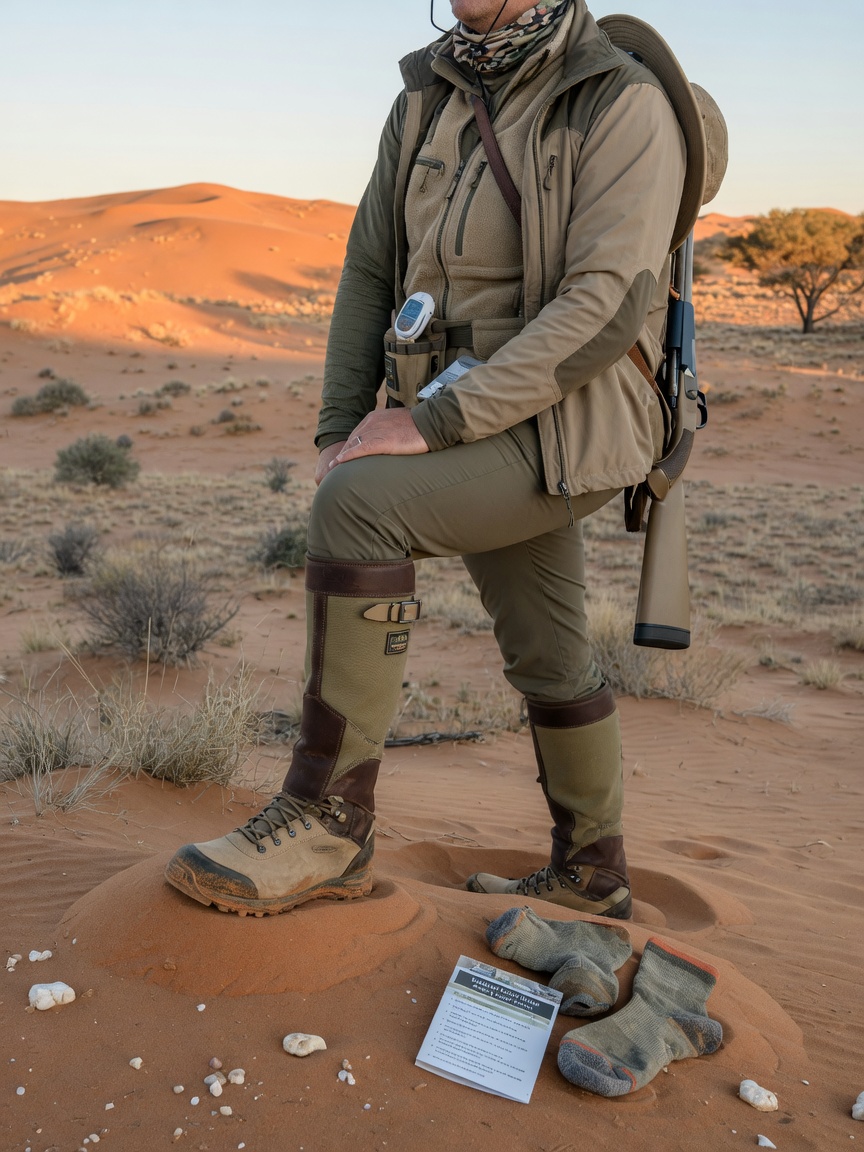
Once you own the pack, treat it as the critical tool it is. After every outing inspect seams and fabric for the smallest nicks and repair them immediately with tenacious tape or a needle and heavy thread. Dust, sap and UV exposure degrade even the best textiles, so a quick wipe-down and occasional application of a UV-protectant spray extend service life. In the field, pack with purpose: water first, then ammunition and optics, then everything else. Wear the pack high and snug so it does not swing into bushes. Pair it with thorn-resistant gaiters or chaps; the combination dramatically reduces both pack and clothing damage.
Beyond personal convenience, choosing durable gear supports the larger conservation picture. Quality packs last many seasons instead of ending up in landfill after one trip. Many of the companies producing these packs also contribute to anti-poaching programs and habitat work. Your hunting license fees already fund wildlife management across much of southern Africa; pairing that financial support with equipment that does not need constant replacement is a small but tangible way to hunt more responsibly.
A lightweight daypack that survives African thorns lets you concentrate on the animals, the track and the shot instead of on leaking bladders and torn fabric. Do the research, invest in proven materials and construction, and maintain the pack properly. Then get into the thornveld and hunt hard, hunt fair, and leave the country better than you found it. We want to hear what has worked for you. Drop your pack recommendations and hard-won lessons in the comments and help fellow hunters stay equipped and ethical.