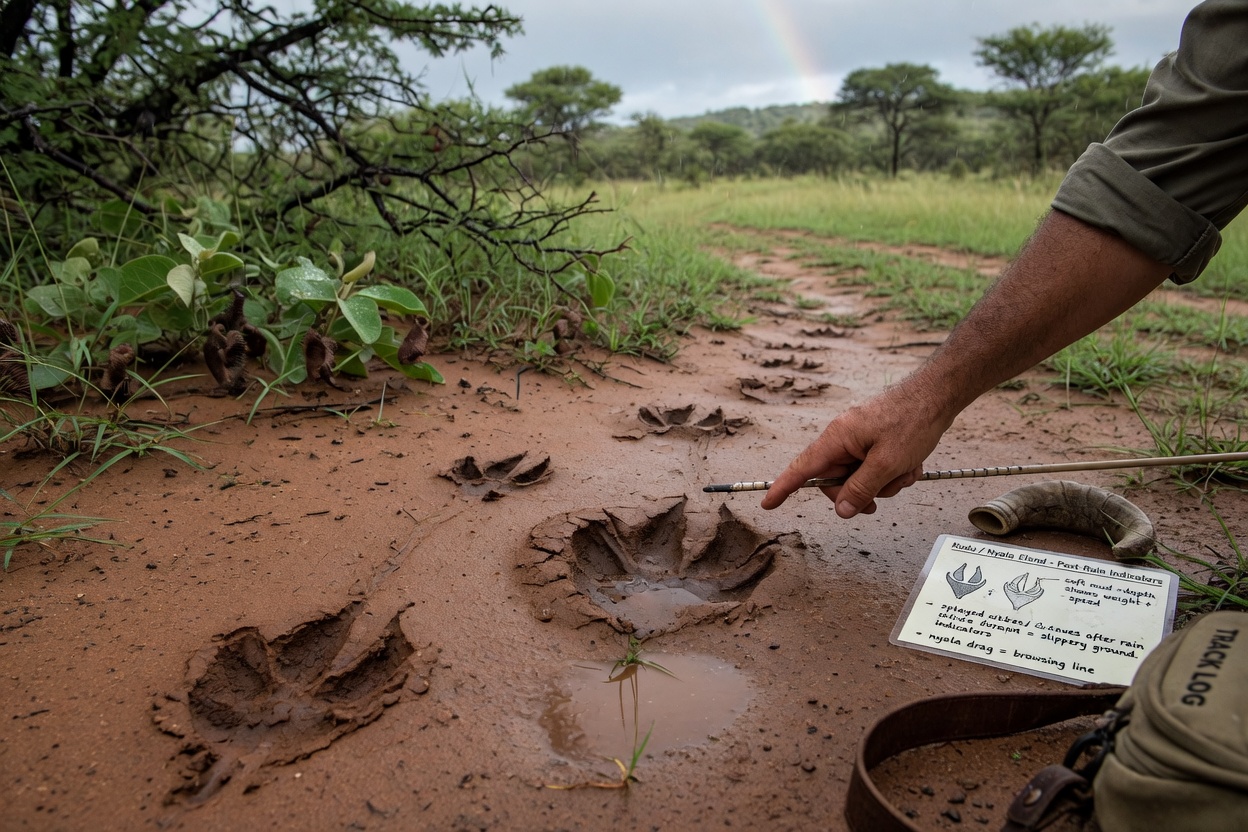
There's nothing quite like the African bush right after a soaking rain. The dust settles, scents sharpen, and the ground becomes a living map. For hunters chasing spiral-horned antelope, those hours following a storm offer one of the best chances to read the land clearly. Greater kudu, nyala, bushbuck, sitatunga and eland leave prints that tell stories of movement, feeding and caution. Learning to interpret those tracks after rain turns guesswork into informed pursuit and keeps the hunt ethical and effective.
Spiral-horned antelope belong to the Tragelaphini group and rank among Africa's most prized game animals. The greater kudu stands out with its long corkscrew horns and large, pointed hooves. Nyala prefer thick riverine cover and leave slightly smaller, more rounded prints. Eland, the biggest of the group, produce broad, heavy tracks that sink deep in wet soil. Bushbuck and sitatunga add their own variations depending on habitat. All share the classic cloven-hoof design, yet size, shape and associated signs let an experienced tracker tell them apart. Recent field observations from professional hunters in South Africa and Namibia confirm that rain-softened ground increases track detail by a wide margin, making species identification far more reliable than on hard, dry earth.
Rain changes everything about how tracks form and last. Soft, moist soil takes a clean impression of the two toes, the dewclaws that often appear in deeper mud, and even the slight splay that occurs when an animal moves quickly. A light shower creates perfect conditions: the ground is pliable but not flooded. Heavy downpours can wash edges away or fill prints with water and debris, so timing matters. Wildlife biologists note that tracks remain sharpest in the first twelve to twenty-four hours after moderate rain. After that, sun and wind begin to blur them. The key question every hunter must answer is whether the animal walked before or after the rain. Prints made after the rain stay crisp with defined walls. Those made before often show raindrop pitting or smoothed edges.
Start by measuring and describing what you see. A mature greater kudu bull typically leaves a track three to four inches long, pointed at the front and sometimes splayed. Nyala tracks run closer to two and a half inches and look a bit rounder. Eland prints are larger still and heavier, often showing more of the dewclaw in soft going. Look closely at the interdigital space and any gland impression that wet soil might capture. Stride length and straddle also speak volumes. A relaxed walking gait shows even spacing. A sudden change to longer bounds or a tighter group of prints can signal the animal detected something and shifted to alert mode.
Aging the track is where rain really helps the hunter. Fresh prints have sharp, almost sculpted edges and may still hold a thin film of water. Older tracks crumble at the rim or collect leaves and insects. If the surrounding soil is wet but the inside of the print is already drying and cracking, the animal likely passed after the rain ended. Conversely, a track full of settled rainwater or showing splash marks around the edges was probably made before the storm. Combining this visual evidence with other signs, such as fresh dung that has not been diluted or browse marks on still-wet vegetation, builds a reliable timeline.
Following the trail requires patience and a systematic approach. Move slowly and scan both the prints and the surrounding cover. Spiral-horned antelope are browsers, so look for freshly nipped twigs at chest to head height for kudu or lower for nyala and bushbuck. After rain the broken stems stay wet and green longer, confirming recent feeding. Note the direction of travel by the way the toes point and how soil is thrown. Animals heading to water or a known thicket often follow the same routes, creating a visible path even when individual prints fade. In my own time guiding in the Limpopo and Zambezi valleys I have watched a single set of kudu tracks lead from a muddy donga straight to a hidden drainage line where the bull eventually stood. Those hours of careful reading paid off because the rain had made every step obvious.
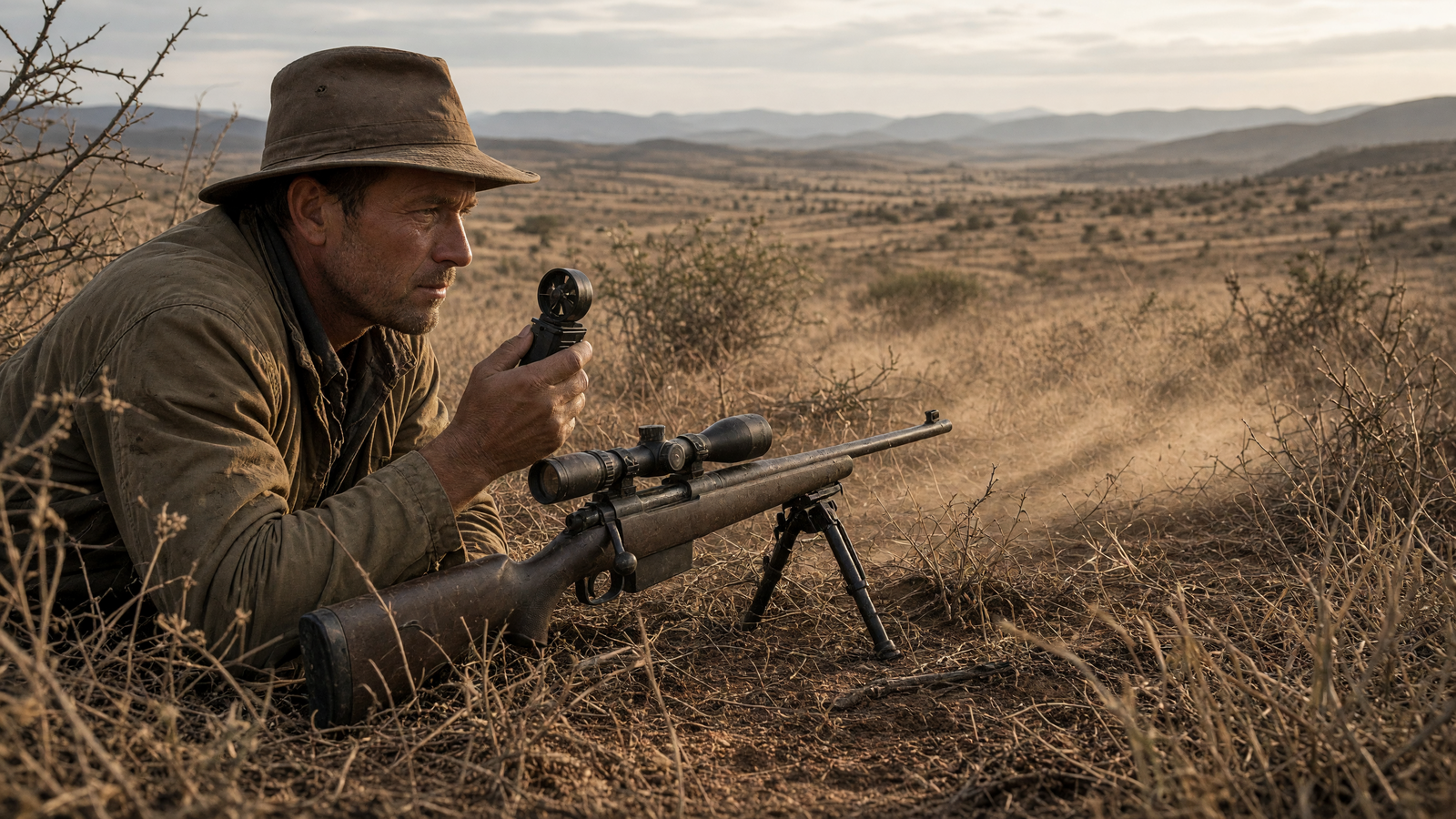
Practical habits make the difference between spotting a track and actually using it. Early morning side-light after an overnight rain throws shadows that highlight even shallow impressions. Carry a small stick or your rifle barrel to measure length without disturbing the print. Photograph the track next to a familiar object for later comparison. Work into the wind when possible so you do not push the animal ahead of you. If the trail enters thick bush, pause and glass ahead rather than blundering through and destroying sign. Many professional hunters now pair traditional tracking with simple weather apps to predict the next rain window, giving them a planned advantage without losing the core skill of reading the ground.
Ethics sit at the center of this work. Spiral-horned antelope populations remain healthy in well-managed areas precisely because regulated hunting generates funds for habitat protection and anti-poaching. Always hunt with the proper licenses, respect quota systems and choose operators who reinvest in conservation. A clean, well-placed shot after a patient stalk honors both the animal and the tradition. Never follow a track so aggressively that you push a wounded animal or disturb breeding groups. The same rain that reveals tracks also reminds us how quickly conditions change; leave the land as you found it.
Recent shifts in rainfall patterns across southern and eastern Africa have made these skills even more valuable. Longer dry spells followed by intense storms mean the window for perfect tracking can be short. Hunters who stay current with local weather and habitat reports gain an edge while still relying on time-tested observation. Camera-trap studies published in the last few years have confirmed what trackers already knew: spiral-horned antelope move more freely after rain when the ground is quiet and green flush appears. That knowledge lets you anticipate rather than simply react.
Mastering tracks after rain does more than put an animal in the bag. It deepens your connection to the bush and sharpens every other hunting sense. The next time a storm rolls through, get out early, walk slowly and let the ground speak. Practice on known trails near camp until the differences between species become second nature. Then take those lessons into the real hunt.
Share your own tracking experiences in the comments or with fellow hunters. Ethical, skilled pursuit keeps this tradition alive for the next generation. If you are planning an African safari, choose operators who value both the hunt and the habitat. The rain will fall again, the tracks will appear, and you will be ready to read them.