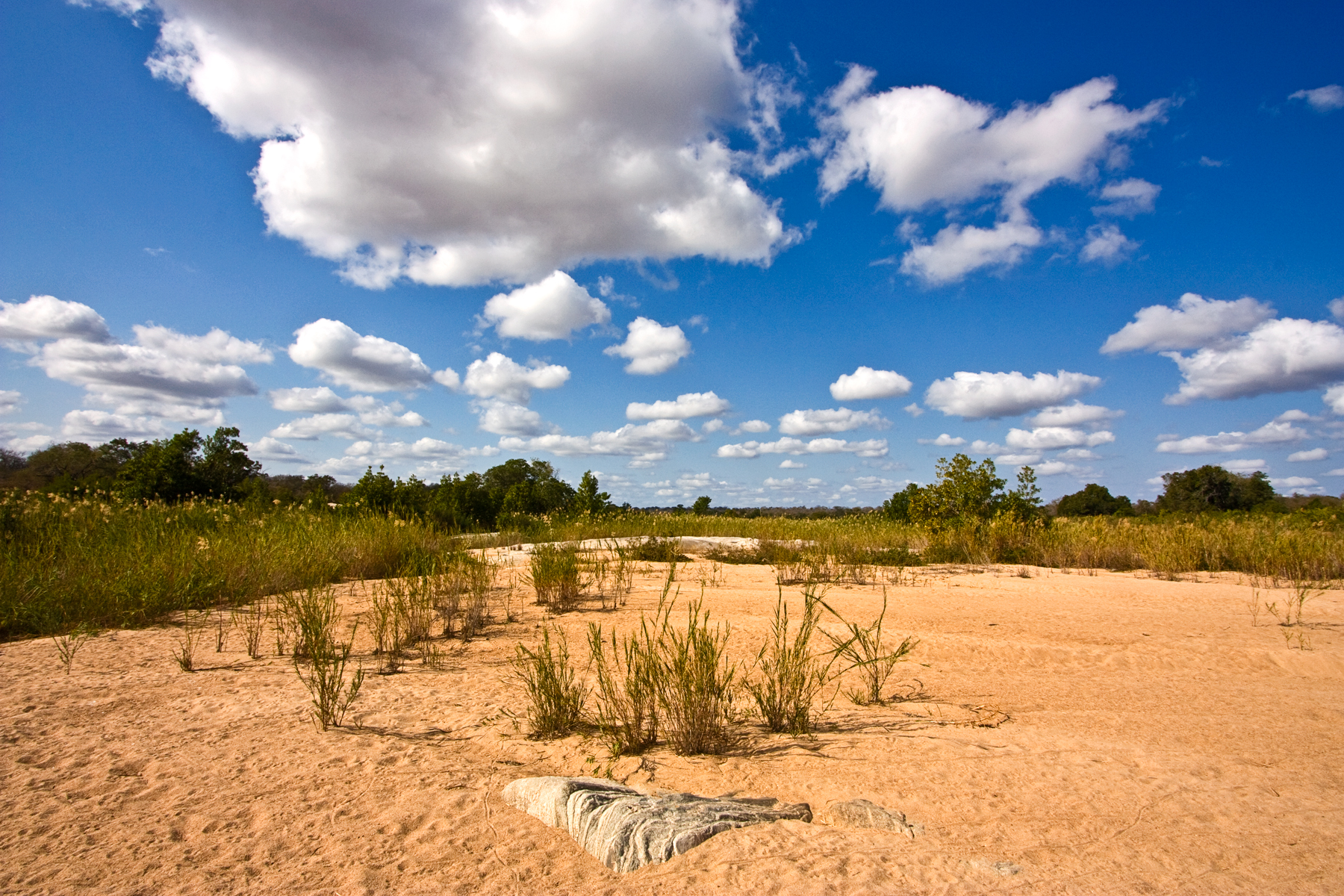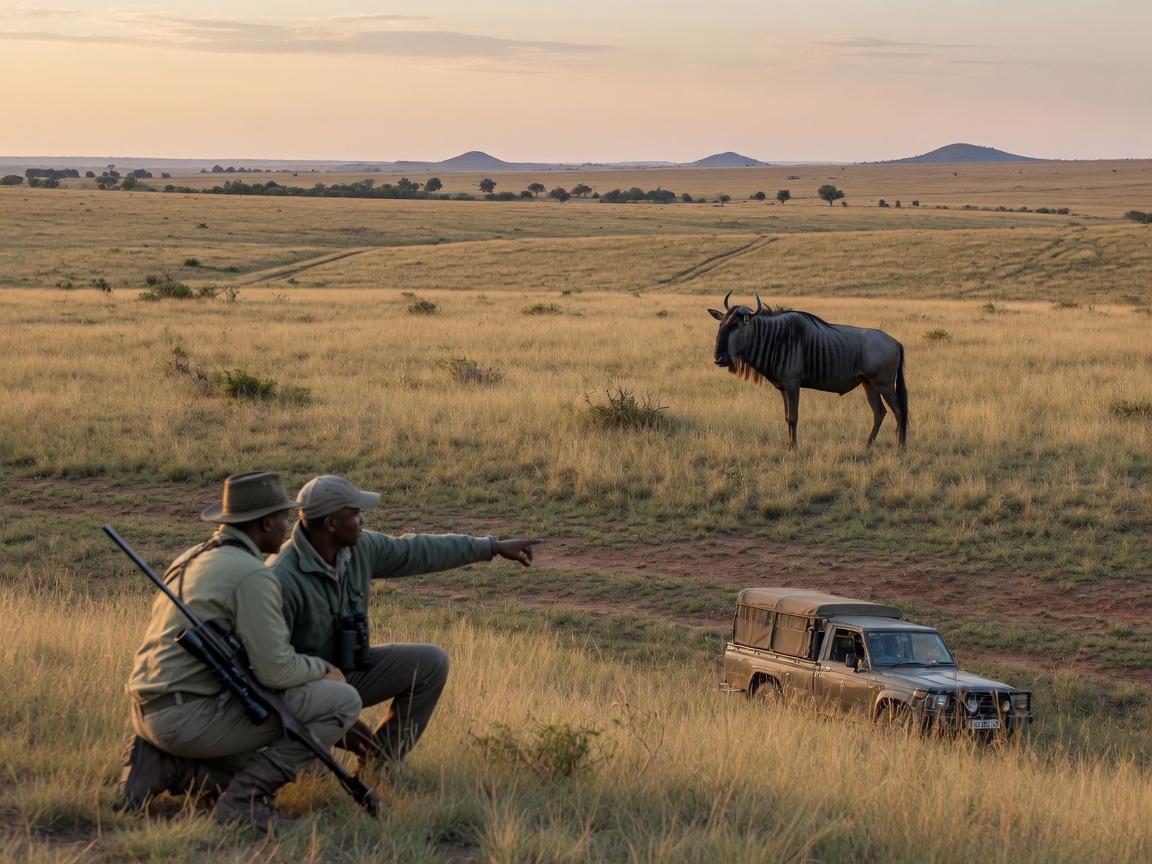
The vast open grasslands of South Africa's Free State province stretch as far as the eye can see, a golden sea of grass under an endless African sky. This is prime country for one of the continent's most iconic plains game animals: the blue wildebeest. Also known as the brindled gnu, these hardy antelope with their sloping backs, flowing manes, and heavy horns offer hunters a true test of skill, patience, and marksmanship. Hunting blue wildebeest here is more than a pursuit of a trophy. It is an immersion in a landscape that has supported wildlife for millennia, combined with a commitment to ethical practices that keep these populations thriving.
Free State grasslands provide some of the best blue wildebeest hunting in southern Africa. Unlike denser bushveld regions, the relatively open terrain allows for long-range spotting and classic walk-and-stalk hunts. Private game ranches and conservancies dominate the hunting scene, offering well-managed habitats where herds of 50 to several hundred animals are common. These properties benefit from scientific wildlife management, with regular population surveys ensuring sustainable off-take. Blue wildebeest numbers in South Africa remain healthy and classified as Least Concern by the IUCN, a status supported by hunting revenue that funds habitat work, water point development, and anti-poaching patrols. Recent industry reports from 2023 and 2024 show strong recovery in hunting tourism after global disruptions, with Free State operators noting consistent demand for plains game packages that include this species.
Success starts with knowing the animal. Blue wildebeest bulls typically weigh 200 to 250 kilograms and stand around 1.4 meters at the shoulder. Prime trophies feature broad, curving horns that can measure 70 to 80 centimeters along the curve, often with a distinctive boss. They live in mixed herds but mature bulls become territorial during the rut in late summer. These animals are alert, possess excellent eyesight, and can run at speeds exceeding 80 kilometers per hour. They are also known for their unpredictable temperament, especially if wounded, which makes a clean first shot essential. In the Free State, you will often find them mixed with other species such as blesbok, springbok, and black wildebeest, creating opportunities for mixed-bag hunts.
Timing your hunt correctly makes a significant difference. The dry winter months from May through August are ideal. Shorter grass improves visibility, animals concentrate around remaining water, and cooler temperatures allow for longer days afield. Early morning and late afternoon remain the most productive periods, as wildebeest typically rest during midday heat. Summer hunts are possible but more challenging due to taller grass and scattered herds. Always confirm current regulations with your outfitter, as provincial permits and quotas apply and can shift based on annual assessments.
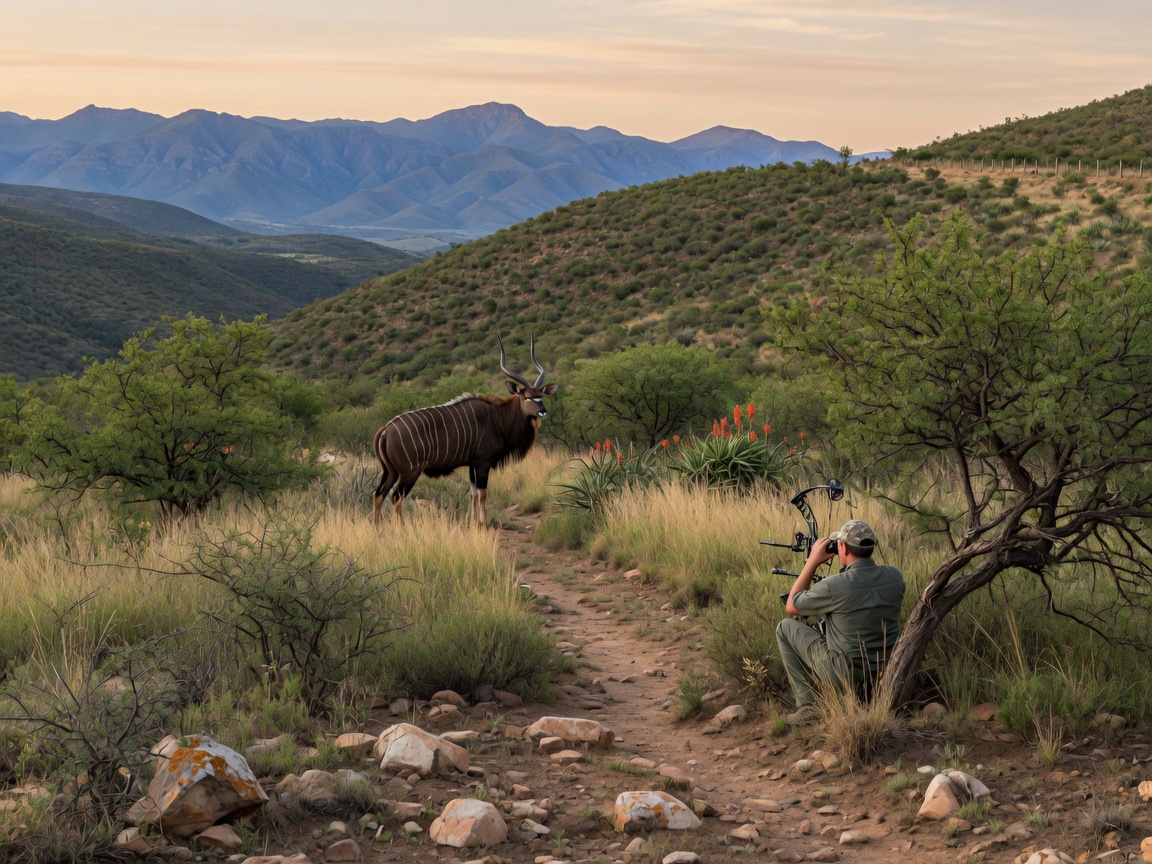
Hunting methods in the Free State lean toward traditional fair-chase approaches. Most hunts begin with vehicle reconnaissance to locate herds, followed by a careful stalk on foot using terrain features, drainage lines, or isolated trees for cover. Glassing from elevated koppies or ridges is highly effective in this country. Some ranches offer hide or waterhole hunting, which suits bowhunters or those seeking a more stationary experience. Wind is your greatest ally and enemy in open grassland. Always approach from downwind and use the terrain to break your outline. Distances can vary widely, from close-range opportunities under 100 meters to shots stretching 250 meters or more across flat ground. A professional hunter is legally required and will guide you through local conditions, animal behavior, and shot opportunities.
Choosing the right equipment is straightforward but important. A reliable bolt-action rifle in a proven caliber such as .308 Winchester, .30-06 Springfield, 7mm Remington Magnum, or .300 Winchester Magnum paired with 150- to 180-grain premium controlled-expansion bullets handles blue wildebeest well. These animals have a sturdy build, so penetration and energy matter. Practice shooting from sitting, kneeling, and improvised field rests, as you will rarely have a perfect bench. Quality 10x42 binoculars are indispensable for judging horn quality and spotting distant herds. Neutral-colored clothing that matches the dry grass, broken-in boots for walking several kilometers, a daypack with water and essentials, and a good rest or shooting sticks complete a practical kit. For bowhunters, a setup delivering at least 60 foot-pounds of kinetic energy with strong, well-tuned arrows is recommended given the open country and potential for longer shots.
Ethical hunting is non-negotiable. Select mature bulls rather than breeding-age cows or young animals unless specifically hunting for meat. Aim for the vital heart-lung area just behind the shoulder. A quartering-away shot requires adjusting your point of aim slightly forward. Follow up immediately on any hit and be prepared for the animal to cover ground quickly. One well-placed shot is the goal. Field care should be prompt in the African climate: dress the animal, cape it carefully if a trophy, and keep meat cool. These practices honor the animal and the tradition.
Conservation is the foundation of hunting in the Free State. License fees, daily rates, and trophy fees flow back into land management, community projects, and wildlife protection. Many ranches practice mixed farming that integrates game with livestock, demonstrating that well-managed hunting land supports both biodiversity and rural livelihoods. Hunters play a direct role in this model. By choosing ethical operators affiliated with organizations such as PHASA, you help ensure standards remain high and benefits reach local people.
From years spent in these grasslands, I can tell you that few experiences match the tension of a stalk across open ground with a herd of wildebeest feeding ahead, their dark forms contrasting against the pale grass. The moment a good bull turns broadside and you settle the crosshairs is unforgettable. Combine your blue wildebeest hunt with other Free State specialties for a fuller experience. Prepare physically for walking, handle firearm import paperwork early, and discuss trophy export requirements well in advance, as even non-CITES species involve documentation.
The Free State grasslands remain one of Africa's most accessible and rewarding destinations for blue wildebeest. The combination of quality animals, professional operators, reasonable costs compared to more famous safari areas, and genuine conservation impact makes it stand out. If the idea of hunting under that big Free State sky appeals to you, start conversations with reputable outfitters now. Research their track record, ask about recent trophy quality, and plan a hunt that respects both the animal and the land. The wildebeest are there, the grass is waiting, and a memorable African hunt is within reach.