Spotting a waterbuck along a riverbank in the African bush is one of those moments that makes your heart race. These impressive antelope, with their shaggy coats and sweeping horns, represent a classic plains game trophy. Yet many hunters struggle to accurately judge waterbuck trophy quality in the field, leading to rushed decisions or disappointment back at camp. Proper field judging separates a good hunt from a great one while ensuring we only take mature animals that have already contributed to the gene pool.
Waterbuck belong to the Kobus genus and come in two primary forms recognized by hunters: the common waterbuck with its distinctive white rump ring and the defassa waterbuck found farther west and north. Both species occupy similar habitats near permanent water and display comparable trophy characteristics. Adult bulls can weigh 500 pounds or more, standing nearly four feet at the shoulder. Their horns grow throughout life, developing the characteristic backward sweep before curving forward at the tips. Typical mature trophies measure 28 to 32 inches along the curve, with exceptional animals exceeding 36 inches. SCI scoring combines the length of both horns plus their basal circumferences, so mass matters as much as length.
Understanding these basics is only the start. In the field you rarely get a tape measure. You must train your eye to evaluate several features quickly and from a distance. Start with overall body size and condition. A trophy bull carries a thick, muscular neck that blends into heavy shoulders. His coat often appears darker and coarser than younger males, especially around the neck and chest. The distinctive white markings on common waterbuck become more pronounced with age. Compare the bull in question to others in the herd. Waterbuck are reasonably social, and the dominant animal usually stands out through both size and demeanor.
Horn assessment requires the most practice. From a broadside or slightly quartering view, look at how far the horns extend beyond the ears. On a quality bull the horns should appear at least one and a half times the length of the head from nose to poll. The bases should look thick, roughly the diameter of a beer can or larger when viewed from the front. Count the number of prominent rings if possible; more than a dozen well-defined rings generally indicate a mature animal. Watch the tips. They should hook inward noticeably rather than growing straight or splaying outward. Symmetry is important for scoring but also signals a healthy, well-developed animal.
Age estimation goes hand in hand with trophy quality. Waterbuck reach sexual maturity around four to five years but do not develop their best horns until seven or eight. Older bulls, those ten years and beyond, often carry the heaviest mass even if length has slowed. Look at the face. Mature animals show a broader muzzle and more pronounced facial markings. Their ears may appear relatively smaller against a larger head. Behavior offers clues too. Older bulls frequently stay slightly apart from the main group or claim the best feeding spots near water. They move with a deliberate, almost arrogant gait.
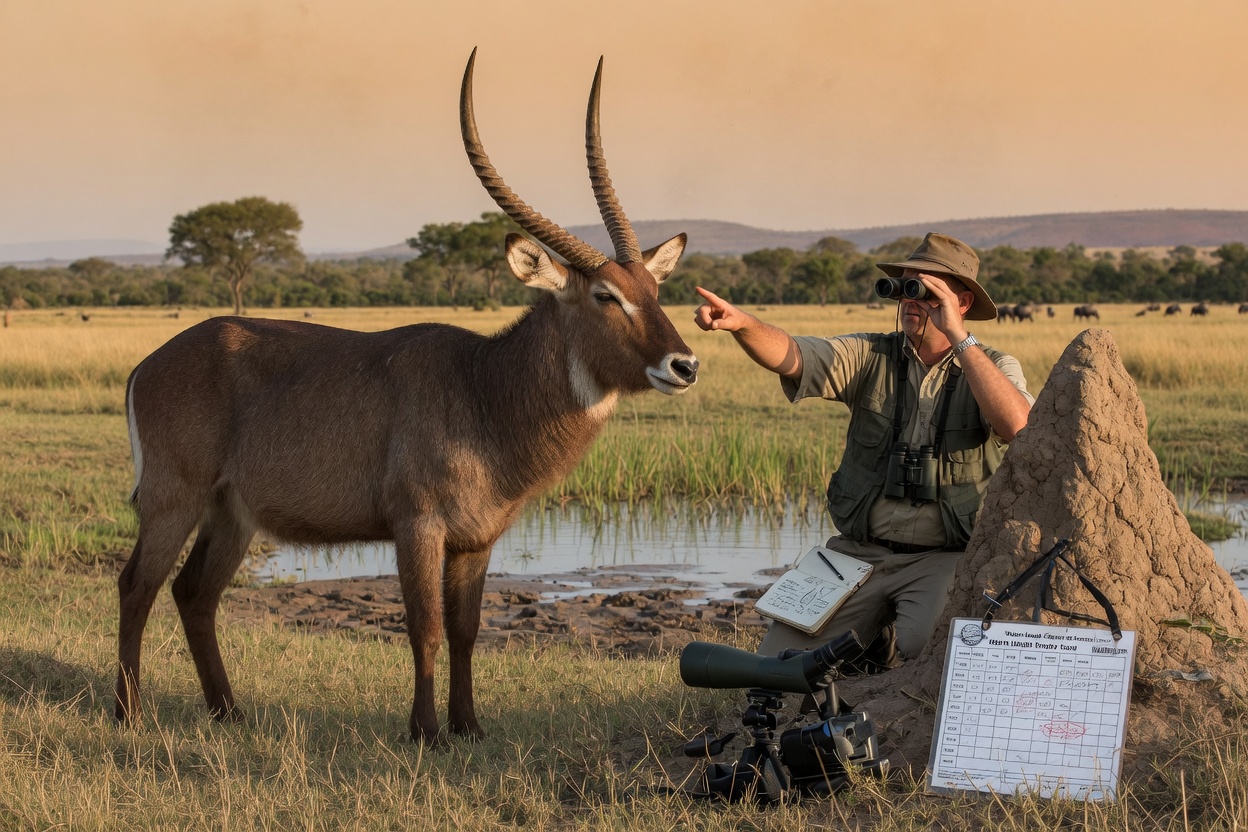
Practical field techniques make all the difference. Always use quality binoculars or a spotting scope. A 10x42 pair lets you study details at 150 to 200 yards without bumping the animal. Approach from downwind and use available cover, typically riverine vegetation or termite mounds. Take your time. A waterbuck that looks huge at first glance often shrinks when you examine the bases and mass. Have your PH or hunting partner give a second opinion. Experience counts, and local knowledge of typical sizes in that concession is invaluable. Photograph the animal if possible for later review, though never at the expense of a clean shot opportunity.
Several common mistakes trip up even experienced hunters. Many overestimate length because waterbuck horns have a dramatic curve that creates an optical illusion. What looks like 34 inches may measure 29. Others focus only on length and ignore mass, ending up with a skinny-horned animal that scores poorly. Shooting the first decent bull you see is another frequent error. Waterbuck populations in well-managed areas often contain multiple mature males. Patience usually produces a better representative. Finally, never judge solely on the white rump ring or coat color. These features vary individually and by subspecies.
Ethics and conservation must guide every decision. Waterbuck remain listed as Least Concern by the IUCN, yet local populations face pressure from habitat loss and unregulated hunting in some regions. Legal, well-regulated hunting provides critical funding for anti-poaching and habitat protection across southern and eastern Africa. By taking only mature males we help maintain healthy age structures. Many concessions now use quota systems based on annual surveys. Respect those limits. A true sportsman leaves younger animals to grow and breed. The satisfaction of a well-judged trophy far outweighs the momentary excitement of pulling the trigger on a marginal animal.
Preparation before the hunt improves your judging skills dramatically. Study photographs and videos of known-score waterbuck. Visit taxidermy studios or museums if possible. Practice estimating measurements on cattle or other livestock at home. Once in Africa, spend the first day or two simply observing herds without hunting. Note how light, distance, and vegetation affect your perception. Discuss typical trophy sizes with your outfitter. In South Africa’s game ranches you may encounter larger average animals due to intensive management, while free-range areas in Mozambique or Tanzania often produce more character-filled, older bulls.
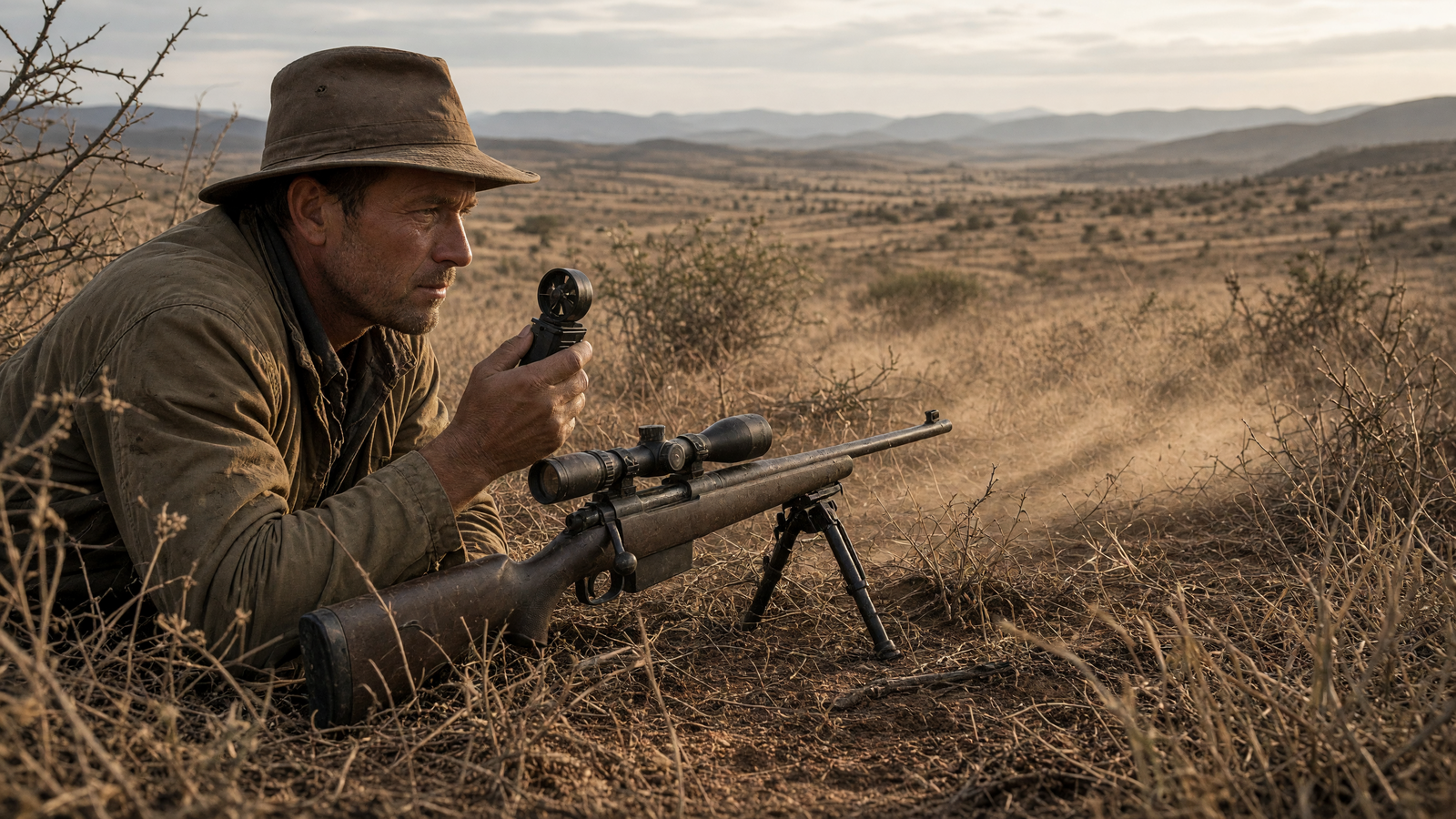
Gear choices support better judging. A lightweight spotting scope with a sturdy tripod lets you examine animals at longer ranges. Rangefinding binoculars help confirm distance so you can better gauge size. Keep a small notebook to record observations about specific bulls you pass. These notes become valuable later when comparing animals. Comfortable clothing in muted colors allows you to remain still for extended periods, giving you more time to evaluate.
Recent developments in African hunting have made field judging even more relevant. Improved wildlife management in several countries has produced stronger waterbuck populations and, in some cases, larger average trophies. At the same time, increased hunting pressure in popular areas means the truly exceptional animals require more skill to locate and judge. Trail cameras have become common scouting tools, yet they cannot replace the ability to evaluate a living animal in real time. The hunter who masters field judging still holds a distinct advantage.
The reward for careful judging extends beyond the score sheet. A mature waterbuck taken after thoughtful evaluation represents the pinnacle of fair-chase hunting. You return home with a trophy that tells a story of patience, knowledge, and respect for the animal. That mount on the wall becomes a reminder of wild places and the responsibility we carry as hunters.
Start practicing these techniques on your next safari or even during local hunts for similar-sized game. Share your own field judging experiences with fellow hunters. The more we discuss and refine these skills, the better stewards we become of Africa’s wildlife. Book your next waterbuck hunt with an outfitter committed to sustainable practices, and go prepared to judge with both your eyes and your ethics. The bush rewards those who take the time to look carefully.