The South African Lowveld stands as one of the most rewarding hunting destinations on the planet. Vast savannas, dense riverine bush and a rich variety of plains game and dangerous game draw hunters from around the world. Success here depends heavily on reliable optics. A crisp view through your riflescope or binoculars can mean the difference between a clean, ethical harvest and a missed opportunity or, worse, a wounded animal. Yet the same climate that supports this incredible wildlife also wages a constant war on your glass. High humidity, sudden thunderstorms, heavy dew and warm temperatures create ideal conditions for fogging, fungal growth and corrosion.
Humidity does far more than make you sweat. External condensation can appear in seconds when you step from an air-conditioned vehicle into the hot, moist air, instantly turning a clear sight picture into a blur. If seals are compromised, moisture enters the optic and causes internal fog that no amount of wiping will fix. Even more destructive is lens fungus. Airborne spores settle on glass surfaces and, in the warm, damp Lowveld environment, can begin growing within days. The fungus produces acids that etch coatings and glass, leaving permanent damage. Industry reports from optical manufacturers confirm that tropical and subtropical regions like the Lowveld accelerate these problems dramatically compared with drier climates. Dust that turns to abrasive mud after rain only adds to the wear on exterior surfaces and moving parts.
I have watched experienced hunters lose shots they should have made because their scope fogged at the critical moment or because fungus had already begun to haze the lenses. Those moments stay with you. Proper care is therefore not merely about protecting an expensive piece of equipment. It is about upholding the ethical standards that define responsible hunting. Clear optics allow precise shot placement, reduce the chance of wounding game and support the conservation model that keeps these hunting areas viable for future generations.
Selecting the right optics forms your first and strongest defence. Insist on fully waterproof and fog-proof models that have been nitrogen or argon purged. Argon, being denser, provides a slight edge in some independent tests by remaining in the tube longer if a seal is marginally compromised. Look for robust O-ring seals, high-quality anodising on metal parts and modern hydrophobic coatings that cause water to bead and run off rather than cling. Brands such as Zeiss, Swarovski, Leica, Vortex and Leupold have invested heavily in these technologies, and many now offer models specifically proven in African conditions. Recent developments include more durable extra-low-dispersion glass, improved scratch-resistant coatings and, in some premium lines, enhanced sealing that carries lifetime waterproof warranties. These features are worth the investment when you consider the cost of replacing a ruined optic or, more importantly, the cost of a failed hunt.
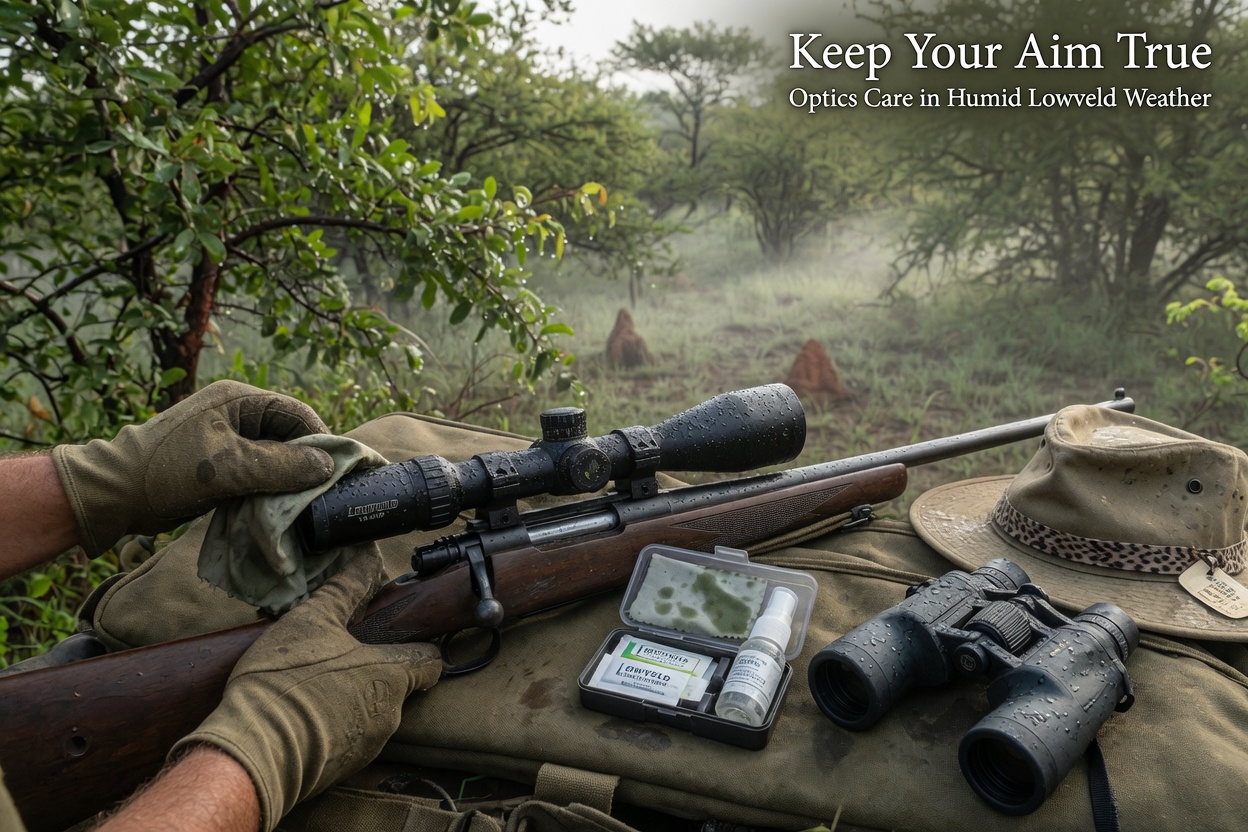
Once you are in the field, daily habits make the biggest difference. Keep flip-up or bikini-style lens covers on whenever you are not actively using the optic. After rain or heavy dew, wipe the exterior with a clean, dry microfiber cloth. Never use your shirt, a paper towel or any fabric that can scratch coatings. Resist the urge to breathe on a lens to clean it; that simply adds more moisture and potential contaminants. Temperature shock is a frequent culprit. If your optics have been in an air-conditioned lodge or vehicle, allow them to warm gradually in the shade before exposing them to the full heat and humidity. Sudden changes produce instant condensation both outside and, if seals are tired, inside. Store the rifle or binoculars in a shaded, ventilated spot rather than a closed case that can trap heat and moisture like a greenhouse.
Cleaning must be done correctly or you risk doing more harm than good. Begin with a rocket blower or a very soft brush to lift loose dust and pollen. Apply a drop or two of approved lens cleaning fluid to a high-quality microfiber cloth, never directly onto the glass, and wipe in gentle circular motions from the centre outward. For stubborn spots a little distilled water on the cloth often suffices. In the Lowveld, insects, pollen and fine dust combine with moisture to form a film that attracts still more dirt, so inspect your lenses at the end of every day. After cleaning, look through the optic toward a bright light or the sky to check for any internal haze or the first signs of fungus, which typically appear as faint spider-web patterns or small spots.
Long-term storage is equally critical, especially if you are on an extended safari or live in the region. Never put damp optics into a case. Use a hard case lined with fresh silica-gel packets or rechargeable desiccant packs. In very humid conditions a small dry cabinet or even a sealed plastic tub with extra desiccant can keep relative humidity well below the 60 percent threshold where fungus thrives. Check and recharge the desiccant regularly. Avoid leather cases, which hold moisture, and never store optics in a closed vehicle overnight. Periodically inspect every optic you own, even those that have not been used recently. Early detection of fungus often allows a manufacturer’s service centre to clean the interior before permanent etching occurs. Attempting to open or clean inside the optic yourself almost always damages the coatings and voids any remaining warranty.
A few extra field-tested habits will further protect your gear. Rain guards or dedicated wet-weather covers are inexpensive insurance during the Lowveld’s afternoon storms. A very light film of appropriate silicone grease on external metal surfaces (kept well away from lenses and seals) helps shed water and inhibit rust. Electronic rangefinders and thermal units need particular attention to battery compartments and rubber seals, as humidity can cause corrosion or short circuits. Always carry spare lens cloths in a zip-lock bag so they stay dry. After a particularly wet day, leave the optics out in a dry, shaded room with the covers off for several hours before casing them.
These practices are not complicated, yet they are frequently neglected until it is too late. A well-maintained scope or pair of binoculars can deliver decades of reliable service. That reliability translates directly into better shot placement and more humane outcomes, which in turn supports the conservation ethic that underpins legal, sustainable hunting in South Africa. Many professional hunters and outfitters in the Lowveld will tell you that clients who arrive with neglected optics often leave disappointed, while those who treat their glass with respect consistently enjoy clearer views and more successful, ethical hunts.
If you have a Lowveld hunt planned, begin your preparation today. Inspect every optic you intend to take, replace worn covers, stock up on quality cleaning supplies and desiccants, and consider a professional service if the equipment is more than a few years old. The small investment of time and money now will pay dividends when that trophy kudu or buffalo steps into the open and you need a perfectly clear sight picture. We would love to hear your own experiences. What methods have you found most effective for keeping optics functional in humid African conditions? Share them with fellow hunters so we can all learn.
The humid Lowveld will always test your gear, but it does not have to defeat it. By choosing the right equipment, practising consistent field care and storing optics properly, you keep your glass clear, your shots true and your hunting ethical. That combination produces the kind of memorable, responsible hunts that keep us coming back to this remarkable part of Africa. Protect your optics and you protect the quality of the experience itself.