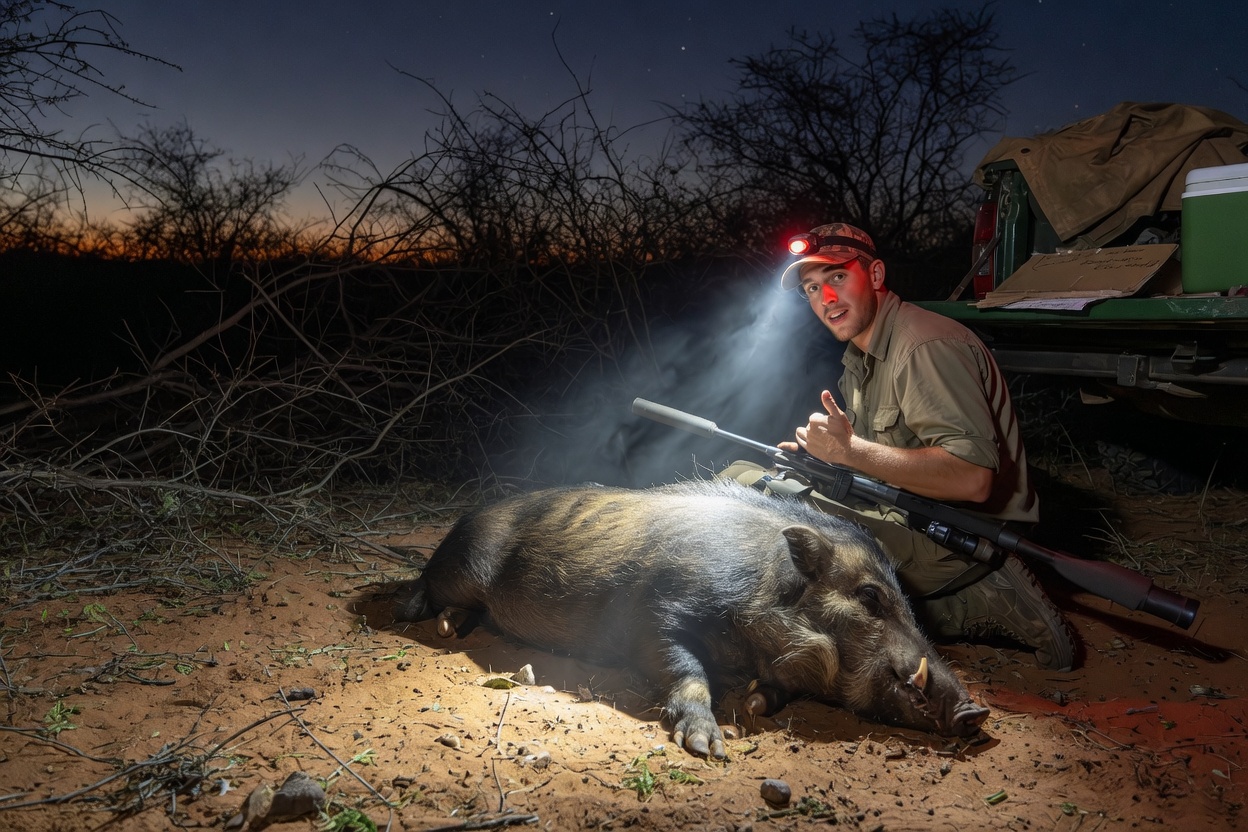
The African night in Limpopo unfolds like a living story, filled with rustles, distant calls, and the kind of silence that makes your pulse quicken. As a complete beginner, I never expected my first night hunt for bushpig to leave such a lasting mark. We set out from a hunting camp in the Waterberg area just as the sun dipped below the horizon, the bushveld turning from gold to deep shadow. Bushpigs, those secretive nocturnal animals also known as Potamochoerus larvatus, come alive after dark. They move through thickets and along riverine bush in small family groups, foraging for roots, insects, and whatever crops they can reach. In Limpopo they are a familiar presence on farms, where their feeding can cause real damage to maize and other plantings. That practical reality, combined with their wariness, makes a carefully planned night hunt both effective and responsible.
I had prepared for weeks. My professional hunter, a PHASA-registered guide with years of local knowledge, walked me through the legal side first. Night hunting for bushpig in Limpopo is permitted under specific provincial rules, usually when the animals are treated as damage-causing species. Permits must be in order, and every hunter is expected to follow the latest guidelines issued by the provincial authority. We used a .308 rifle, a caliber widely recommended for its balance of accuracy and stopping power on an animal that can weigh anywhere from 50 to 150 kilograms. A good spotlight with a red filter reduced the chance of alerting the pigs too early. I wore muted clothing, carried insect repellent, and listened carefully during the safety briefing. Night hunting adds extra layers of risk: limited visibility, uneven ground, and the possibility of other wildlife moving through the same area. We agreed on simple hand signals and a clear plan for what to do after the shot.
The hide sat on the edge of a harvested maize field, a spot the PH had baited lightly with fermented grain over several evenings. We arrived in the last light and settled in. The first hour felt endless. Nightjars called, insects hummed, and once a jackal yipped far off. My mind raced through every piece of advice I had read: stay still, control your breathing, trust the PH. Around 21:30 we heard the first grunt. Two dark shapes emerged from the thicket, moving slowly, noses to the ground. The PH waited until they were broadside and well clear of cover, then switched on the light. The beam caught the larger animal, a young boar with a coarse reddish coat and small tusks. I settled the crosshairs just behind the shoulder, exhaled, and squeezed. The shot was clean. The pig dropped in its tracks. We waited several minutes, then approached with the light still on, confirming it was down and that no others were nearby.
That moment mixed relief, respect, and a quiet sense of achievement. We recovered the animal without waste. Bushpig meat is lean, flavourful, and well suited to a traditional braai or slow cooking. Back at camp we skinned and quartered it under good light, talking through what had gone right and what I could improve. The PH pointed out how the animal’s excellent hearing and sense of smell make wind direction and silence even more important at night than during the day. He also reminded me that a wounded bushpig can be dangerous; a well-placed first shot is both ethical and practical.
Hunting like this is not simply sport. In Limpopo, regulated night hunts for bushpig form part of a wider wildlife-management approach. Farmers lose significant income to crop damage each year, and controlled hunting provides a legal, monitored way to reduce that pressure while generating income that supports habitat work and anti-poaching patrols. The species itself remains listed as Least Concern by the IUCN, with healthy numbers across much of its range. Ethical operators keep harvest numbers modest, use the meat, and treat every animal with respect. That combination of utility and conservation is what drew me to the hunt in the first place.
For other beginners the lessons are straightforward. Choose a reputable outfitter who insists on proper permits and a thorough safety briefing. Practise shooting from sitting or kneeling positions in low light at a range before you travel. Learn the animal’s habits: bushpigs prefer dense cover, travel well-worn paths, and often appear after 21:00. Dress for cool nights, even in summer, and carry a headlamp with a red setting for camp chores. Most importantly, listen more than you speak. The PH has spent years reading the bush after dark; your job is to stay calm and make a clean shot when the chance comes.
I left Limpopo with more than a freezer full of meat. The experience sharpened my appreciation for the night itself, for the skill required to hunt fairly, and for the role responsible hunting plays in keeping both farms and wild places viable. If you are considering your first night hunt, start the conversation with an experienced guide, study the current regulations, and go prepared to learn. The bushveld after dark has a way of teaching you things no daylight hunt can match. Share your own first-night stories or questions below; the hunting community grows stronger when we exchange honest experiences and keep ethics at the centre.