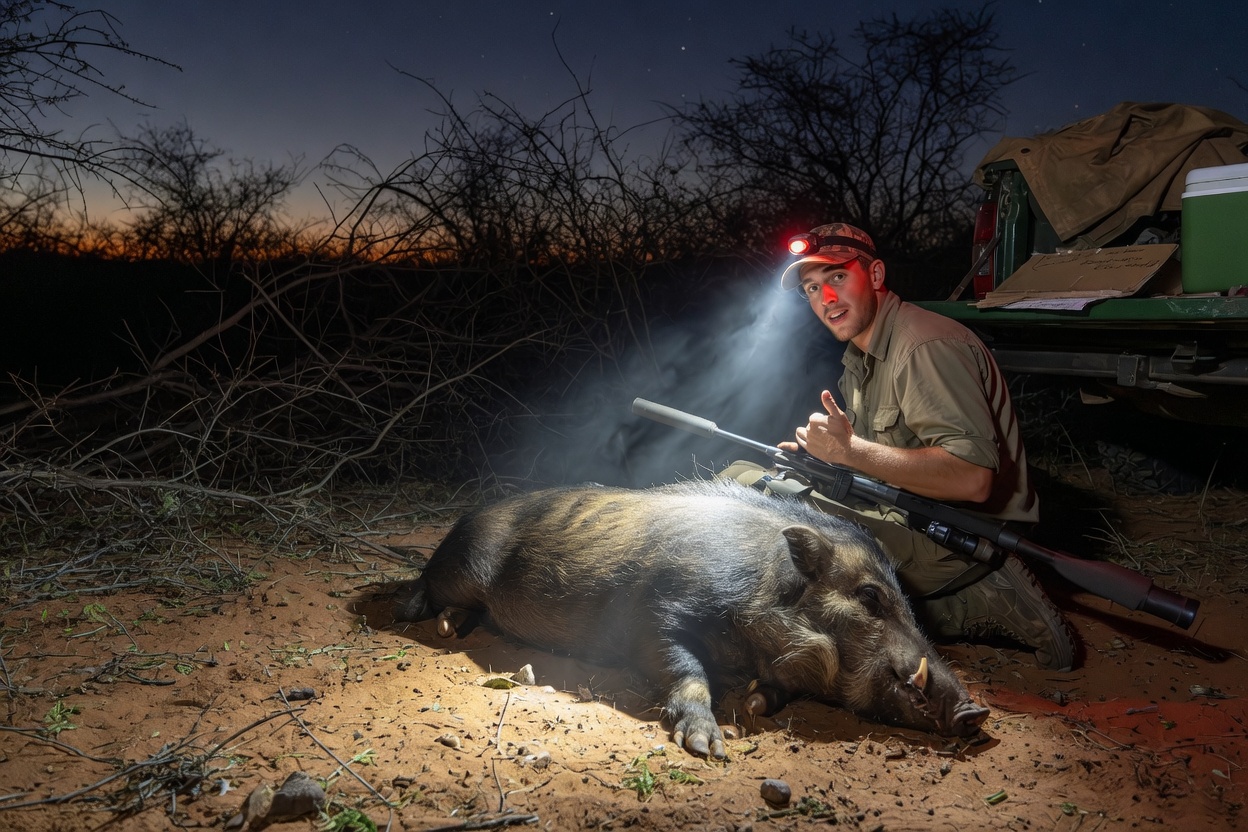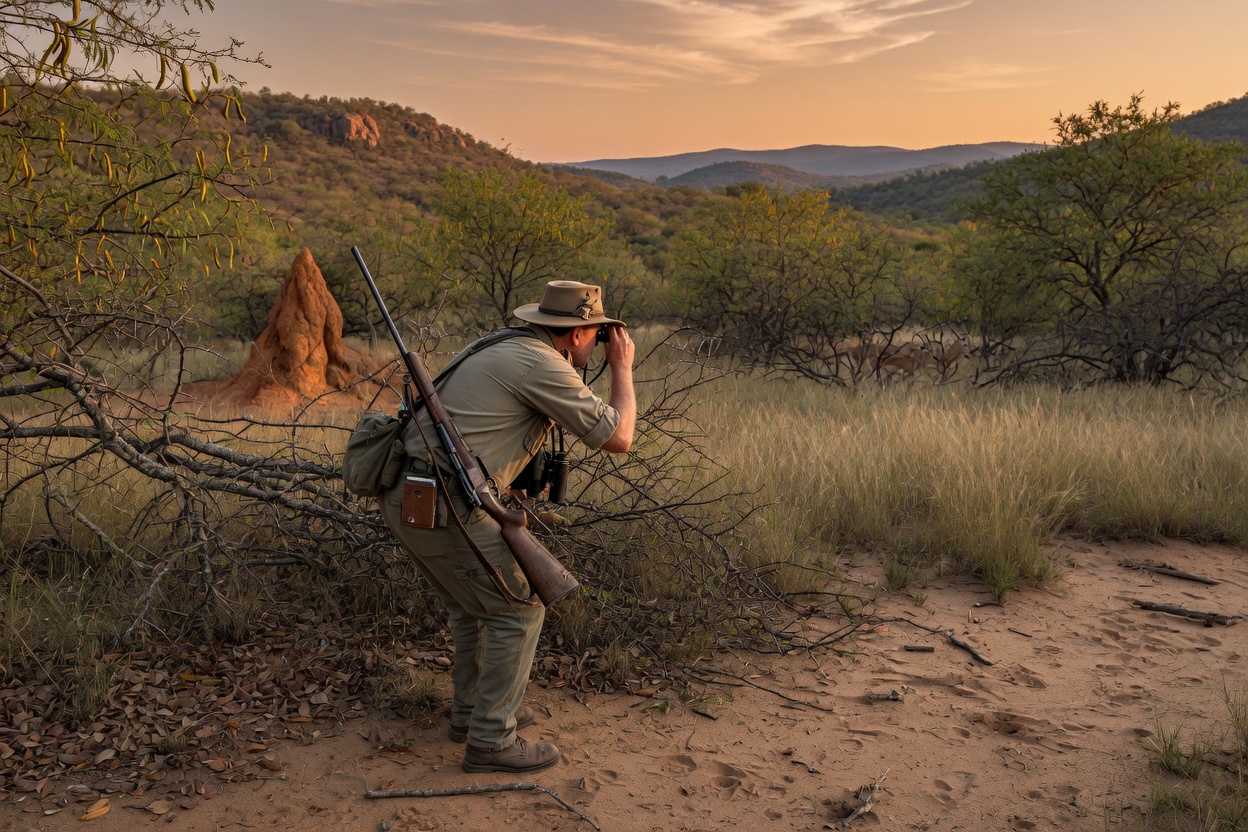
The first light of dawn painted the Limpopo Bushveld in shades of gold and amber as I stepped from the hunting vehicle onto the red earth. Acacia thorns snagged at my gaiters and the air carried the sharp scent of mopane leaves mixed with distant woodsmoke from a nearby village. My professional hunter, a quiet man named Pieter who had spent thirty years reading this country, simply nodded toward a game trail and whispered that we would walk from here. No blinds. No vehicles after this point. Just two men moving through one of Africa's most storied hunting landscapes in the oldest way possible.
That morning began a series of walk-and-stalk hunts that taught me more about the craft than a decade of sitting in tree stands back home. Walk-and-stalk hunting in the Limpopo Bushveld is not merely a method. It is a conversation with the land, the wind, and the animals that live there. The province's mix of thornveld, riverine thickets, and open savanna demands that you become part of the environment rather than an observer of it. Over several days pursuing impala, kudu, and wildebeest, I collected lessons that every hunter who values fair chase should carry with them.
The wind is everything. In the Bushveld the air rarely behaves. Morning thermals rise off the sun-warmed ground and swirl through the trees, then afternoon breezes shift without warning. Pieter taught me to check the wind constantly with a small bottle of unscented powder or even a pinch of fine dust from the trail. We once spent forty minutes circling a small herd of zebra because a faint eddy would have carried our scent straight to them. Studies of animal olfaction show that many African plains game species can detect human scent from several hundred meters when conditions are right. Ignoring the wind is the fastest way to educate every animal in the area that you are there. Approach from downwind whenever possible, and be prepared to abandon a stalk the moment the breeze betrays you.
Slow down more than you think you need to. Western hunters often walk too fast, even when they believe they are being careful. In the Bushveld you must move like the animals themselves. Take three or four steps, then stop and glass. Use every bush, termite mound, and shadow. I watched Pieter cover two hundred meters in twenty minutes, placing each boot with deliberate care so that no twig snapped. The animals here have been hunted by predators for millennia. Their eyes catch movement instantly. Research on ungulate vision confirms they detect motion far better than detail, which is why a hunter who freezes against a tree trunk can sometimes remain unseen even at close range. The moment you rush, the hunt is usually over.
Learn to read the ground. Tracks, droppings, and browse marks tell the story of what passed and how recently. Impala tracks are neat and heart-shaped. Kudu leave larger, more elongated prints with a distinctive dewclaw mark when the ground is soft. Fresh dung that is still moist and dark means the animal is close. Pieter would kneel, rub a bit of soil between his fingers, and tell me whether a herd had fed there that morning or the day before. These skills are not folklore. Wildlife biologists use the same sign to estimate population densities and movement patterns. A hunter who cannot read the Bushveld is simply wandering. One afternoon we followed a single set of fresh wildebeest tracks for nearly a kilometer before the animals appeared in a clearing, completely unaware of us. That stalk would have been impossible without the language of the earth.
Patience is not passive. It is an active decision to wait for the ethical shot. We once had a magnificent kudu bull quartering toward us at eighty meters. The angle was poor and brush covered his vitals. Many hunters would have taken the shot anyway. Pieter simply sat down in the shade and said we would wait. Twenty minutes later the bull stepped into the open and presented a perfect broadside. The bullet went exactly where it needed to go. Ethical hunting in Africa means knowing your rifle, knowing the animal's anatomy, and refusing the marginal opportunity. Organizations that monitor hunting ethics consistently find that rushed shots produce higher wounding rates. A clean kill honors the animal and the tradition. Anything less is a failure of discipline.
The physical demands surprised me. Walk-and-stalk in the Bushveld often means covering ten to fifteen kilometers a day through thorn, loose sand, and uneven ground. Fitness matters. So does the right clothing. Lightweight, thorn-resistant pants, a long-sleeved shirt in muted earth tones, and boots that can handle both heat and hidden rocks are essential. A good pair of binoculars and a rangefinder save time and prevent mistakes. Caliber choice for plains game typically starts at .270 Winchester or 7mm-08 and goes up to .30-06 or .308, always with premium bullets designed for controlled expansion. These are not secrets, but they are details that separate a successful, ethical hunt from a frustrating one.
Conservation is not an afterthought here. It is the reason the animals still exist in huntable numbers. Hunting concessions in Limpopo generate revenue that pays for anti-poaching patrols, habitat management, and community programs. South African wildlife authorities have documented that well-regulated hunting provides a significant portion of the funding that keeps private and communal lands dedicated to wildlife rather than converted to livestock or crops. When a hunter takes an animal under a legal quota, that animal has already contributed more to the survival of its species than it would have in an unhunted population facing habitat loss and illegal snaring. This is not theory. It is the working model that has allowed species like the southern white rhino and many plains game populations to recover from historic lows.
I left Limpopo with more than memories of stalks and sunsets. I left with a deeper respect for the animals, the land, and the men and women who manage it. Walk-and-stalk hunting strips away the comfort of blinds and vehicles and forces you to meet the wild on its own terms. It is harder, slower, and infinitely more rewarding. If you have never tried it, consider making the journey. The Bushveld will teach you things no book or video can. And when you return home, you will hunt differently, with more patience, more awareness, and a stronger commitment to doing it right.
The next time you plan a hunt, think about leaving the vehicle behind and walking. The lessons are waiting in the thornveld, written in tracks and carried on the wind. Share your own walk-and-stalk stories with fellow hunters, support outfitters who prioritize ethics and conservation, and remember that every responsible hunt is a vote for the future of wild places. The Bushveld is still out there, ancient and alive, ready to teach the next hunter who is willing to listen.