The first time you hear a Cape buffalo grunt in the mopane woodland of Namibia's Caprivi region, something primitive stirs in your chest. I had read the stories, watched the videos and listened to old hunters talk about the Black Death, but nothing prepares you for the real thing. This is the diary of that first encounter, written while the dust of the Zambezi floodplains was still on my boots and the memory of those massive bosses was still sharp.
I arrived at the remote hunting camp after a long flight into Katima Mulilo and a dusty drive through the former Caprivi Strip, now officially the Zambezi Region. The camp sat on a high bank overlooking a channel of the river, with elephants visible in the distance and the constant soundtrack of fish eagles. My professional hunter, a quiet Namibian with twenty years in these blocks, laid out the rules immediately. We hunt on foot. We take only mature bulls. We respect the animal and the land. Every dollar of the trophy fee goes into community conservancies that fund anti-poaching patrols and schools. Namibia's model works. Wildlife numbers here have grown because rural people see direct benefit from living with dangerous game instead of viewing it as a threat.
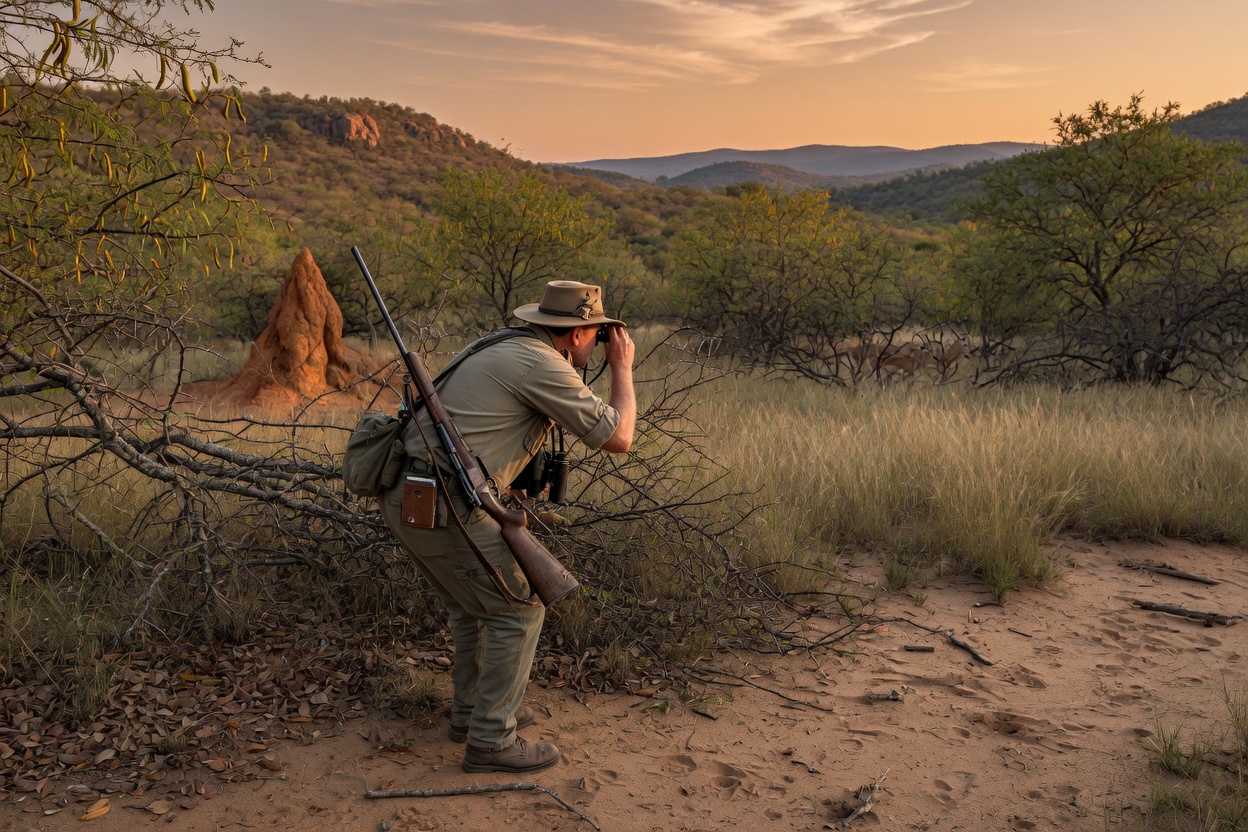
The first two days were about learning the country. We walked. A lot. Buffalo sign was everywhere once you knew how to read it. Fresh tracks the size of dinner plates, dung still warm, the way a herd of cows and calves had crossed a sandy pan at first light. My PH taught me to distinguish a dagga boy's track from a younger bull by the width of the pad and the depth of the dewclaws. We glassed from termite mounds and sat in the shade of sausage trees while the heat built. I saw more game in those two days than I had in years of hunting elsewhere: herds of lechwe in the floodplains, a leopard slipping across a road at dusk, elephants treating our Land Cruiser like a minor inconvenience. The buffalo remained elusive, as they often do.
On the third morning the tracker, a local man who could read the ground like a newspaper, found what we wanted. A small group of bulls had fed through a stand of young mopane just after sunrise. The tracks were huge. We followed for three hours, the wind constantly in our faces, moving when the buffalo moved, freezing when they stopped to feed or rest. My heart was already hammering and we had not even seen them yet.
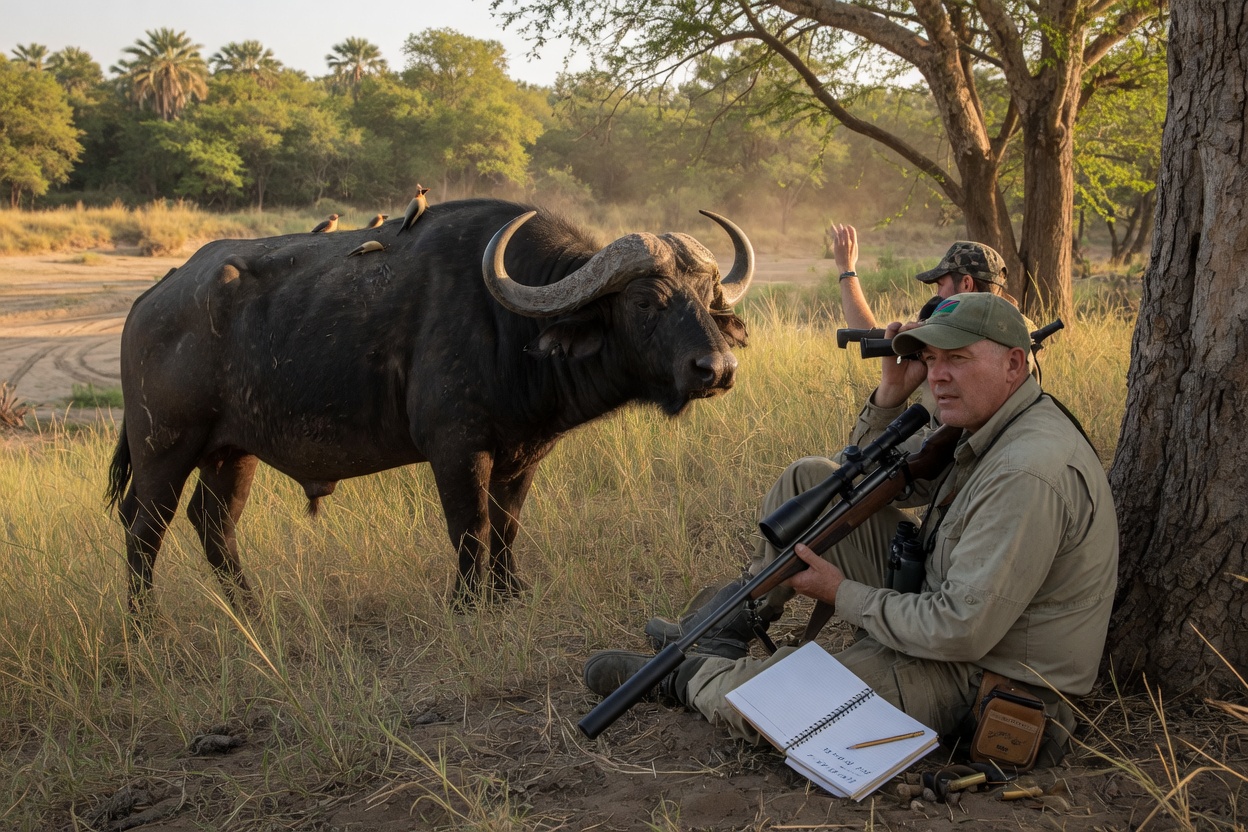
Then they were there. Four bulls standing in a small opening, black as coal against the pale grass. The biggest one had a heavy, hard boss that met in the middle and deep curls that would go well over forty inches. He was old. His body showed the scars of a lifetime of fighting. The PH confirmed with a nod. This was the one. We closed the distance to eighty yards using every scrap of cover. I set up on the shooting sticks, found the spot just behind the shoulder, and waited for him to turn broadside. The world narrowed to the sight picture and the sound of my own pulse.
The .416 Rigby recoiled and the bull hunched, then spun and crashed into the thick stuff with the others. We waited the obligatory minutes, listening. No death bellow. We took up the blood trail carefully, rifles ready, the PH in front. Two hundred yards later we found him down in a small clearing, already still. No charge, no drama, just a clean, ethical end to a magnificent animal. I sat down hard. The adrenaline dump left me shaking. I placed a hand on that worn, mud-caked hide and felt genuine gratitude. This was not a video game animal. This was a creature that could have ended me in seconds if things had gone differently, and I had been given the privilege of taking him.
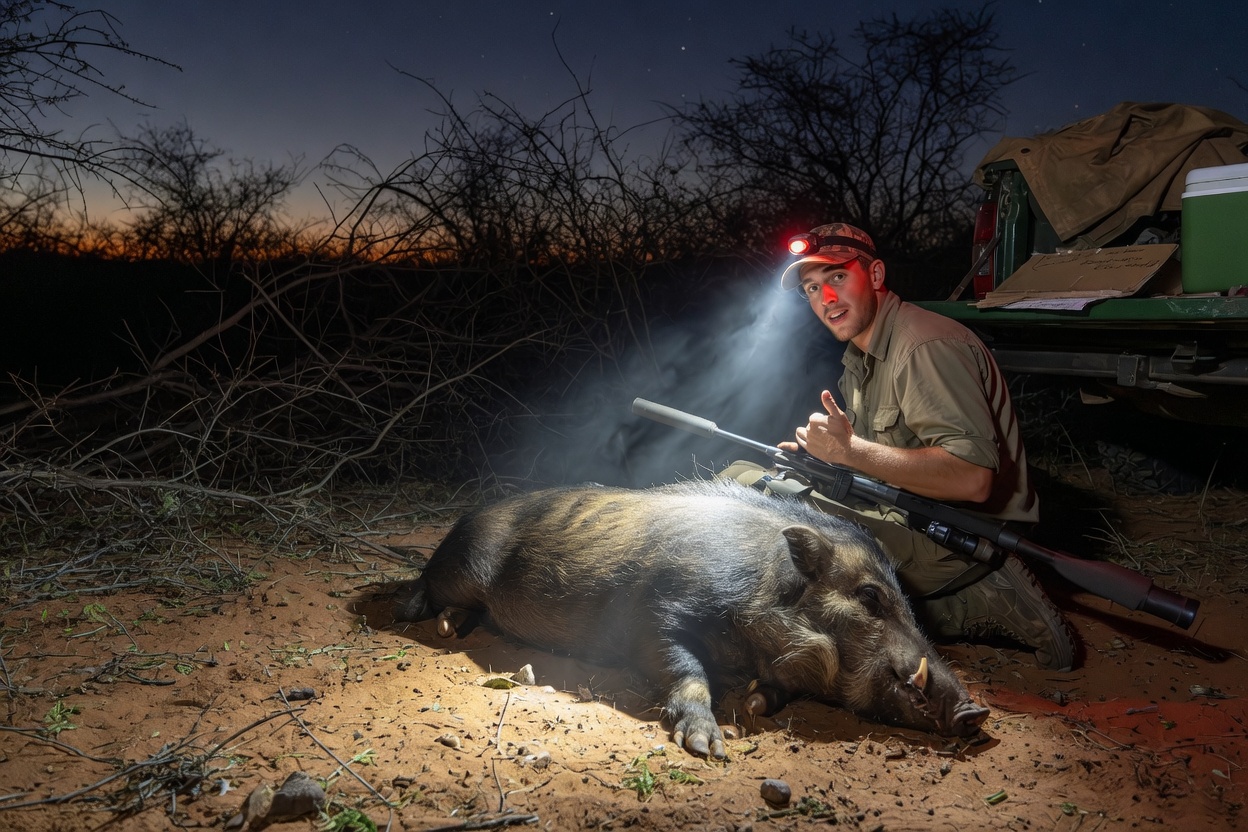
We recovered every bit of usable meat. The local staff would distribute it to nearby villages that same afternoon. The skull and cape were prepared for the taxidermist. Around the fire that night we talked about shot placement, about how buffalo often absorb a poorly placed bullet and keep coming, about why a hunter owes the animal a first-shot kill. I learned more in those few hours than in years of reading.
Cape buffalo remain one of Africa's most respected dangerous game animals for good reason. They are unpredictable, they have exceptional senses, and a wounded bull will often circle and wait. Current best practice among ethical operators in the Zambezi Region is simple: hunt with an experienced PH who knows the specific concession, use a minimum of .375 H&H with premium solids or bonded bullets, and never take a shot you are not certain of. Practice from shooting sticks until it is automatic. Understand that the real hunt is the tracking and the stalk, not the trigger pull. Namibia's conservancy program has shown that well-regulated hunting can coexist with growing wildlife populations. Independent studies and government data confirm that areas with sustainable hunting have better anti-poaching outcomes and more habitat protection than purely photographic areas in similar landscapes.
That first buffalo changed how I think about hunting. It stripped away any remaining casual attitude. You do not take a Cape buffalo. You earn the right to hunt one through patience, physical effort and respect. The encounter stays with you. I still hear that deep grunt when I close my eyes.
If you are considering your own first dangerous game hunt, do it right. Choose operators who put conservation and community first. Prepare physically and mentally. And when you finally stand over that old dagga boy, take a moment. The animal deserves it.
I would love to hear your own first buffalo stories. Drop them in the comments or reach out if you are planning a trip to the Caprivi. The buffalo are still there, the country is still wild, and the model still works when we hunt with integrity.