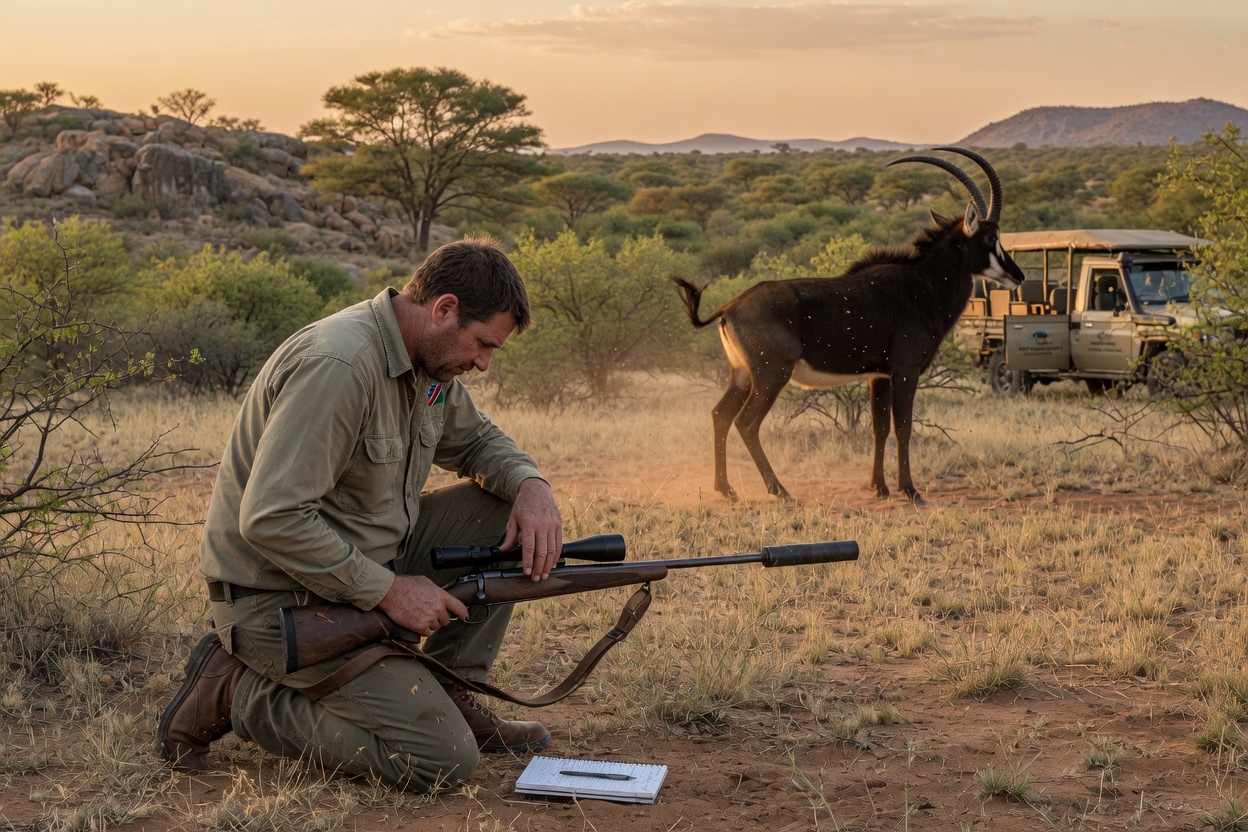
Namibia remains one of Africa's premier hunting destinations, where vast landscapes, healthy wildlife populations, and community-based conservation create opportunities few other places can match. I traveled there last season with high hopes of taking a mature sable bull, one of the continent's most striking antelope with its glossy black coat, white facial markings, and sweeping scimitar horns. What unfolded instead was a complete failure of the stalk. The animal walked away untouched. That miss, however, taught me more about hunting, ethics, and myself than any successful hunt I have ever completed.
The story began in a well-managed conservancy in northern Namibia, an area of mixed mopane woodland, open grassland, and rocky ridges. My professional hunter and I had glassed a bachelor group of sable the previous afternoon. One bull stood out immediately. His horns swept back in a deep curve, tips worn from years of fighting, body thick through the neck and shoulders. We marked the location and planned a dawn approach.
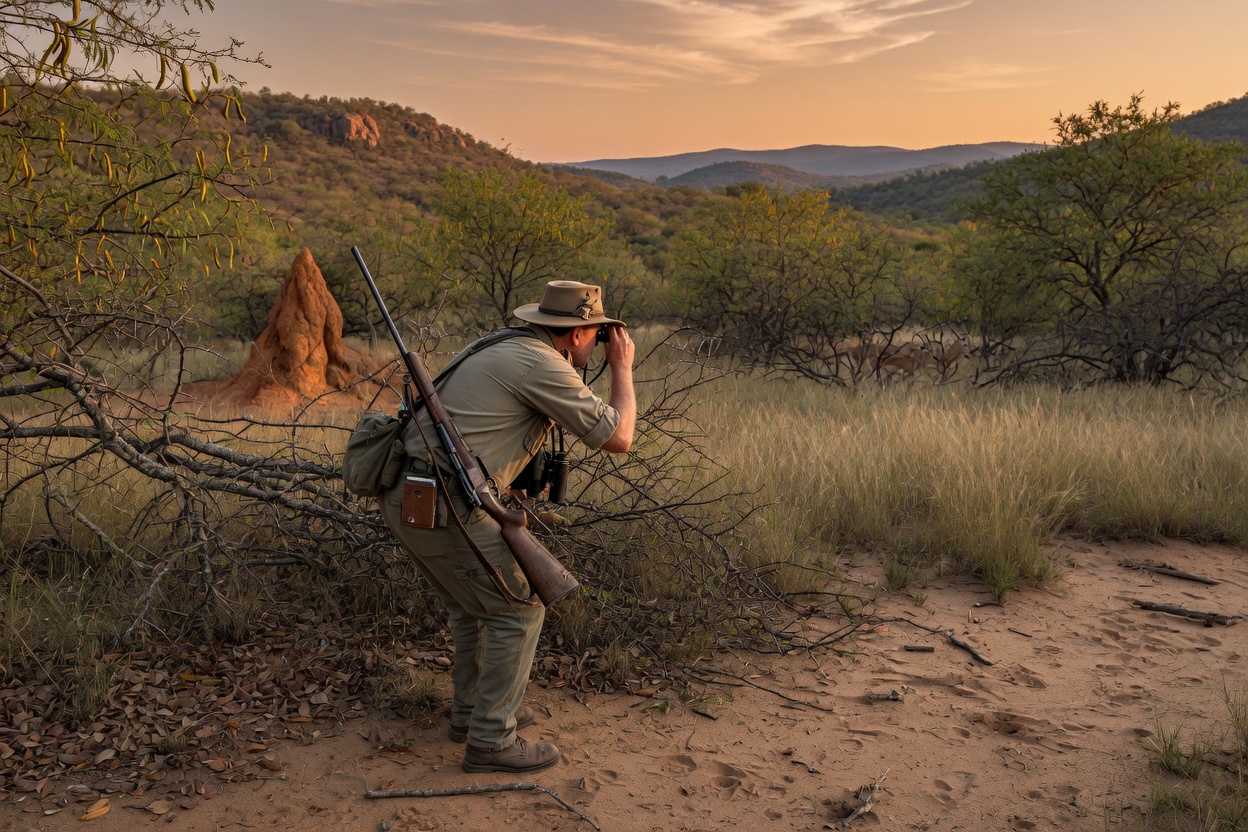
We left camp well before first light, moving slowly on foot after the vehicle drop-off. The morning air was cool and still. We used every fold in the ground, staying below the skyline, checking the wind constantly with a small bottle of fine ash. For nearly two hours we closed the distance. The bulls were feeding slowly, heads down, occasionally lifting to scan. At 90 yards I settled onto the shooting sticks. The chosen bull quartered slightly toward us, presenting a less-than-ideal angle. I waited. Then a sudden puff of breeze, almost imperceptible, carried our scent. The lead cow in a nearby mixed group barked once. Every sable head snapped up. In three seconds the entire group vanished into the mopane.
No shot was fired. We never saw that bull again during the remaining days.
The first lesson arrived immediately: wind is not a suggestion in African hunting. It is the single most important factor. Sable possess an exceptional sense of smell. Studies of antelope behavior and decades of professional hunter reports confirm they will detect human scent at distances far greater than most hunters expect, especially in still air or when thermals begin to rise. I had checked the wind, but I had not accounted for a micro-shift caused by the warming ground. From that day forward I began carrying two wind checkers and making a habit of reading vegetation movement and insect flight even when the air felt dead. Simple, cheap tools prevent expensive mistakes.
The second lesson concerned patience and shot selection. I could have taken the shot. Many hunters would have. The distance was ethical, the rifle zeroed, the rest solid. But the angle was poor and the animal was already alert. A wounded sable in thick cover is a dangerous and heartbreaking proposition. Namibia's hunting regulations and the ethical codes of reputable outfitters emphasize clean, one-shot kills. Passing on a questionable opportunity is not weakness. It is the mark of a hunter who values the animal more than the story. Research from wildlife veterinarians and ballistics experts consistently shows that quartering-to shots on large antelope increase the risk of a non-vital hit. I chose to live with an empty tag rather than risk that outcome.
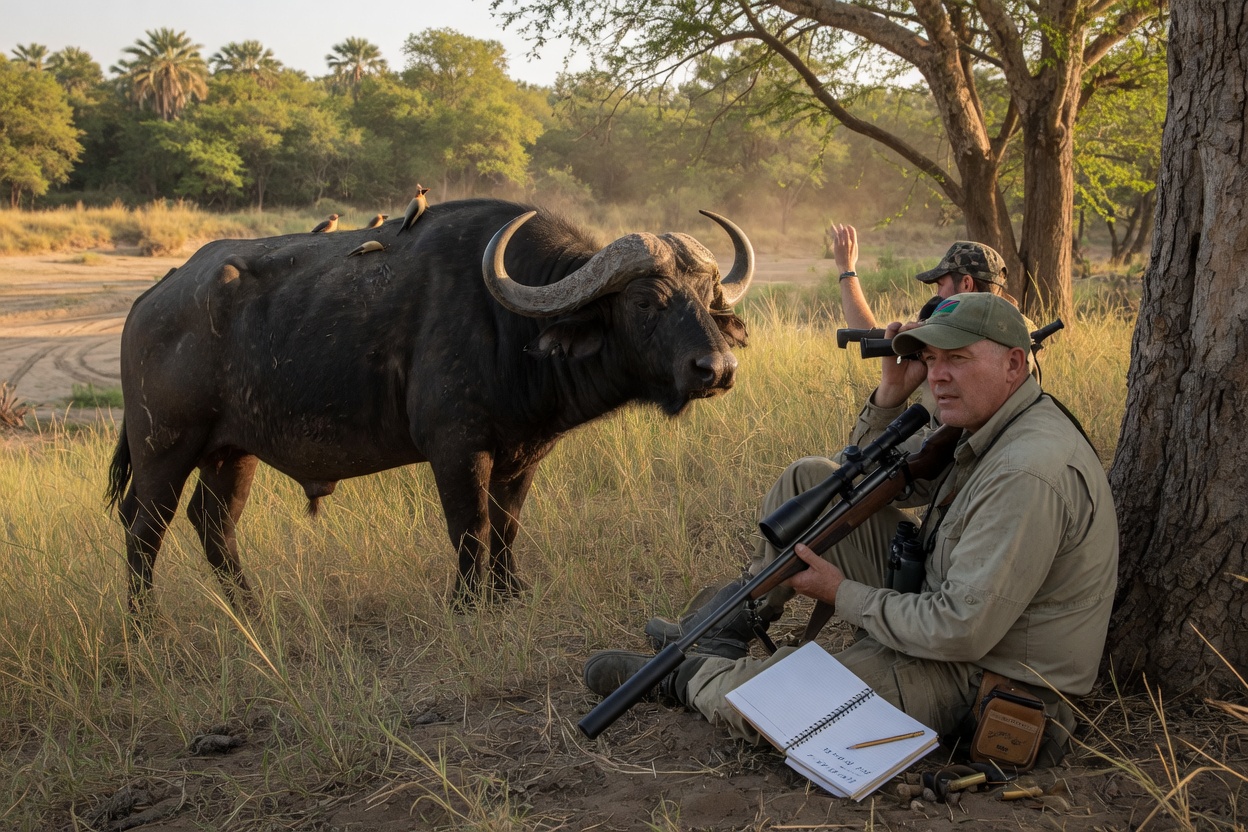
A third lesson involved understanding sable behavior itself. These animals are not the same as impala or even kudu. Mature bulls often stay with bachelor groups until the breeding season, then become territorial. They are highly visual and will use high ground to watch for danger. They also respond strongly to alarm calls from other species. That single bark from the cow ended the stalk. Spending time studying recent field observations and speaking with Namibian PHs beforehand would have prepared me better for how quickly a sable group can dissolve. Hunters heading to Namibia should treat pre-hunt research as seriously as rifle practice.
The failure also reinforced the conservation reality of hunting in Namibia. Even though no animal was taken, the daily rates, concession fees, and community levies still flowed to the conservancy. Namibia's communal conservancy program, now covering millions of hectares, has been documented by organizations such as the Namibian Association of CBNRM Support Organisations as a model that has increased wildlife numbers while providing income to rural communities. Legal, well-regulated hunting remains one of the most effective tools against poaching and habitat loss in the region. A failed stalk does not diminish that contribution. It simply means the hunter returns home with a different kind of trophy: humility and improved skill.
Practical takeaways I now share with anyone planning a Namibia hunt include physical preparation for long, slow stalks over uneven ground, extensive practice from shooting sticks at unknown distances, and a clear personal rule about shot angles. I also recommend choosing outfitters who are members of the Namibia Professional Hunting Association and who operate in conservancies with transparent quota systems. Ask about recent drought impacts and how they affect animal condition and movement. Climate variability has become a larger factor in southern African hunting in recent years, and ethical operators adjust their approach accordingly.
That sable bull is still out there, older and wiser. I like to think the encounter made both of us better. Hunting is not only about the animals we take. It is equally about the ones we let walk and the lessons they leave behind. If you are considering a sable hunt or any African plains game hunt, go prepared, hunt ethically, and be ready to learn even when the stalk fails.
Share your own close-call stories or questions about Namibia hunting in the comments. Support conservation-focused operators and consider contributing to anti-poaching efforts that make these hunts possible for future generations.