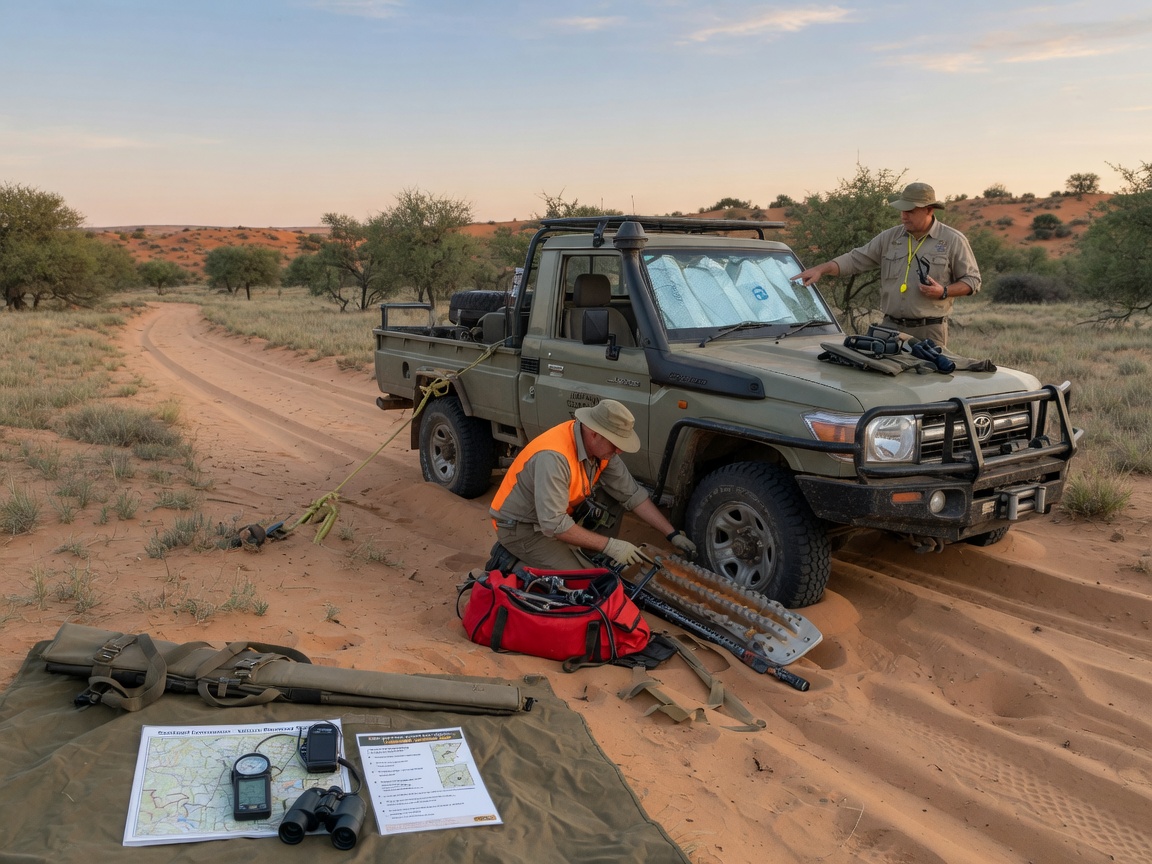
The Sandveld stretches out like an endless canvas of pale dunes and hardy scrub, offering hunters some of the most authentic and challenging experiences on the African continent. For outfitters leading clients through these remote sandy expanses, the landscape delivers unforgettable stalks after gemsbok, springbok, and other plains game. Yet that same beauty hides real danger. Soft sand can swallow a vehicle in minutes, turning a routine transfer into a stranded situation far from help. Vehicle safety and recovery are not optional extras here. They form the backbone of professional outfitting, protecting lives, preserving the hunt, and honoring the land we depend on.
Sandveld terrain demands respect. Unlike firmer bushveld or rocky kalahari pans, the fine, wind-blown sand here shifts constantly. After rain it can become deceptively firm on the surface while remaining loose underneath. Midday heat dries it into powder that offers almost no traction. Outfitters who treat every track as potentially treacherous stay ahead of trouble. Recent field reports from southern African hunting associations note that vehicle incidents remain one of the top causes of delayed or cancelled hunts in sandy regions, often because crews underestimated how quickly conditions change.
Preparation starts long before the first client arrives. Choose vehicles built for the job. Proven platforms such as the Toyota Land Cruiser 70 and 79 series or well-equipped Ford Rangers dominate Sandveld operations for good reason. Their ground clearance, locking differentials, and reliable diesel engines handle prolonged low-range work. But even the best truck fails without maintenance. Inspect tires weekly for cuts and proper load ratings. Carry at least two full-size spares. Check cooling systems thoroughly because sand clogs radiators fast. Keep a detailed log of every service. Many experienced outfitters now use simple digital checklists on tablets so nothing gets missed during the rush of camp setup.
Tire pressure management is the single most effective prevention tool. Drop pressures to 1.0–1.4 bar (15–20 psi) when entering deep sand. This increases the tire’s footprint and lets it float rather than dig. Always reinflate as soon as you reach firmer ground using a quality portable compressor. Leaving tires soft on rocky tracks destroys sidewalls. Practice this routine until it becomes automatic for every driver on your team.
When prevention fails, recovery gear must be ready and understood by everyone. A complete kit includes two pairs of recovery boards such as Maxtrax or equivalent, a long-handle shovel, a high-lift jack with a wide base plate, a rated kinetic recovery rope, two snatch straps, shackles, gloves, and a first-aid kit dedicated to recovery injuries. Winches remain valuable but they are not magic. In open Sandveld you often lack solid trees, so carry a sand anchor or be prepared to bury a spare tire as a deadman. Kinetic ropes have largely replaced old-style static straps because they store energy and reduce shock loading. Industry tests from recovery specialists show they cut vehicle damage by more than half when used correctly.
Technique matters more than equipment. If you feel the vehicle start to bog, ease off the throttle immediately. Spinning wheels only dig deeper. Assess the situation before anyone jumps out. Clear sand from in front of the tires, place boards at a slight upward angle, and use gentle rocking rather than full power. Communicate clearly. One person directs. Never stand in the path of a taut rope. Recent safety bulletins from 4x4 training organizations emphasize that most injuries occur during rushed recoveries when people forget basic rules.
Outfitters carry extra responsibility. Your clients trust you with their safety and their once-in-a-lifetime hunt. Train every staff member, including trackers and skinners, in basic recovery. Run dry-land drills at the start of each season. Simulate a stuck vehicle so the team learns roles under pressure. Include clients in a short safety briefing so they understand why you stop to air down or why you choose a particular route. This transparency builds confidence and reduces panic if something goes wrong.
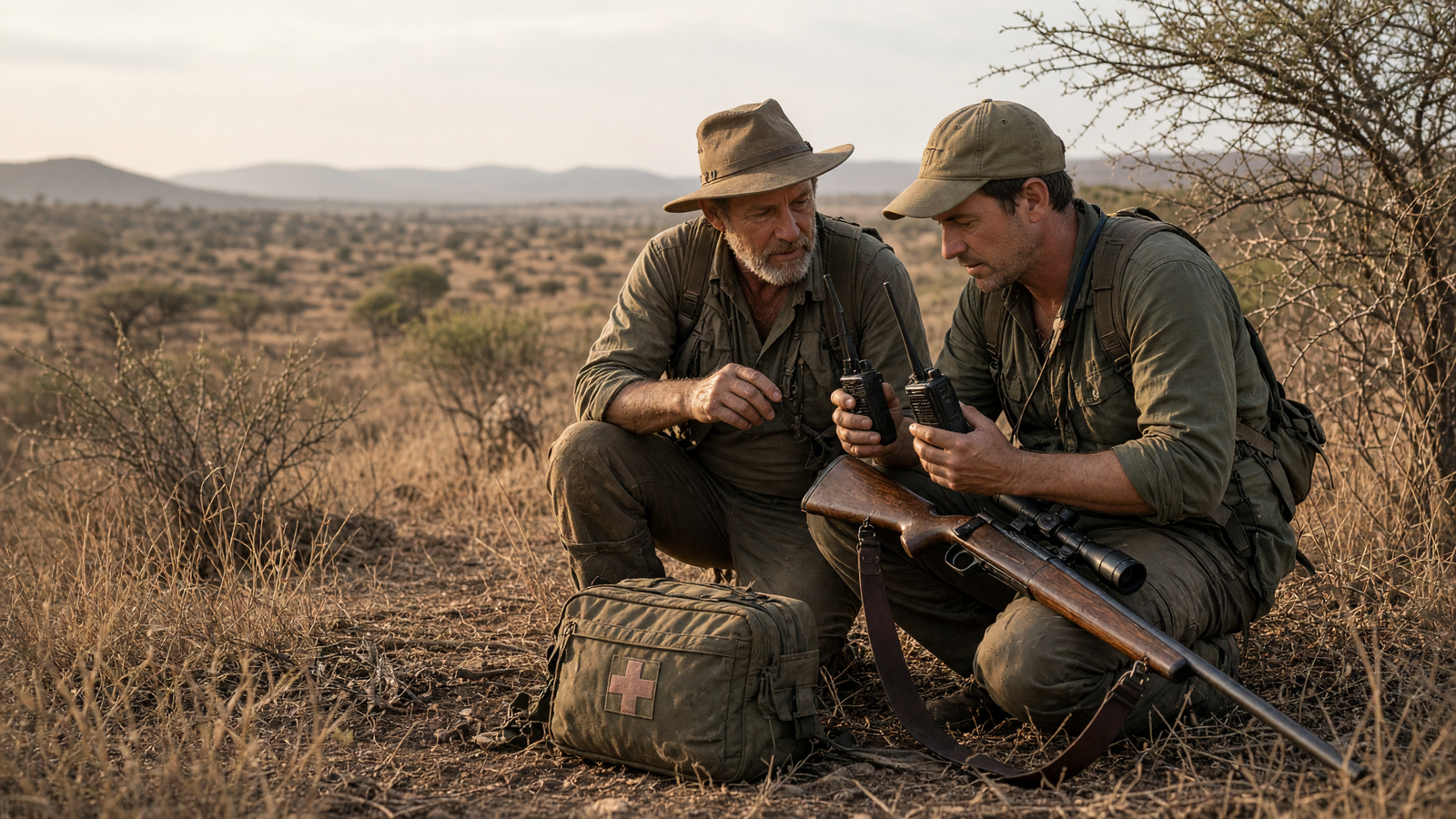
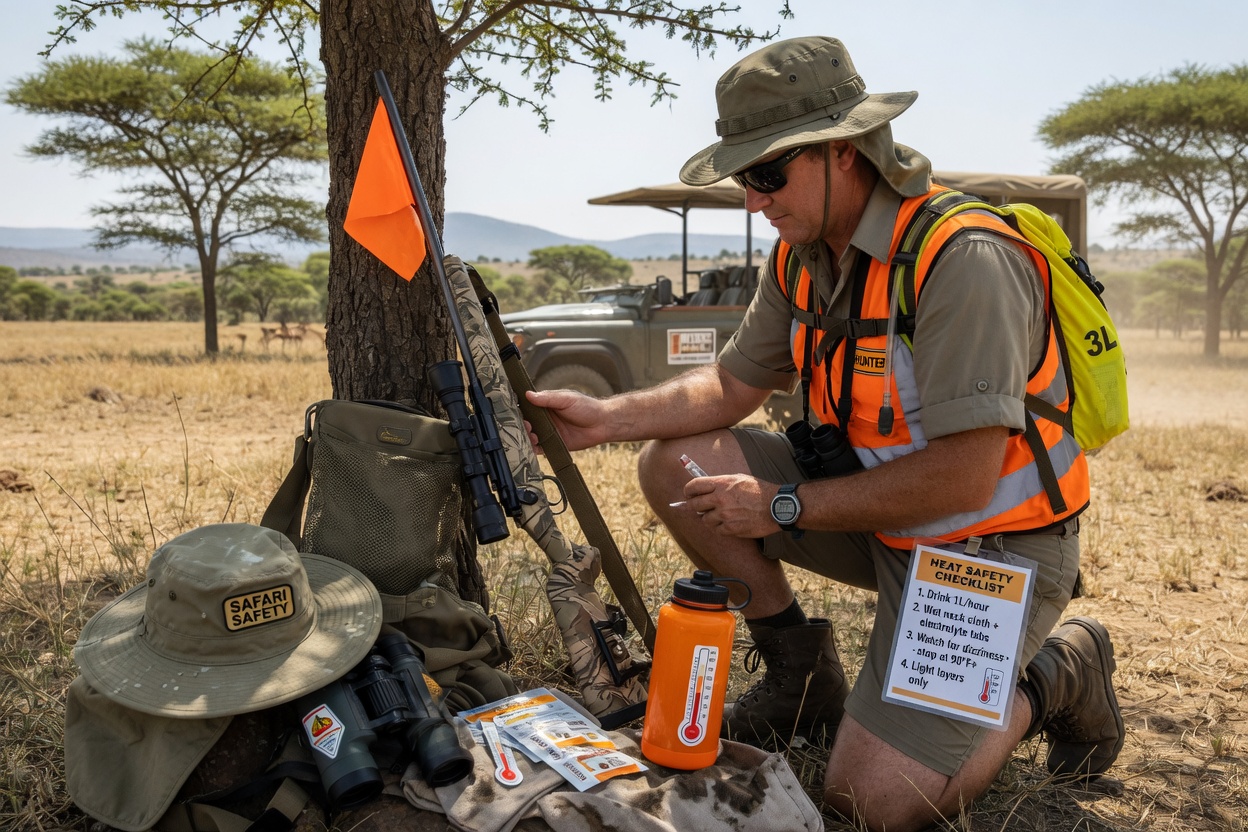
Communication and emergency planning close the safety loop. Cellular coverage vanishes quickly in true Sandveld. Equip every vehicle with a satellite communicator or a reliable two-way radio network. Carry a personal locator beacon. Share daily GPS waypoints with base camp. Heat exhaustion and dehydration become real threats during a long recovery, so extra water and shade tarps belong in every kit. Know the nearest medical evacuation options and keep those contacts current.
Conservation sits at the heart of ethical outfitting. Reckless recovery scars the land. Spinning tires tear up vegetation that takes years to recover in this fragile ecosystem. Always choose the least damaging extraction path. Fill in holes and ruts before you leave. Never winch from living trees if an alternative exists. These small acts protect the habitat that sustains the game we hunt and the future of our profession. Hunting organizations across southern Africa increasingly tie concession renewals to demonstrated low-impact practices. Outfitters who lead on this front gain both moral high ground and practical advantage.
I have watched too many hunts unravel because a vehicle sat buried until nightfall. One season a client’s dream gemsbok was lost simply because the recovery took so long the animal could not be reached before dark. That experience changed how I outfit. We now treat vehicle readiness with the same seriousness as rifle zeroing or meat care. The result has been fewer delays, happier clients, and cleaner concessions.
Invest in quality gear, train your people, and treat every sandy track with humility. The Sandveld will still test you, but you will meet those tests prepared. Your clients will notice the difference. They will tell others. More importantly, you will go home knowing you kept everyone safe and left the land as you found it.
Share your own hard-won recovery lessons with fellow outfitters. The more we talk openly about what works, the safer every hunt becomes. Stay sharp out there.