Black Springbok Hunting
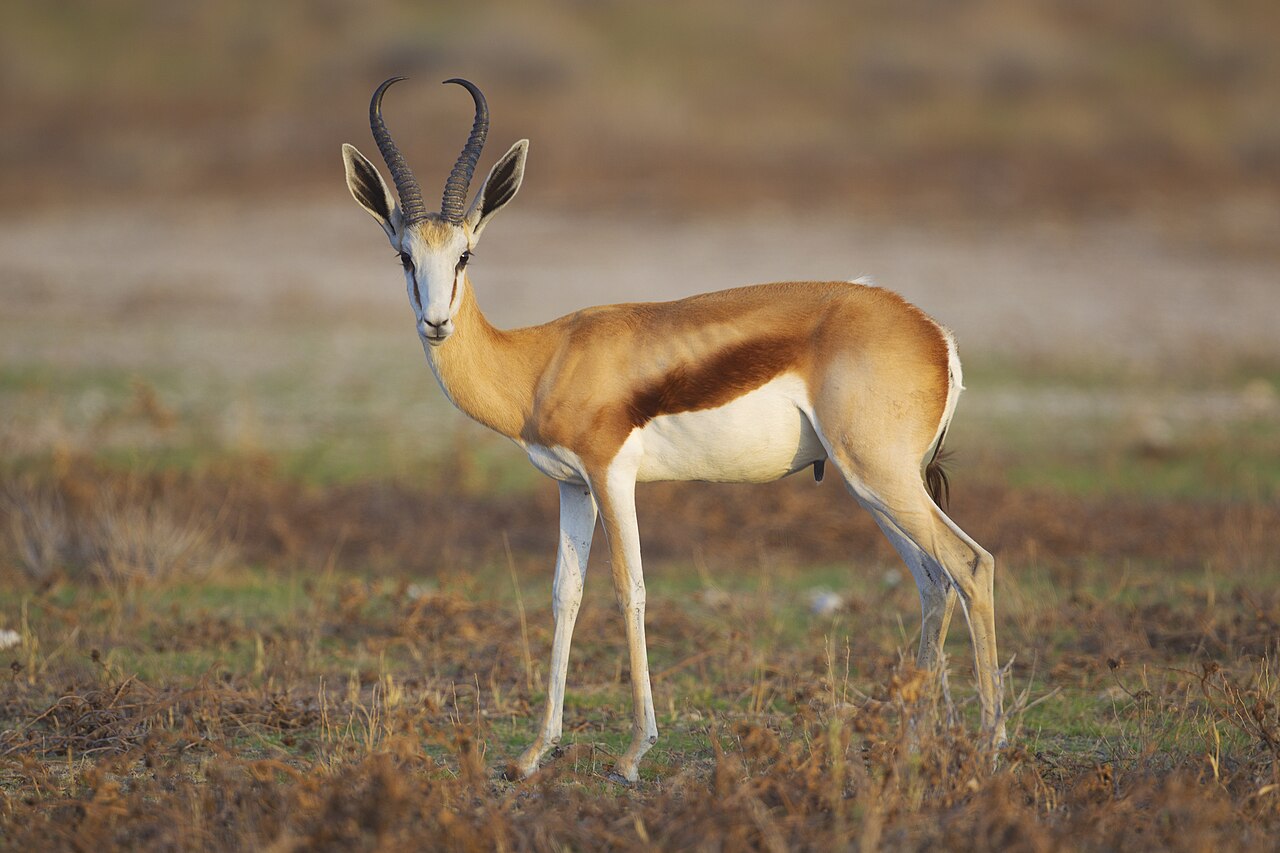
Antidorcas marsupialis
The black springbok is a distinctive color variant of the common springbok, Antidorcas marsupialis, highly sought after by hunters for its striking dark pelage and the demanding nature of the hunt. These medium-sized antelope stand 75 to 90 centimeters at the shoulder and typically weigh 30 to 48 kilograms, with rams larger and more heavily built than ewes. Both sexes carry lyre-shaped horns that sweep backward then curve forward, often measuring 35 to 48 centimeters in mature trophy rams. The coat is a deep chocolate-brown to nearly black on the back and flanks, set against paler underparts, with the familiar white facial blaze and dark lateral stripe still visible. Black springbok inhabit the open grasslands, savannas, and arid Karoo of southern Africa, particularly on game ranches in South Africa and Namibia where the recessive black color morph has been selectively bred. They are well adapted to dry conditions, drawing moisture from forage, and live in mixed herds that can number dozens of animals. Territorial rams defend breeding areas during the rut. Their famous pronking—explosive, stiff-legged leaps reaching two meters—serves as both a display and an alarm signal. Diurnal and exceptionally alert, they feed on short grasses and succulents and can reach speeds exceeding 80 kilometers per hour when fleeing. Hunters value the black springbok as challenging plains-game quarry. Their keen eyesight and wariness reward careful stalking or patient waiting from a hide. Trophy assessment centers on horn length, mass, and symmetry, producing handsome mounts. The species remains abundant and is classified as Least Concern; well-managed hunting of farm-raised color variants supports habitat conservation and rural economies.
Hunt facts
- Countries
- South Africa
- Hunt regions
-
South Africa: Eastern Cape Free State Gauteng Limpopo Mpumalanga North West Northern Cape
- Habitat
- Grassland Semi-arid
- Best time to hunt
- May–October (SA ranch colour morph — not wild range)
- Mass
- 30–48 kg (66–106 lb)
- Trophy minimum
-
- SCI (inches): 30
- SCI bow: 27
- Rowland Ward (inches): 14
SA ranch colour morph of Springbok — not wild range
Typical record-book minimums; confirm the current edition with your professional hunter.
Where to Find Black Springbok
Black Springbok, a dark color variant of the common springbok, occur mainly on private game ranches rather than large free-ranging wild populations. They favor open grasslands, semi-arid savannas, and plains typical of the Karoo and Kalahari in southern Africa.
South Africa provides the best hunting opportunities, especially in the Northern Cape, Free State, and Eastern Cape, with Namibia offering similar arid ranch settings. These managed properties support healthy numbers for legal trophy hunts.
The dry season from May to August is ideal, as sparse vegetation improves visibility and animals concentrate near water, aligning with most hunting seasons.
They occupy flat to gently rolling terrain with short grass, scattered shrubs, dunes, or low rocky areas that allow long-distance spotting but little concealment.
Scan open plains with binoculars at dawn and dusk when they graze in small groups. Their black coats stand out against pale grass. Approach from downwind using any available cover, as they are alert, fast, and possess excellent eyesight.
Why Hunt Black Springbok
Hunters pursue Black Springbok for their striking trophy appeal, with a rare black or dark brown coat that stands out dramatically against the usual tan, paired with classic lyre horns for a one-of-a-kind mount. The hunt delivers excitement through stalking these swift, alert antelope on open plains, where their pronking leaps and speed test a hunter's skill and patience. Their meat is highly valued as lean, flavorful venison suited to steaks, roasts, and biltong. Culturally significant as South Africa's national animal, springbok hunting ties into Afrikaner heritage and safari traditions. Importantly, hunting generates revenue that funds habitat conservation, breeding, and land management on game farms, aiding species sustainability. This pursuit offers unique African experiences, from witnessing mixed herds to the thrill of a specialized color-phase trophy in the wild.
Black Springbok Hunting Tips
Black springbok hunting rewards patience and precise shooting on African game ranches where these agile color-variant antelope thrive. Walk-and-stalk in open plains or waiting in blinds near water and grazing areas prove most effective, especially when you use the wind and available cover. A well-zeroed rifle in . 243 Winchester, . 270, 7mm-08 or similar plains-game calibers with a quality scope handles typical 100-250 yard shots cleanly. Place the bullet just behind the shoulder, one-third up the body, for a heart-lung hit that drops them ethically; follow up immediately if they run.
Approach from downwind, glass often, and move slowly because their eyesight and speed make them unforgiving. Early morning and late afternoon in the cooler dry months offer the best visibility and activity. Skip rushed shots at bounding animals, ignore wind at your peril, and never underestimate their jump. Always identify the target and what lies beyond, follow ranch rules, handle firearms safely, and hunt with a professional PH when possible.
Featured Outfitters for Black Springbok
View all


Hunt packages with Black Springbok
Curated hunt ideas — no price on the page. Enquire and we'll match outfitters after review.
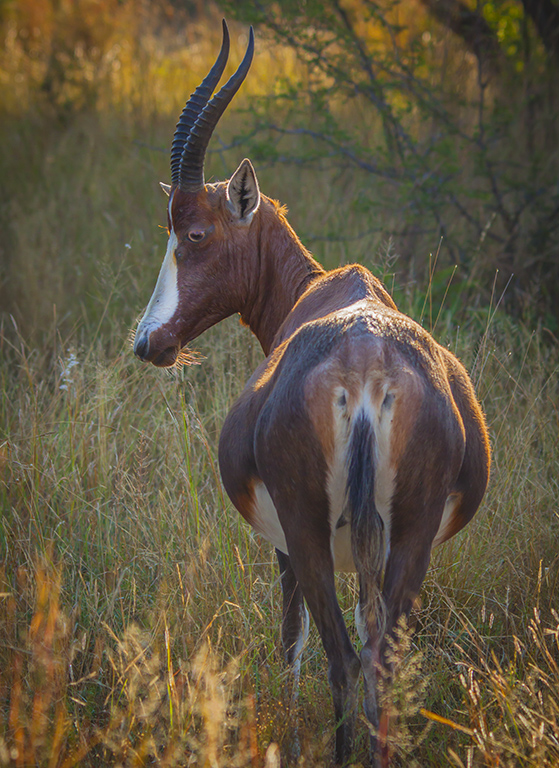
Free State Colour Variants — 7 Days
7 days · South Africa
7-day free state colour variants — white blesbok, copper blesbok, yellow blesbok in Free State ranch plains.
$8,500 – $9,800
Plan Your Black Springbok Hunt
Submit a free enquiry and we'll match you with outfitters who hunt Black Springbok in your region.
Sign Up to Enquire Aardwolf
 Abyssinian Bushbuck
 Baboon
 Bat-Eared Fox
 Bay Duiker
 Beisa Oryx