Bongo Hunting
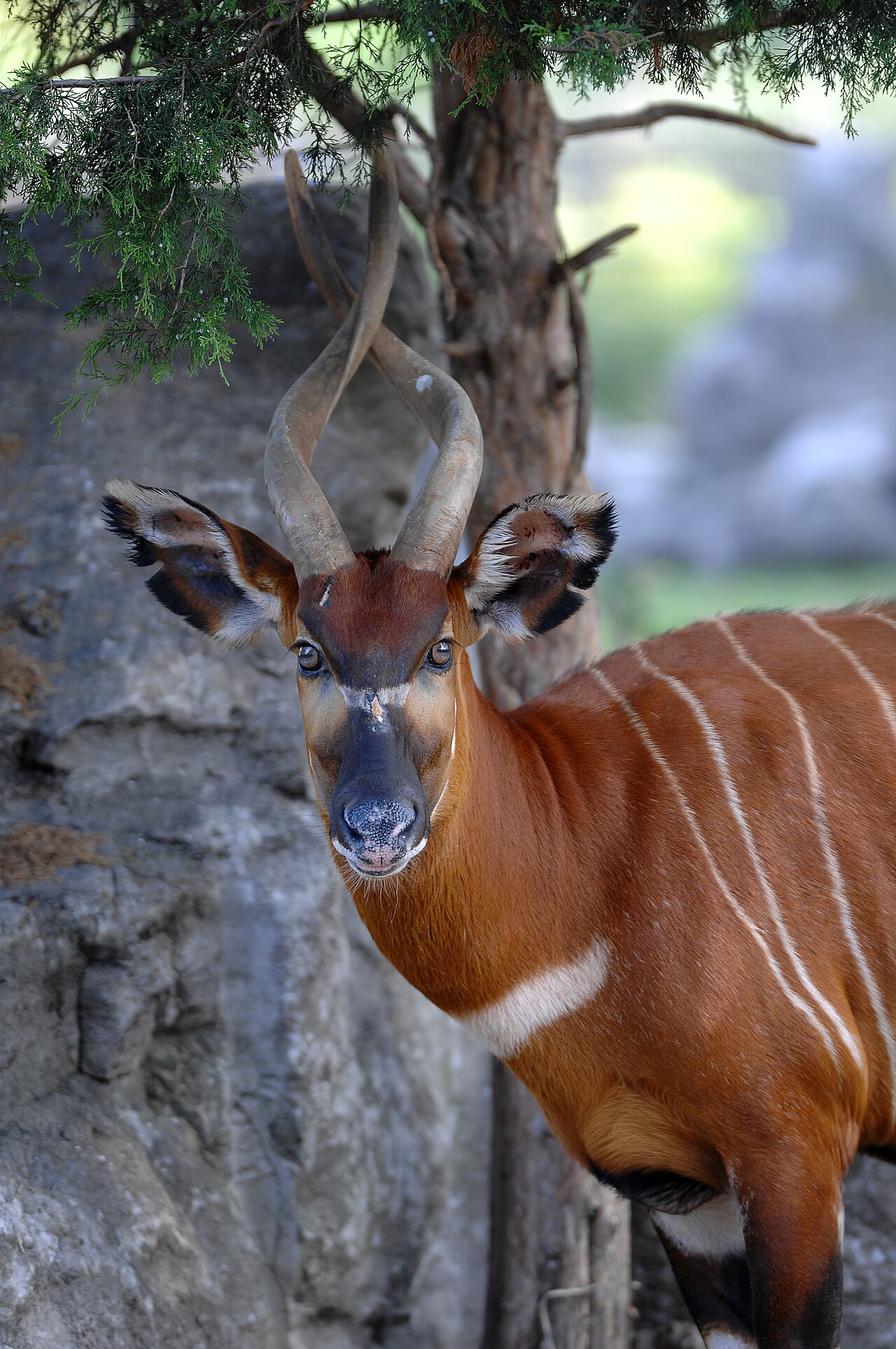
Tragelaphus eurycerus
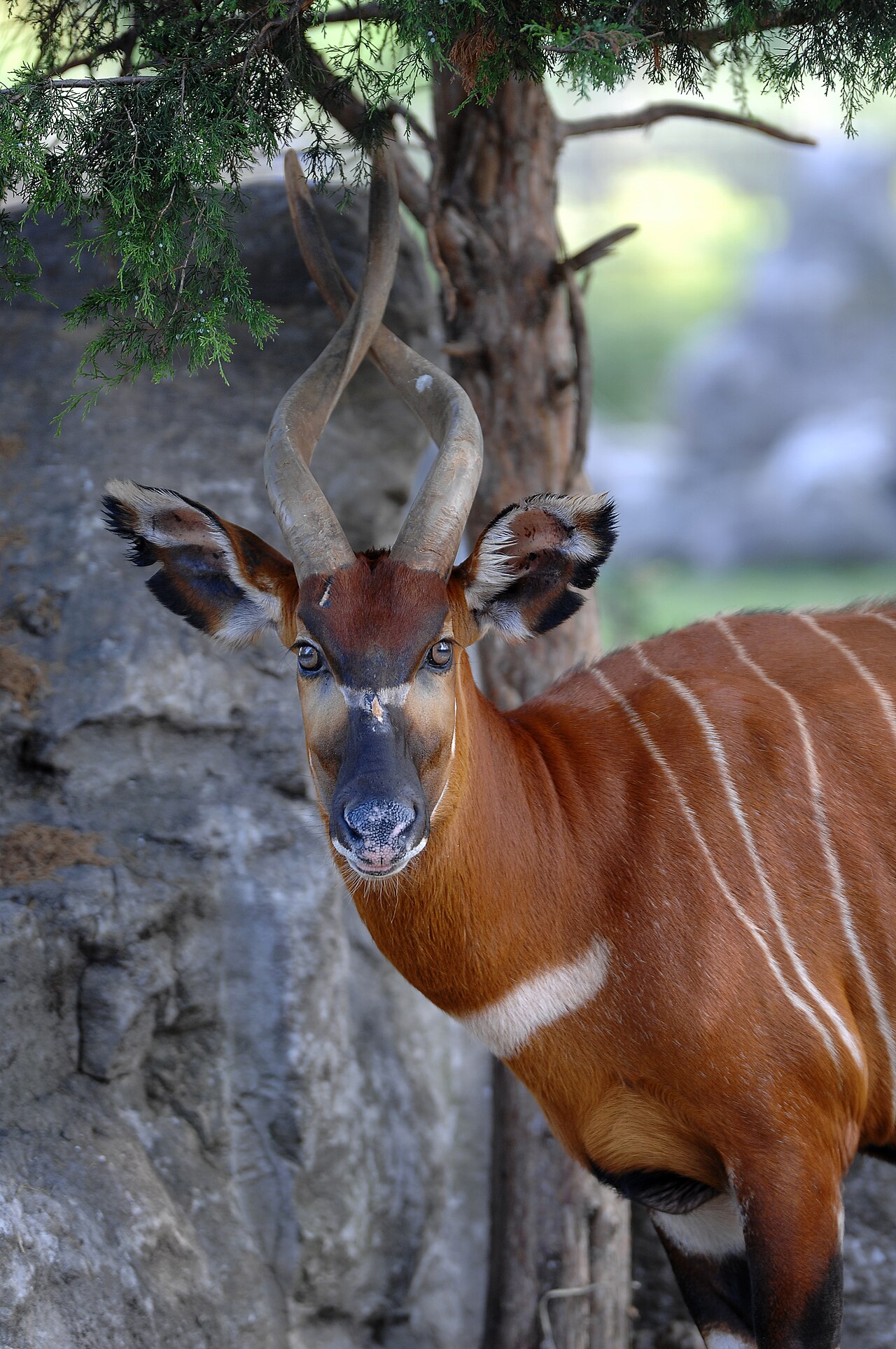
The bongo (Tragelaphus eurycerus) is one of Africa's most striking and sought-after hunting trophies, renowned for its elusive nature in dense forests. This large antelope displays a rich chestnut-red coat marked by ten to fifteen white vertical stripes, a distinctive white chevron on the face, and white markings on the legs. Both males and females carry impressive spiraled horns that curve backward, those of mature bulls being longer and heavier. Adults stand 110 to 130 centimeters at the shoulder, with weights ranging from 210 kilograms in females to over 400 kilograms in large males. Bongos inhabit the tropical rainforests and montane forests of Central and West Africa, ranging from Sierra Leone through Cameroon and the Congo Basin to isolated Kenyan highlands. They prefer thick undergrowth close to water sources. Primarily nocturnal and highly secretive, they live in small groups of females and young or as solitary males, browsing on leaves, shoots, and fruits. Their populations are fragmented, with the lowland bongo more common and the mountain subspecies extremely rare. Hunters regard the bongo as one of the most challenging African species due to its wariness and the difficult terrain. Success often depends on skilled tracking through humid, tangled vegetation with the help of experienced local trackers. The resulting trophy, with its elegant horns and vivid coloration, is highly prized. The species is classified as Near Threatened, and where hunting occurs it is tightly controlled, with fees supporting anti-poaching and habitat conservation efforts.
Hunt facts
- Countries
- Cameroon Central African Republic
- Hunt regions
-
Cameroon: East SouthCentral African Republic: Sangha-Mbaéré
- Habitat
- Forest
- Best time to hunt
- May–October (Central African forest safari; also South Sudan historically)
- Mass
- 200–400 kg (441–882 lb)
Where to Find Bongo
The western or lowland bongo inhabits dense tropical rainforests in Central Africa. Primary habitats include humid lowland forests, swamp forests, and riverine areas with thick cover. They are found in Cameroon, Central African Republic, Congo, and Gabon. Cameroon's eastern rainforests and CAR hunting concessions are among the best areas for legal bongo hunting. The dry season, typically November to April, offers better conditions as paths dry out and bongos frequent salt licks more. Terrain involves thick jungle, mud, and dense undergrowth making movement difficult. To find them, search salt licks, follow tracks and dung, hunt at dawn or dusk with experienced trackers. They are secretive so patience and local knowledge are key. Always obtain proper hunting licenses as this species is protected in many areas.
Why Hunt Bongo
The bongo stands out as a premier trophy for hunters due to its impressive spiral horns and beautifully striped reddish coat, making it one of the most visually striking antelopes in Africa. The pursuit is exceptionally challenging and exciting, involving stealthy tracking through thick equatorial forests where the animal's shyness and habitat demand peak skills and endurance from the hunter. Its meat offers excellent culinary value, being tender with a mild game flavor that shines in stews, roasts, and local African preparations. In various cultures, the bongo carries traditional importance as a symbol of the mysterious rainforest. Hunting this species yields conservation benefits by channeling funds into protecting vast forest habitats, supporting anti-poaching initiatives, and benefiting local communities who aid in wildlife management. Unique experiences include venturing into remote, untouched jungles, working alongside indigenous trackers, and savoring the profound adventure of hunting one of Africa's most secretive giants.
Bongo Hunting Tips
Bongo hunting in the rainforests of Central Africa is a challenging pursuit best accomplished by tracking with experienced local trackers. These specialists follow faint hoof prints, dung piles, and feeding signs through dense vegetation. Hunters must stalk with utmost silence, using the wind to stay downwind of the wary animals.
A rifle chambered in . 375 H&H Magnum or a comparable large caliber provides the necessary power for shots in thick cover. Low-power scopes or iron sights are ideal given the close distances and poor light. Camouflage clothing that matches the jungle and comfortable hiking boots complete the essential kit.
Proper shot placement targets the heart and lungs just behind the shoulder. Bongo are large and tenacious so immediate follow-up is required after any shot.
Successful tracking means moving slowly, stopping often to listen and look. The dry season from December to March offers the best visibility and tracking conditions. Bongo typically feed at dawn and dusk making those the prime hunting hours.
Hunters should avoid making noise, taking hurried shots, or failing to wait for a clear opportunity. Safety considerations include always hunting under the guidance of a professional hunter, remaining alert for snakes and other wildlife, and positively identifying the target in the limited visibility of the forest.
Featured Outfitters for Bongo
View all

Hunt packages with Bongo
Curated hunt ideas — no price on the page. Enquire and we'll match outfitters after review.
Cameroon Bongo Quest — 14 Days
14 days · Cameroon
14-day cameroon bongo quest — bongo, forest buffalo, yellow-backed duiker in East Cameroon forest (quota-dependent).
$45,000 – $65,000
CAR Eastern Forest Mix — 14 Days
14 days · Central African Republic
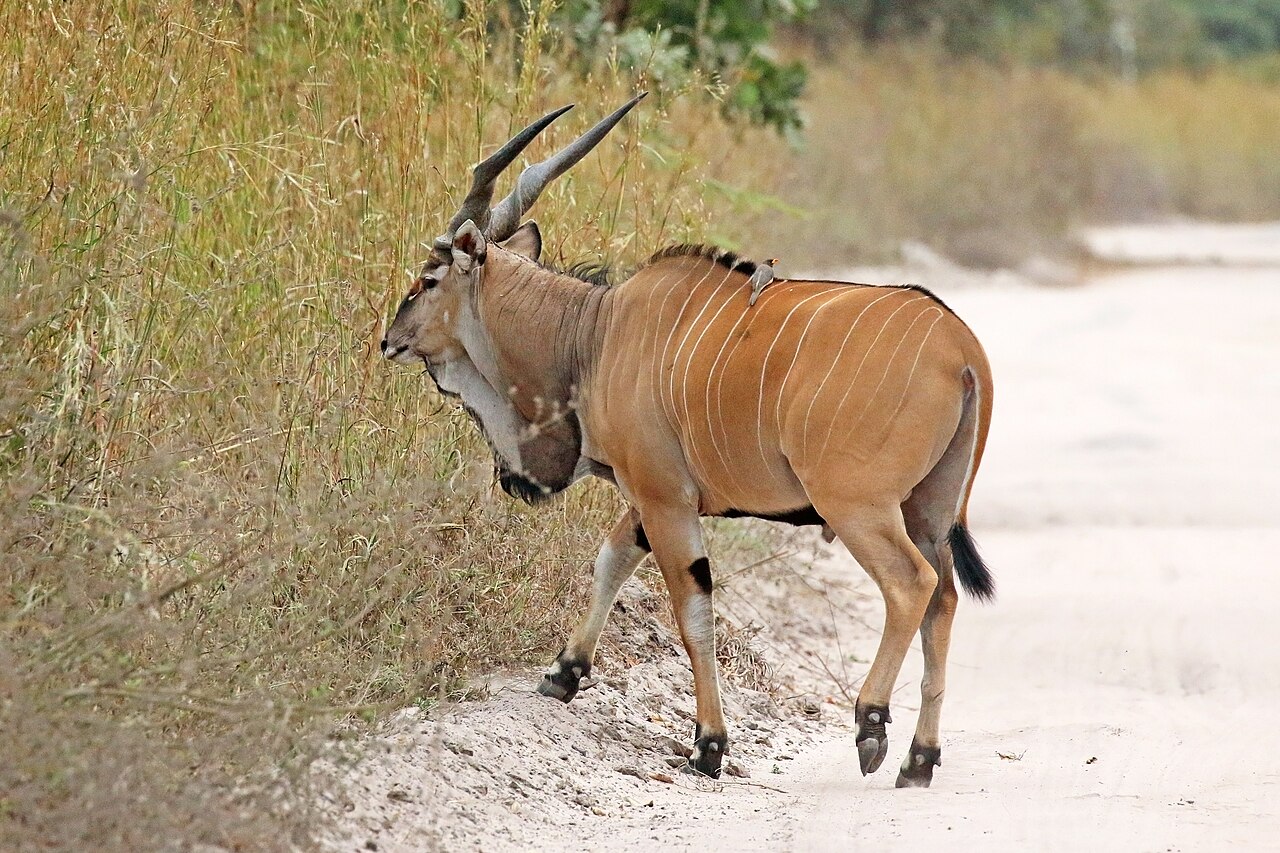
14-day car eastern forest mix — bongo, lord derby eland, forest buffalo in Haute-Kotto forest concessions.
$48,000 – $70,000
Bamingui-Bangoran Forest — 12 Days
12 days · Central African Republic
Twelve days Bamingui-Bangoran — bongo and forest buffalo focus.
$42,000 – $58,000
Sangha-Mbaéré Forest — 12 Days
12 days · Central African Republic
Twelve days Sangha-Mbaéré — bongo and Lord Derby eland forest quest.
$45,000 – $65,000
Plan Your Bongo Hunt
Submit a free enquiry and we'll match you with outfitters who hunt Bongo in your region.
Sign Up to Enquire Aardwolf
 Abyssinian Bushbuck
 Baboon
 Bat-Eared Fox
 Bay Duiker
 Beisa Oryx