Nyasa Wildebeest Hunting
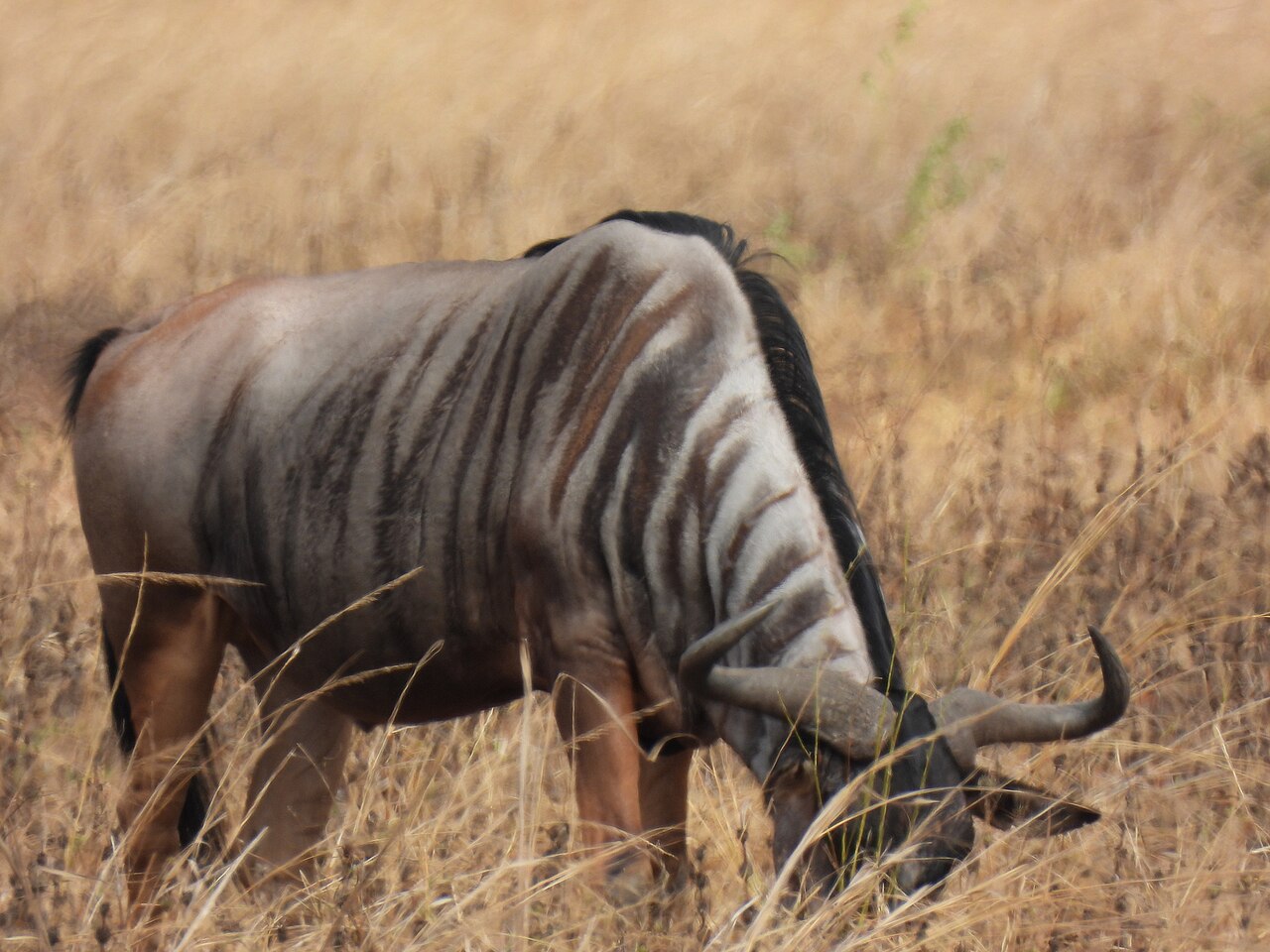
Connochaetes taurinus johnstoni
The Nyasa wildebeest, known scientifically as Connochaetes taurinus johnstoni, is a striking subspecies of blue wildebeest that draws hunters to the woodlands and grasslands of eastern Africa. Adults display a compact, muscular build with males standing 1. 4 meters at the shoulder and weighing 220 to 270 kilograms, while females are somewhat lighter. The coat is a deep slate-gray to brown, often marked by a distinctive white band across the muzzle that sets this animal apart from other wildebeest. Both sexes carry horns, yet the males develop a heavier boss and more pronounced inward curve that makes for a memorable trophy. These animals thrive in open savanna, miombo woodland edges, and short-grass plains where they graze throughout the day, forming mixed herds that can swell into the hundreds near water in the dry season. They are wary and quick to take flight, relying on speed and endurance rather than cover, so hunters must close the distance carefully or wait for a clear shot at a stationary animal. Their characteristic snorts and head-tossing displays add to the excitement of the stalk. The Nyasa wildebeest occupies a relatively compact range stretching from southern Tanzania through Malawi and into northern Mozambique, particularly around the Lake Malawi basin. In licensed hunting areas of Mozambique and Tanzania they are taken as part of plains-game safaris, offering solid horn measurements of 60 to 80 centimeters and excellent table fare. Populations remain listed as Least Concern overall, though habitat fragmentation and unregulated offtake pose local risks; well-regulated trophy hunting helps fund anti-poaching and habitat work that benefits the species.
Hunt facts
- Countries
- Mozambique Tanzania Zambia
- Hunt regions
-
Tanzania: Lindi Morogoro Pwani
- Habitat
- Grassland Mixed savanna Woodland
- Best time to hunt
- July–December (Dry season (East / miombo))
- Mass
- 180–250 kg (397–551 lb)
- Trophy minimum
-
- SCI (inches): 70
- SCI bow: 54
- Rowland Ward (inches): 28 4/8
- Rowland Ward record: 36
Same operator-table blue wildebeest row; confirm Niassa/Nyasa category
Typical record-book minimums; confirm the current edition with your professional hunter.
Where to Find Nyasa Wildebeest
Nyasa wildebeest thrive in miombo woodlands mixed with open grasslands and seasonal floodplains across southern Tanzania, northern Mozambique, Malawi, and eastern Zambia. These habitats feature scattered acacia and mopane trees alongside dambos and riverine corridors that provide grazing and water.
Licensed hunting occurs mainly in Tanzania’s southern concessions near the former Selous and Rukwa areas plus Mozambique’s Niassa Reserve and Zambezi Valley blocks, where professional outfitters operate under quota systems.
The dry season from June through October offers the best conditions because shrinking waterholes draw herds into predictable locations and thinner vegetation improves visibility. Wet months scatter animals and thicken cover.
Expect rolling woodland-savanna terrain with sandy soils, seasonal rivers, and patches of taller grass. Wildebeest favor edges of open plains near water yet retreat into thicker bush when pressured.
Locate them by glassing open flats at first and last light, following fresh tracks and dung toward remaining water, and watching for dust clouds raised by moving herds. Local trackers in established concessions know current concentrations and movement patterns.
Why Hunt Nyasa Wildebeest
The Nyasa wildebeest draws dedicated hunters with its striking trophy horns that sweep outward then curve inward, paired with a sturdy build and distinctive dark coat that make for a memorable plains game addition. These animals deliver real hunting excitement through their wariness in mixed herds on open grasslands, where keen senses and sudden bursts of speed demand patient stalks, careful wind reading, and precise shots that test even experienced safari hunters.
Lean, flavorful meat rewards the effort, yielding excellent steaks, stews, and biltong that highlight African game cuisine. As symbols of East African wilderness in local traditions, they carry cultural weight, while regulated hunting generates funds for habitat protection, anti-poaching patrols, and community programs that sustain populations. Pursuing this subspecies in remote Tanzanian and Mozambican landscapes offers unique, off-the-beaten-path adventures combining trophy quality with authentic wilderness immersion.
Nyasa Wildebeest Hunting Tips
Hunting Nyasa wildebeest in the grasslands of Malawi, Mozambique, and Tanzania rewards hunters who use spot and stalk techniques. Locate herds with binoculars from a high point then approach slowly using terrain and vegetation for cover while remaining downwind of their excellent senses. A bolt action rifle chambered in . 308 Winchester, . 30-06 Springfield or similar with 165 grain bullets is well suited for these hardy animals. Take a broadside shot just behind the front shoulder targeting the vital heart lung area for a clean ethical kill.
Track by observing fresh tracks and droppings but focus on stalking rather than following for miles. Early morning and late afternoon during the dry season offer the best opportunities as wildebeest move to water. Avoid mistakes like shooting at running animals, ignoring wind direction or taking marginal shots that wound rather than kill. Safety comes first so always confirm your target, be alert for other wildlife including predators, follow firearm handling rules and hunt with experienced local guides who ensure compliance with all laws and ethical standards.
Featured Outfitters for Nyasa Wildebeest
View all


Plan Your Nyasa Wildebeest Hunt
Submit a free enquiry and we'll match you with outfitters who hunt Nyasa Wildebeest in your region.
Sign Up to Enquire Aardwolf
 Abyssinian Bushbuck
 Baboon
 Bat-Eared Fox
 Bay Duiker
 Beisa Oryx