African Civet Hunting
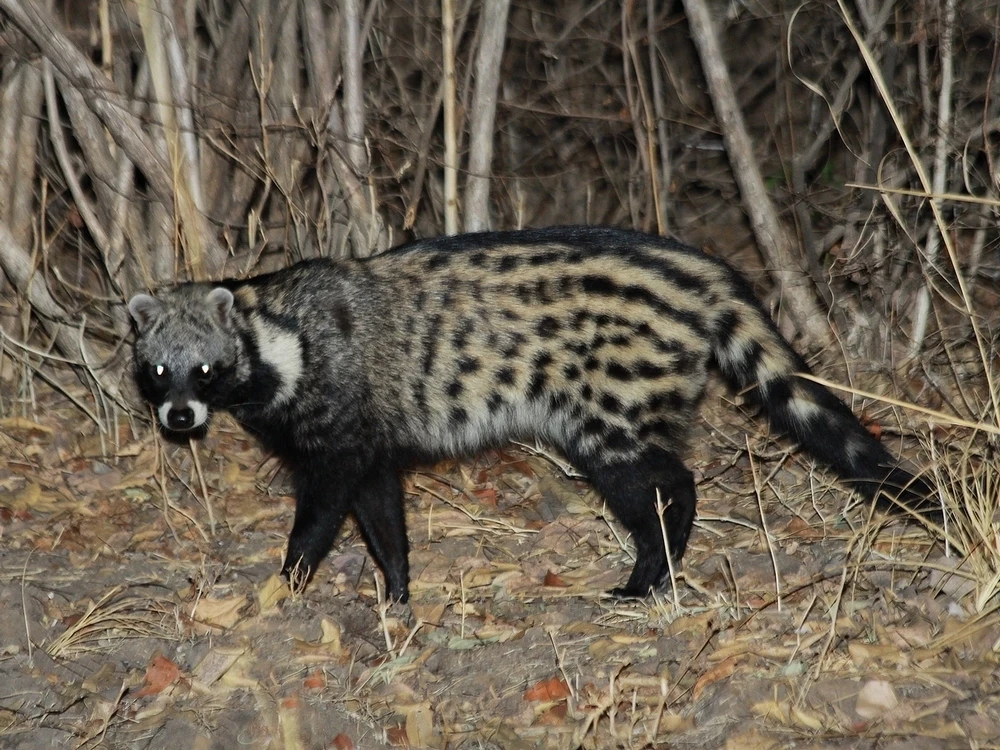
Civettictis civetta
The African Civet, Civettictis civetta, is a distinctive nocturnal mammal that hunters and wildlife observers across Africa may encounter after dark. It has a sturdy, somewhat hunched body with short legs, a long bushy tail, large rounded ears, and a pointed snout. The coat is gray to yellowish with bold black spots, bands, and stripes that create a unique pattern. Adults typically measure 67 to 84 centimeters in body length plus a 34 to 47 centimeter tail, stand about 40 centimeters at the shoulder, and weigh 7 to 20 kilograms, with males larger than females. Specialized perineal glands produce a strong musk historically used in perfumes. African civets occupy forests, woodlands, savannas, and even farmlands provided there is dense cover and water nearby. They are solitary and strictly nocturnal, resting by day in thickets or old burrows before emerging to forage. Their omnivorous diet includes fruits, insects, rodents, birds, reptiles, eggs, and carrion. The species ranges widely through sub-Saharan Africa from Senegal and Gambia eastward to Ethiopia and Somalia and southward to Namibia, Botswana, and South Africa, avoiding only true deserts and high mountains. Hunters most often see these animals during night operations, where the striking markings and musky scent can give them away. They are not a primary trophy species but appear in some small-game packages; the pelt is distinctive and they can defend themselves by biting or spraying musk if cornered. The African civet is listed as Least Concern thanks to its adaptability and broad distribution, though habitat loss and local hunting for bushmeat remain localized concerns.
Hunt facts
- Countries
- Angola Benin Botswana Burkina Faso Cameroon Central African Republic Ethiopia Mozambique Namibia South Africa Tanzania Uganda Zambia Zimbabwe
- Hunt regions
-
Angola: Cuando Cubango Cunene Huíla Moxico NamibeBenin: Alibori Atakora BorgouBotswana: Chobe North WestCameroon: Adamawa East Far North North SouthCentral African Republic: Bamingui-Bangoran Haute-Kotto Sangha-Mbaéré VakagaEthiopia: Afar Benishangul-Gumuz Oromia SomaliMozambique: Gaza Manica Niassa Sofala Tete ZambeziaNamibia: Kavango East Kavango West ZambeziSouth Africa: Gauteng KwaZulu-Natal Limpopo Mpumalanga North WestTanzania: Arusha Katavi Lindi Manyara Morogoro Pwani Rukwa Simiyu Singida TaboraUganda: Central Northern WesternZambia: Central Eastern Luapula Muchinga North-Western Southern WesternZimbabwe: Manicaland Mashonaland Central Mashonaland West Masvingo Matabeleland North Matabeleland South Midlands
- Habitat
- Woodland Bushveld Forest
- Best time to hunt
- May–October (Dry season)
- Mass
- 7–20 kg (15–44 lb)
Where to Find African Civet
African civets occupy varied habitats across sub-Saharan Africa, from savannas and woodlands to forests, grasslands, and riverine thickets that provide dense daytime cover and access to water. They occur widely in South Africa, Namibia, Botswana, Zimbabwe, Tanzania, and Kenya. The most practical hunting areas are private game ranches and conservancies in South Africa and Namibia, where mixed bushveld, open grasslands, and thickets support healthy populations under regulated licenses.
These nocturnal animals remain active year-round, though the dry season from May to October thins vegetation and concentrates them around remaining water, making tracks easier to follow. Terrain typically includes dense undergrowth, game trails, rocky outcrops, and fruiting trees near wetlands.
Locate them by searching for five-toed tracks, musky latrine sites, and droppings along paths and waterholes. Night spotlighting or baiting in known habitats after dark yields the best results when conducted legally with proper permits.
Why Hunt African Civet
The African Civet draws hunters with its striking trophy qualities, from a boldly spotted and striped coat to a unique skull and facial mask that create a distinctive mount unlike typical African game. Hunting this nocturnal, secretive animal presents a genuine challenge that demands night tracking, baiting, or still-hunting in dense cover, delivering real excitement through patience and skill in the dark African bush. The meat is lean with a rich, gamey flavor used in traditional stews and local dishes. In some cultures the civet carries traditional meaning through its musk and folklore roles. Regulated hunting generates funds that support habitat protection, anti-poaching work, and community programs, helping sustain healthy populations. Pursuing this species offers rare nocturnal encounters and a chance to hunt an elusive, lesser-known predator few others ever see.
African Civet Hunting Tips
The African civet is a fascinating yet challenging quarry for hunters in sub-Saharan Africa, known for its nocturnal habits and musky scent. Best hunting methods include using spotlights during permitted night hunts or quietly stalking their territories at dawn and dusk. Setting up near water sources or using natural baits like insects and fruits can increase success rates when done legally. Recommended equipment consists of a small-caliber rifle such as a . 22 Hornet or . 223 Remington for precise shots, along with binoculars and perhaps night vision gear if legal. A sturdy shotgun with appropriate loads is an alternative for closer ranges. For shot placement, aim behind the shoulder to penetrate the vital chest cavity, ensuring a humane harvest given the animal's size of around 15 kilograms. Tracking tips involve identifying their five-toed footprints in soft soil and following the strong odor they use for marking. Stalk slowly, pausing often to listen, as they are wary. The optimal times are during the dry season from June to October, focusing on nighttime hours when they forage. Common mistakes to avoid are failing to obtain necessary permits, underestimating their speed, or not accounting for thick cover. Safety is critical: always hunt with a licensed professional hunter in Africa, stay aware of potential encounters with leopards or snakes, use insect repellent, and have communication devices for emergencies. Respect local laws to ensure ethical and legal hunting.
Featured Outfitters for African Civet
View all


Hunt packages with African Civet
Curated hunt ideas — no price on the page. Enquire and we'll match outfitters after review.
Namibia Night Small Game — 5 Days
5 days · Namibia
5-day namibia night small game — african civet, bat-eared fox, aardwolf in Omaheke farms.
$5,200 – $6,500
Plan Your African Civet Hunt
Submit a free enquiry and we'll match you with outfitters who hunt African Civet in your region.
Sign Up to Enquire African Wildcat
 Baboon
 Bat-Eared Fox
 Bay Duiker
 Black-Fronted Duiker
 Blue Duiker