Blue Duiker Hunting
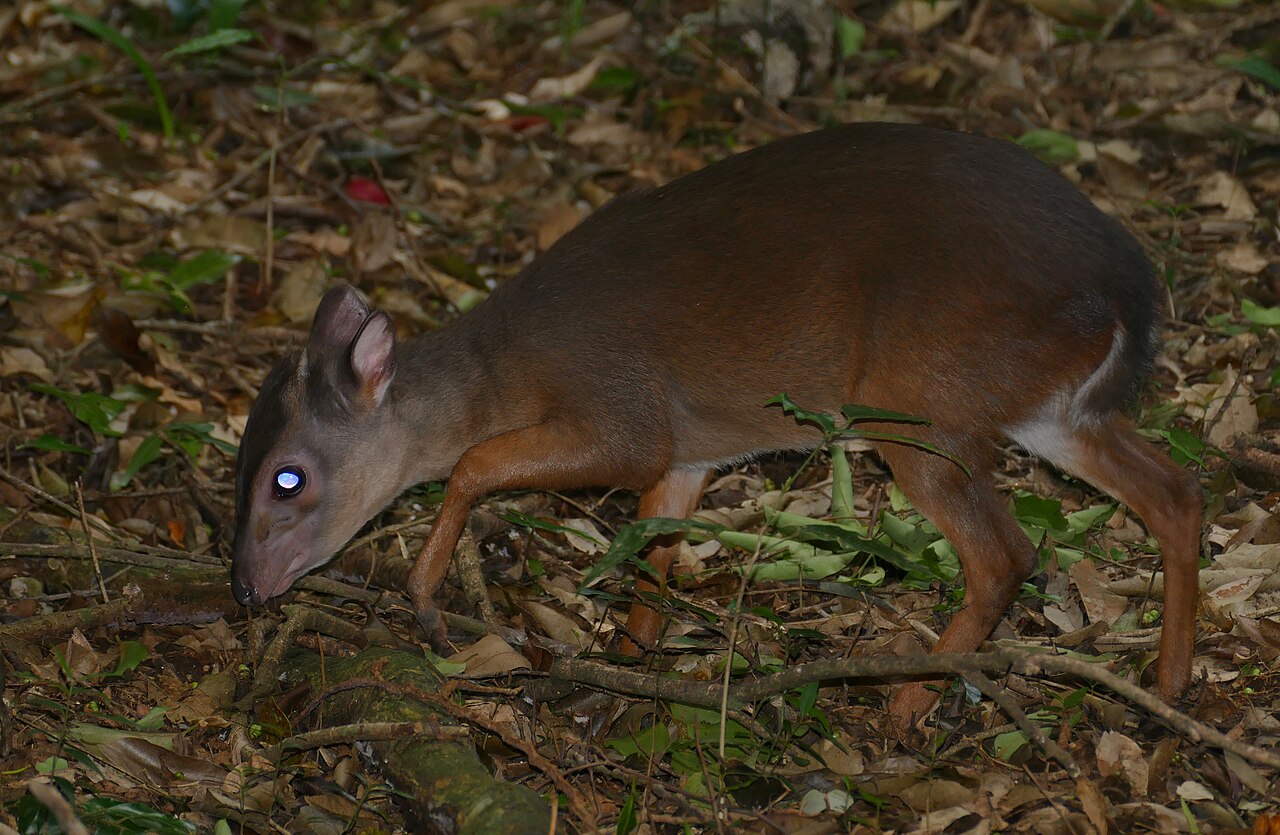
Philantomba monticola
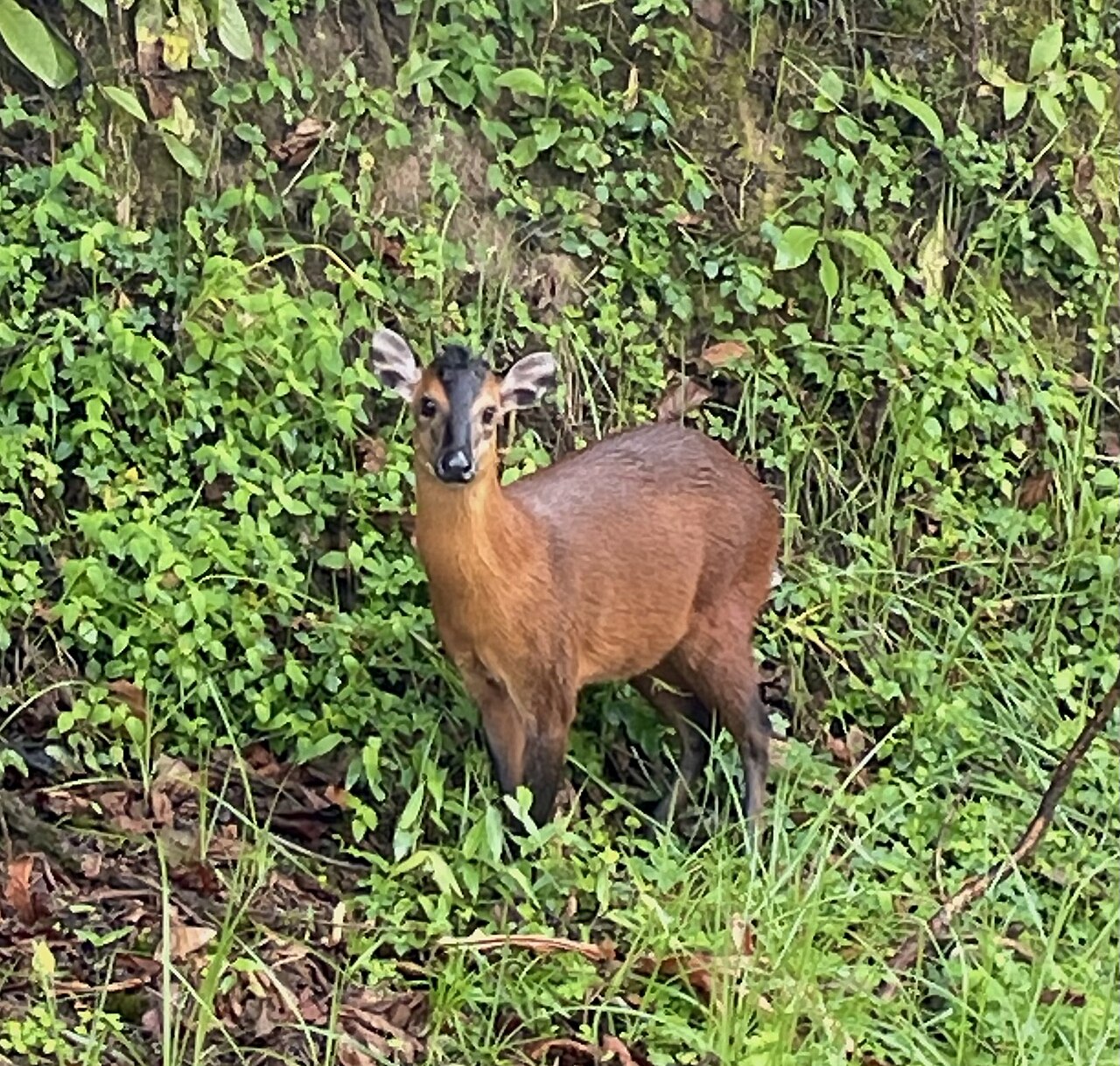
The Blue Duiker is Africa's smallest antelope, a compact and secretive animal that stands 12 to 16 inches at the shoulder and weighs just 8 to 14 pounds. Its coat is a distinctive slate-blue or bluish-gray, darker along the back and paler underneath, with reddish-brown lower legs. Large dark eyes and a mobile white tail that flicks rapidly when the animal is alarmed help it navigate and signal in dim forest light. Only males carry short, straight, sharp horns that rarely exceed two inches. These duikers occupy dense tropical and subtropical forests, thickets, and well-wooded ravines from Nigeria and Cameroon eastward through the Congo Basin to Kenya and Tanzania, then south through Mozambique, Zambia, and Angola into eastern South Africa. They favor thick undergrowth that offers cover and a steady supply of fallen fruit, leaves, flowers, and fungi. Blue duikers live in monogamous pairs that defend small, year-round territories. They are mainly crepuscular and nocturnal, moving with quick, darting bounds and remaining motionless when threatened. Their secretive habits and excellent camouflage make them one of the more challenging small antelope to locate. Hunters value the Blue Duiker as a demanding trophy precisely because of its size and habitat. Encounters usually occur in close cover, often with the help of dogs or during still-hunting along forest paths. The tiny horns and distinctive blue-gray hide make a unique addition to a collection of African game. Populations are listed as Least Concern overall, though local pressure from habitat loss and unregulated hunting exists in parts of the range. Regulated, licensed hunting contributes to habitat protection and wildlife management in several southern African countries.
Hunt facts
- Countries
- Angola Mozambique South Africa Tanzania Uganda Zambia Zimbabwe
- Hunt regions
-
Angola: Cuando Cubango MoxicoMozambique: Gaza Manica SofalaSouth Africa: Eastern Cape KwaZulu-NatalTanzania: Lindi Morogoro PwaniUganda: WesternZambia: Eastern MuchingaZimbabwe: Manicaland Masvingo
- Habitat
- Woodland Forest Coastal
- Best time to hunt
- May–October (Dry season)
- Mass
- 4–6 kg (8.8–13 lb)
- Trophy minimum
-
- SCI (inches): 4 4/16
- SCI bow: 3 10/16
- Rowland Ward (inches): 1 12/16
- Rowland Ward record: 2 8/16
Typical record-book minimums; confirm the current edition with your professional hunter.
Where to Find Blue Duiker
Blue duikers thrive in the dense forests and thickets of sub-Saharan Africa, favoring tropical rainforests, coastal woodlands, and montane forests from West Africa through Central and East Africa into southern regions. Hunters find the best opportunities in countries like Cameroon, Gabon, the Republic of Congo, Tanzania, Mozambique, and South Africa, where established hunting concessions provide access under proper permits. The dry season, generally from June to October, offers optimal conditions as reduced foliage improves visibility and animals become more predictable, though always check local hunting seasons and regulations. These small antelope inhabit thick undergrowth, riverine areas, and humid forested terrain with plenty of cover. Locating blue duikers requires patience; search for trails, tracks, and feeding signs around fruit trees or along forest edges. They are shy and often active at dawn and dusk, so still-hunting or following tracks with experienced local trackers yields the best results in these environments.
Why Hunt Blue Duiker
Hunters pursue the Blue Duiker for its unique trophy qualities as Africa's smallest antelope, featuring short sharp horns on males that represent a prized addition to any collection of pygmy species. The hunting challenge is exceptionally high due to its secretive nature in dense forest undergrowth, demanding expert tracking skills, patience, and often the use of specialized techniques like calling or following hounds, which creates intense excitement with close-range encounters. The meat is tender and flavorful, highly regarded in African cuisine for its delicate taste, making it a culinary highlight of the hunt. Culturally, the Blue Duiker holds traditional significance in various African communities where it has been hunted for generations as a source of sustenance and in folklore. Regulated hunting provides conservation benefits by generating funds for habitat protection and anti-poaching efforts, helping sustain populations amid habitat loss. This species offers unique experiences like stalking through misty forests at dawn, spotting the elusive blue-gray coat, and the thrill of bagging one of the tiniest big game animals.
Blue Duiker Hunting Tips
Hunting the Blue Duiker requires patience and a quiet approach in their dense forest habitat across southern and eastern Africa. The most effective methods include still-hunting along well-used trails or sitting motionless near fruiting trees during dawn and dusk when they feed. Stalking with a local tracker through thick cover also works well, as does using hounds to flush them into the open. A lightweight rifle in . 22 Hornet, . 222 Remington or . 243 Winchester with expanding bullets is recommended for clean kills. A shotgun with buckshot or slugs can suffice at very close range. Always use a quality scope for precise aiming. Aim for the heart-lung area just behind the shoulder, as the vital zone is extremely small. Head shots are risky except at point-blank range. Track them by searching for tiny cloven prints and pellet-like droppings in damp soil. They often remain motionless so scan the undergrowth carefully. The best times are early morning and late afternoon, particularly in the dry season when visibility improves. Avoid hunting in heavy rain or midday heat. Common mistakes include moving too fast, making unnecessary noise, or attempting long-range shots. Underestimating their alertness causes most failures. Safety is paramount in thick vegetation. Positively identify your target before shooting, watch for snakes and other dangerous animals, and strictly follow local hunting laws and firearm safety protocols.
Featured Outfitters for Blue Duiker
View all


Hunt packages with Blue Duiker
Curated hunt ideas — no price on the page. Enquire and we'll match outfitters after review.
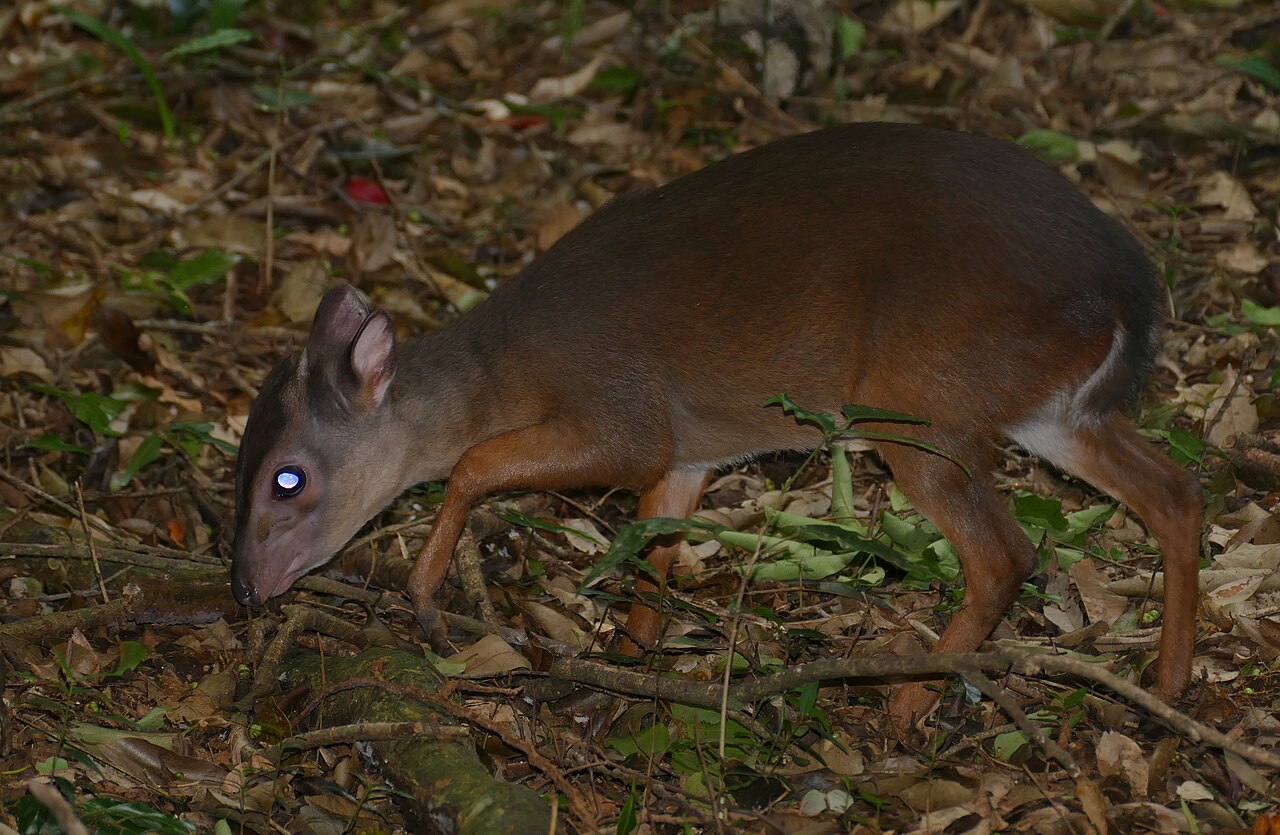
Mozambique Duiker Specialty — 7 Days
7 days · Mozambique
7-day mozambique duiker specialty — blue duiker, red duiker, suni in Sofala thicket.
$7,800 – $9,200
Plan Your Blue Duiker Hunt
Submit a free enquiry and we'll match you with outfitters who hunt Blue Duiker in your region.
Sign Up to Enquire African Civet
 African Wildcat
 Baboon
 Bat-Eared Fox
 Bay Duiker
 Black-Fronted Duiker