Peters' Duiker Hunting
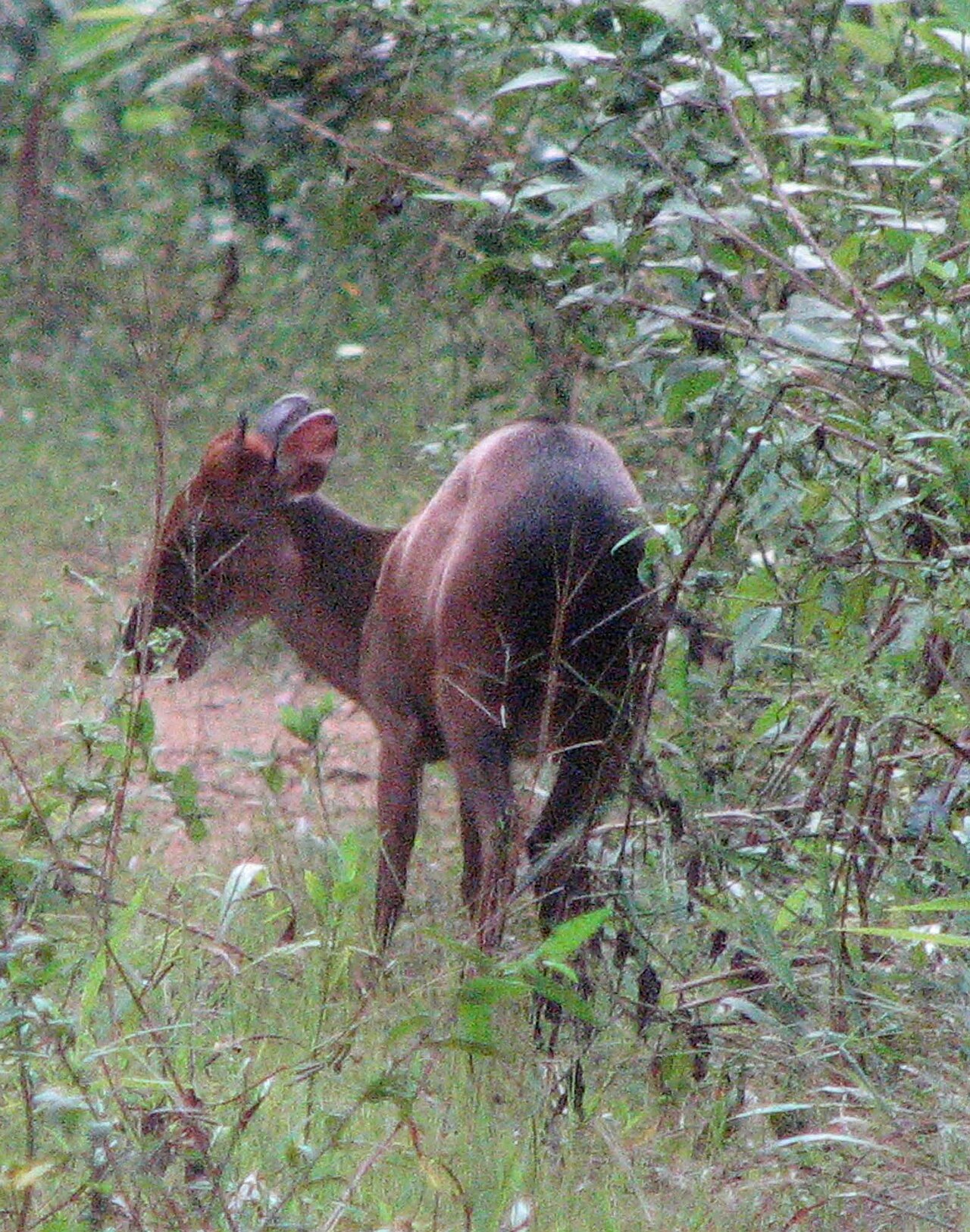
Cephalophus callipygus
Peters' Duiker is a medium-sized forest antelope that rewards hunters with a demanding pursuit through Central Africa's thick rainforests. Standing 48 to 52 centimeters at the shoulder and weighing 18 to 24 kilograms, it has a rich reddish-brown coat marked by a bold black stripe running from the nape down the spine to the tail. White patches appear on the throat and inner legs, while both sexes carry short, straight horns of 7 to 10 centimeters that make a distinctive trophy. These animals live in the understory of primary and secondary rainforests, where they browse on fallen fruit, leaves, and flowers. They are mainly solitary or travel in pairs, becoming most active at dawn and dusk. Their excellent camouflage and alert senses allow them to vanish into dense cover at the slightest disturbance, so hunts typically involve careful tracking, listening for movement, and working with experienced local guides or dogs. The species ranges through southern Cameroon, Equatorial Guinea, Gabon, the Republic of the Congo, and southwestern Central African Republic. Hunters value Peters' Duiker as a challenging forest trophy that tests stealth, endurance, and knowledge of sign such as tracks and feeding sites. Success often comes after long hours on foot in humid, low-visibility conditions. Although listed as Least Concern, the duiker faces pressure from habitat loss and unregulated hunting, so legal, well-managed hunts help support conservation and local communities.
Hunt facts
Where to Find Peters' Duiker
Peters' duiker inhabits dense equatorial rainforests across Central Africa, mainly Cameroon, Gabon, Equatorial Guinea, the Republic of the Congo and northern Democratic Republic of the Congo. These shy antelopes prefer primary and secondary forest with thick undergrowth, fruiting trees and nearby water, often in hilly or riverine zones.
Gabon and southern Cameroon provide the most practical regulated hunting access through forest concessions. The drier months of June to September offer slightly better tracking as vegetation thins and animals use more predictable routes, though they remain hidden year-round in the humid cover.
Expect challenging jungle terrain with limited visibility, tangled vines, steep slopes and occasional swampy ground that demands fitness and local knowledge.
Locate them by following small tracks, pellet droppings and browse on fallen fruit, concentrating efforts at dawn and dusk. Experienced local trackers greatly improve success in these remote forests. Always hunt legally with required permits.
Why Hunt Peters' Duiker
Peters' Duiker is a small forest antelope from Central Africa. Hunters find it special because of its elusive nature and small size. It blends into the jungle perfectly. Hunting it is fun due to the adventure in wild forests. The challenge comes from its speed and hiding spots. You need good tracking skills and patience. The hunt requires stealth in dense cover. People hunt this species for bushmeat, a key protein source in some regions. Sport hunters like the unique experience of stalking it. Regulated hunting can support conservation by funding parks. It also helps control populations in some areas if needed. This keeps the ecosystem balanced. Always hunt ethically and legally to protect wildlife for the future.
Peters' Duiker Hunting Tips
Hunting Peters' duiker in the rainforests of Central Africa demands stealth, patience, and knowledge of their habits. Still-hunting along trails and forest clearings at dawn and dusk is highly effective since these shy antelope are most active then. A specialized duiker call imitating a bleat can attract them, and dogs are sometimes used to flush them from thickets. Recommended firearms include a . 243 Winchester or similar light caliber rifle, or a shotgun with slugs for close shots in vegetation. Shot placement should target the heart and lungs just behind the front shoulder for a quick, humane kill on these small 15-20 kg animals.
Track them by following small cloven prints, droppings, and browse marks while staying silent and downwind. Best hunting occurs year-round but access improves in drier months. Avoid mistakes like moving too fast, making noise, or shooting through brush which can result in lost animals. Safety is critical: obtain all permits, hunt with a partner or guide, use GPS to avoid getting lost, watch for dangerous wildlife and insects, and only take clear, ethical shots with a known backdrop.
Featured Outfitters for Peters' Duiker
View all


Plan Your Peters' Duiker Hunt
Submit a free enquiry and we'll match you with outfitters who hunt Peters' Duiker in your region.
Sign Up to Enquire African Civet
 African Wildcat
 Baboon
 Bat-Eared Fox
 Bay Duiker
 Black-Fronted Duiker